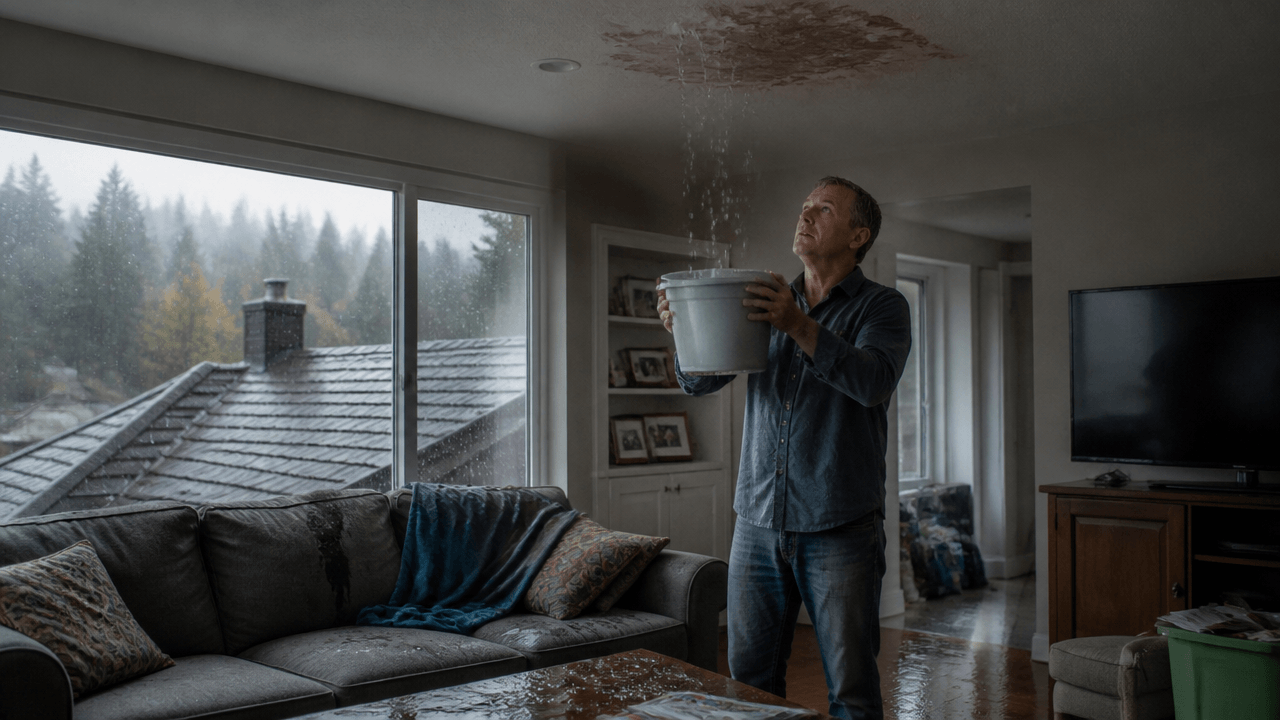
• Act fast when a roof leak starts during a storm. Move belongings, catch dripping water, and keep people away from unsafe areas while the weather is still active. Quick action can limit damage to ceilings, floors, and walls.
• Find the source of the leak as soon as it is safe. Check for damaged shingles, flashing problems, and signs of moisture in the attic or upper rooms. The spot where water shows inside is not always the true entry point.
• Use temporary protection, then schedule a repair. A tarp or short-term cover can help after the storm, but it is not a lasting fix. A proper roof inspection and repair can stop the leak from turning into a bigger problem.
What To Do When A Roof Starts Leaking In A Storm
When a storm hits and water starts coming through the ceiling, every minute matters. A small leak can turn into soaked insulation, damaged drywall, and stained flooring fast. If you are searching for what to do when roof leaks in a storm, the first step is to stay calm and act quickly. We help homeowners in Bellevue handle roof problems like this before they spread.
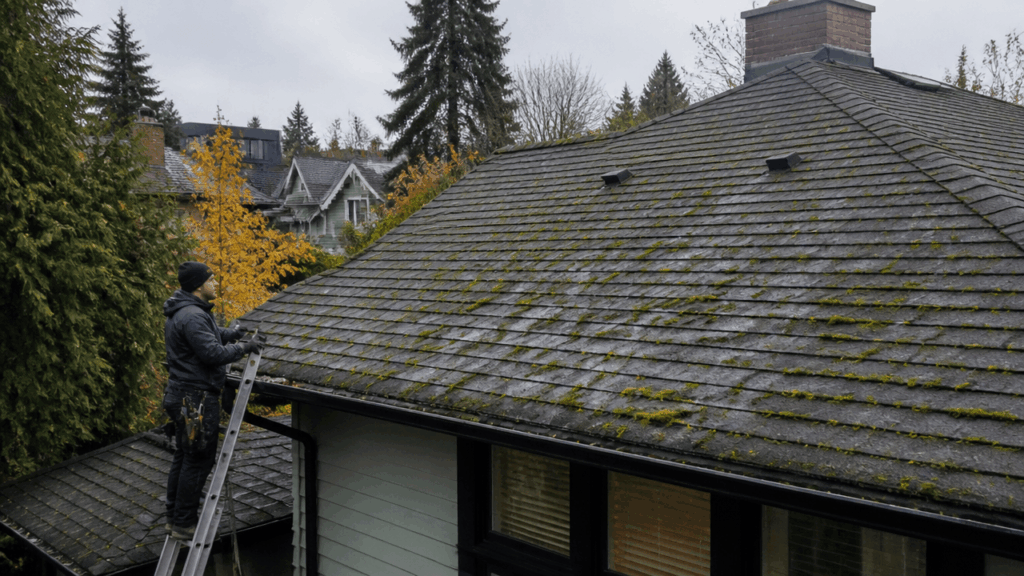
Storm damage often shows up in places people do not check right away. Water may enter near flashing, broken shingles, vents, or weak spots around chimneys. The damage can look small at first, but the hidden moisture may keep moving after the rain slows down. That is why a quick response matters, especially during wet fall weather in our area.
If the leak is active, move items out of the way and limit the water as much as you can. Then start looking for the source from the inside and outside, or review our roof inspection services if you need help finding the problem. Acting early can make the next repair step much easier and help protect your home from more damage.
How We Handle Storm Roof Leaks
The best response starts with safety, not guesswork. A wet ceiling can fall, and a slick roof can be dangerous, so we always tell homeowners to avoid climbing up during bad weather. If you can safely check the attic or top floor, look for drips, dark spots, or damp insulation. A leak that seems minor can still point to a larger roofing problem.
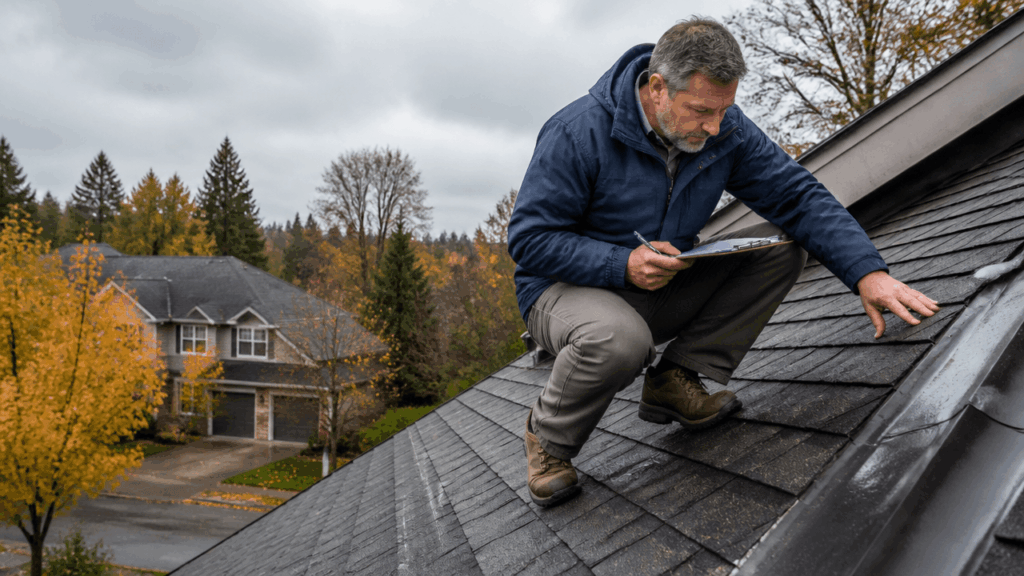
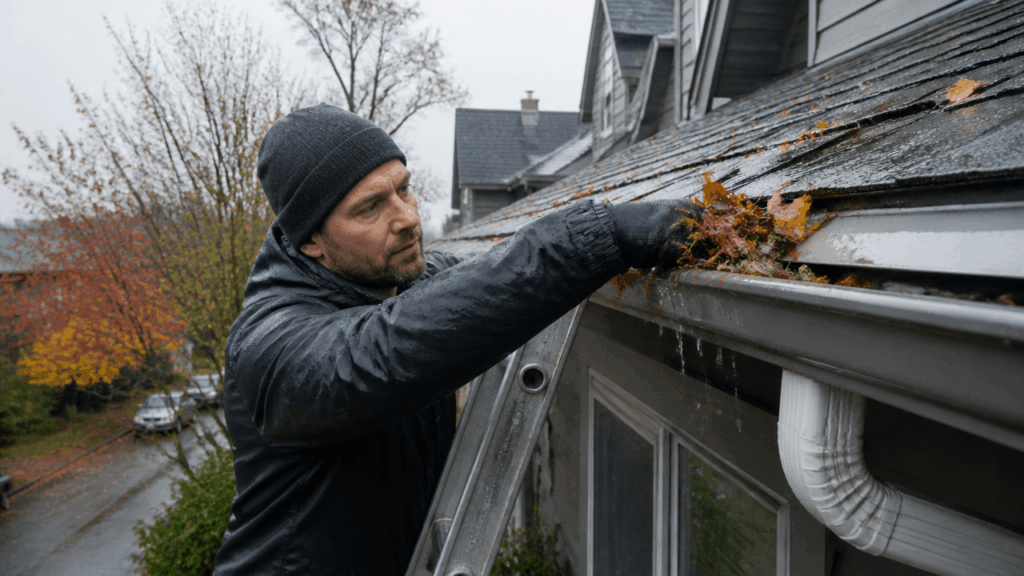
Once the storm eases, the roof should be checked for missing shingles, lifted edges, cracked flashing, or clogged drainage areas. We often find that the leak is not coming from the obvious spot inside the home. In many cases, water travels before it shows itself, which is why a careful look matters. If the issue needs repair, our roof repair services can help stop the damage before it spreads.
Step-by-Step Guide
🛑 Step 1: Stay Safe First
If water is coming through the ceiling during a storm, keep clear of any areas that feel soft, sagging, or unstable. We recommend avoiding the roof itself until the weather improves, since wet surfaces and strong wind can make the situation risky.
🪣 Step 2: Catch The Water
Place buckets, pans, or towels under the leak to reduce damage to floors and furniture. This simple step helps slow the spread of water while you figure out where it is coming from.
🛋️ Step 3: Move Belongings Away
Shift furniture, rugs, electronics, and storage items out of the wet area. Moisture can damage more than the ceiling, and moving things early helps protect your home.
🔦 Step 4: Check For The Source
Look for signs of water in the attic, along vents, around flashing, and near ceiling stains. Roof leaks often travel from the entry point before they show up inside, so the visible drip may not be the true source.
🧼 Step 5: Reduce Indoor Moisture
Dry the affected area as much as possible with towels and air movement once it is safe to do so. This can help limit mold growth and reduce how far the water spreads.
📝 Step 6: Document The Damage
Take clear photos of the leak, the stained areas, and any damaged belongings. This is useful for records and can help support a repair or insurance claim later.
🛠️ Step 7: Make A Temporary Fix
If you can safely reach the problem area after the storm, use a tarp or other short-term cover to block more water from getting in. Temporary fixes are only meant to hold things over until a proper repair can be made.
📞 Step 8: Call A Roofing Pro
Reach out for help as soon as possible so the roof can be checked and repaired the right way. Storm leaks can hide bigger damage, and a fast repair can protect the structure of the home.
Common Mistakes To Avoid
When people try to handle a roof leak on their own, they often rush the process. That can lead to more water damage, missed problems, and unsafe choices. Knowing what not to do is just as important as taking the right steps.
⚠️ Mistake 1: Going On The Roof During Bad Weather
This is one of the most dangerous mistakes because wet roofs are slippery and storms can create sudden hazards. It usually happens when people want to fix the problem fast, but the risk is too high. Wait until conditions are safe, then inspect the roof from the ground or from a secure indoor spot first.
⚠️ Mistake 2: Only Treating The Ceiling Stain
A ceiling stain is a sign of a leak, not the full problem. Many people focus only on the wet spot inside and miss the real source on the roof. To prevent this, look for the path of the water and check nearby roof parts after the storm.
⚠️ Mistake 3: Leaving Wet Items In Place
Furniture, rugs, and electronics can soak up water quickly and get ruined. This often happens because people are focused on the leak itself and forget the rest of the room. Move valuable items away right away to limit the damage.
⚠️ Mistake 4: Using The Wrong Temporary Fix
Some people tape over leaks or use materials that do not hold up in rain and wind. These fixes often fail because they are made for indoor use or dry conditions. Use only a short-term solution that is meant to keep water out until a real repair can be done.
⚠️ Mistake 5: Waiting Too Long To Call For Help
A roof leak can grow fast, especially during stormy weather. Homeowners sometimes wait because the leak seems small or they think it will stop on its own. The best way to prevent bigger repairs is to get the roof checked as soon as the weather allows.
Frequently Asked Questions
What should we do first when a roof leaks in a storm?
Yes, the first step is to protect people and property right away. Move belongings away from the leak, catch the water, and avoid unsafe areas until the storm passes.
Can we fix a storm roof leak ourselves?
Yes, you can handle small temporary steps like placing a tarp or catching water, but a real repair should come from a roofing pro. When people search for what to do when roof leaks in a storm, the safest answer is to stop the water briefly and then get the roof checked.
How do we know where the leak is coming from?
Yes, the source is often above or away from the place where water shows inside. Look for damaged shingles, flashing issues, vent openings, or moisture in the attic to trace it back.
Is a small roof leak still serious?
Yes, even a small leak can lead to bigger damage over time. Water can spread into insulation, wood, and drywall before you notice how far it has gone.
When should we call a roofer after storm damage?
Yes, you should call as soon as the storm is safe enough to allow an inspection. Fast action helps limit damage and gives you a better chance of avoiding larger repairs later.
Final Thoughts On Storm Roof Leaks
A roof leak during a storm is never something to ignore, even if the water seems light at first. The safest approach is to control the immediate damage, find the likely source, and arrange a proper repair as soon as possible. We help Bellevue homeowners stay ahead of roof problems before they turn into larger issues.
If you are dealing with water coming in now, quick action can save time, stress, and repair costs later. The right steps matter, and so does having a team you can trust when the weather turns rough. For more updates and roofing tips, follow us on Instagram.