• TPO roofs usually last 15 to 30 years, but real lifespan depends on installation quality, drainage, weather, and regular maintenance.
• In Capitol Hill, fall rain and cooler conditions can reveal seam issues, ponding water, and flashing damage before winter makes them worse.
• A quick roof check can help us spot wear early, avoid costly leaks, and decide whether repair or replacement is the better next step.
Introduction
A TPO roof can look fine from the ground and still be close to the end of its useful life. In Capitol Hill, fall weather can bring steady rain, cooler nights, and more stress on flat and low-slope roofs. That is why it helps to know how long does a TPO roof last before small issues turn into bigger repairs.
Most TPO roofs hold up well when they are installed correctly and cared for on a regular basis. Still, seams, flashing, ponding water, and foot traffic can shorten their life much faster than many owners expect. If we wait too long, a small leak can spread into insulation damage and interior stains.
The good news is that there are clear signs that tell us when a roof needs attention. We can also take simple steps to slow wear and protect the system before winter weather arrives. For local support, our roof inspection services can help us spot problems early.
What TPO Roof Life Really Depends On
A TPO roof does not age the same way on every building because several factors affect its lifespan. The quality of the install, the slope of the roof, the condition of the seams, and the amount of standing water all play a part. In a place like Capitol Hill, cool damp weather can make weak spots show up faster.
Maintenance matters just as much as the material itself. When we clean drains, check flashing, and fix small seam issues early, the roof usually lasts longer and performs better. If damage is already showing, our roof repair services can help stop the problem before it spreads.
Step-by-Step Guide to Check a TPO Roof
🔍 Step 1: Look for surface wear
Start by checking the membrane for cracks, blisters, punctures, or areas that look thin. These signs often show where the roof is aging faster than expected and may need repair soon.
💧 Step 2: Check for standing water
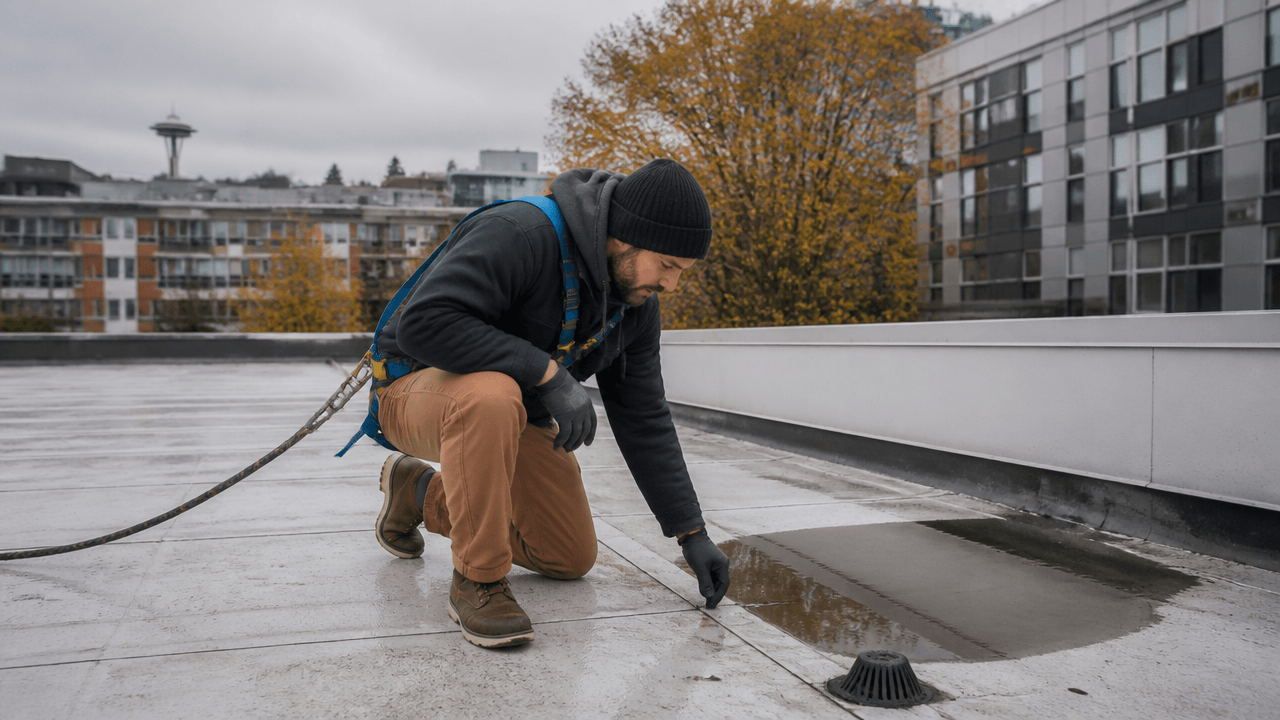
Look after rain to see whether water is pooling in low areas. Ponding water can put extra stress on the roof and speed up wear over time.
🧱 Step 3: Inspect seams and flashing
Pay close attention to seams, edges, and places where the roof meets walls, vents, or equipment. These spots often fail first because they handle the most movement and weather exposure.
🧹 Step 4: Clear dirt and debris
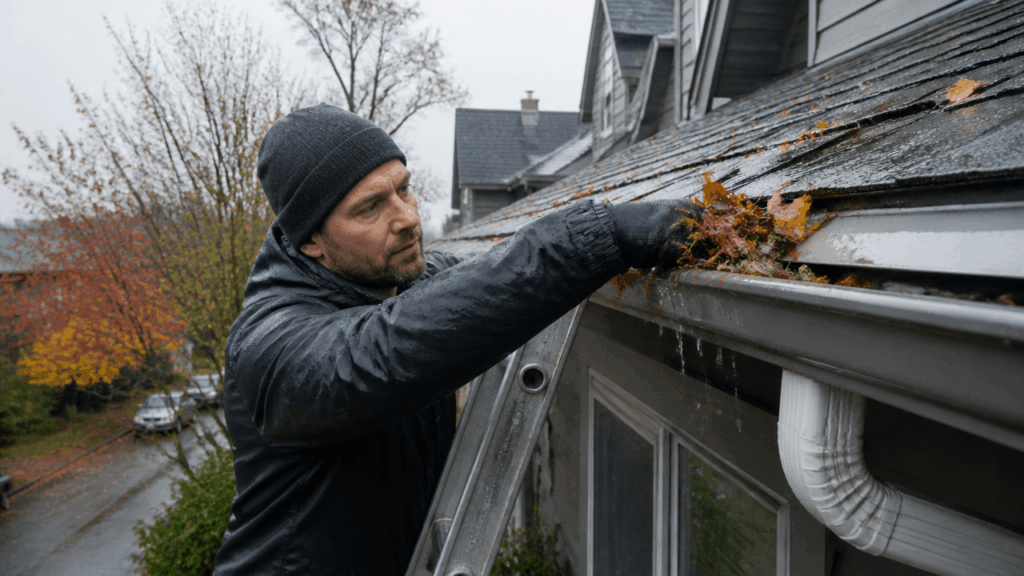
Remove leaves, branches, and built-up grime from the roof surface and drainage areas. Keeping these areas clear helps water move off the roof the way it should.
🛠️ Step 5: Review past repairs
Check any old patchwork or repaired spots for new lifting, gaps, or wear around the edges. Older repairs can weaken over time, especially if they were made in a hurry.
📅 Step 6: Track the roof’s age
Find out when the roof was installed and compare that date with its current condition. This helps us judge whether the roof still has useful life left or is getting close to replacement.
📋 Step 7: Schedule a professional review
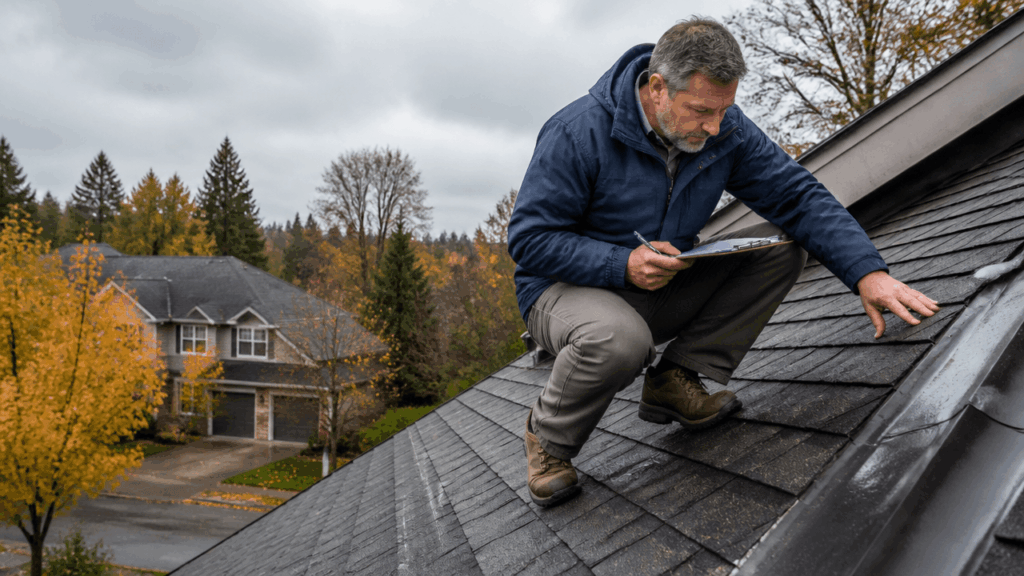
Have a trained roofer evaluate the roof if anything looks questionable. A professional can often catch damage that is easy to miss from a quick visual check.
Common Mistakes to Avoid
A lot of DIY roof checks miss the small details that matter most. That can lead to repairs being delayed until the damage is much worse. These mistakes often happen when people focus only on the surface and ignore the parts of the roof that fail first.
⚠️ Mistake 1: Ignoring the seams
Many people look only at the main membrane and forget the seams, where leaks often start. This happens because seams are easy to overlook, especially if the roof seems fine at a glance. To prevent this, we should always inspect the seam lines closely and look for lifting, gaps, or weak spots.
❌ Mistake 2: Checking the roof only when it leaks
Some owners wait until water shows up inside before taking action. This usually happens because the roof appears to be in decent shape from the outside. To avoid this, we should inspect the roof on a routine schedule so problems are caught early.
🚫 Mistake 3: Leaving ponding water in place
Standing water is often treated like a minor issue, but it can wear down the roof faster. This mistake happens when drainage problems are ignored after storms. To prevent it, we should clear drains and fix low spots before the next round of bad weather.
⚠️ Mistake 4: Missing hidden flashing damage
Flashing around vents, edges, and roof transitions can fail even when the field of the roof still looks solid. People miss it because these areas are harder to see and often require a closer look. The best way to prevent this is to inspect every transition point during each roof check.
❌ Mistake 5: Assuming a roof is fine because it is not old
Age matters, but a younger roof can still have serious wear if it was installed poorly or neglected. This mistake happens when people rely on the date alone instead of the roof’s actual condition. We should always judge the roof by both age and visible performance.
Frequently Asked Questions
How long does a TPO roof last?
A TPO roof often lasts around 15 to 30 years, depending on installation quality, weather exposure, and maintenance. If we keep seams, drains, and flashing in good shape, the roof usually performs longer and more reliably.
What shortens the life of a TPO roof?
Poor installation, standing water, UV exposure, and neglected repairs can shorten the life of a TPO roof. Heavy foot traffic and damaged seams can also cause early failure if they are not addressed quickly.
How do I know if my TPO roof needs repair?
Yes, visible cracks, lifted seams, punctures, and water stains are common signs that repair may be needed. If we notice pooling water or repeated leaks, the roof should be checked soon.
Can a TPO roof last longer with maintenance?
Yes, regular maintenance can help a TPO roof last longer. Cleaning drains, checking seams, and fixing small issues early all reduce the chance of major damage.
Is fall a good time to inspect a TPO roof in Capitol Hill?
Yes, fall is a smart time to inspect a TPO roof in Capitol Hill because rain and cooler weather can expose weak spots. Early checks give us time to fix problems before winter conditions make them worse.
Wrapping Up
Knowing how long does a TPO roof last helps us make better choices before damage becomes expensive. In Capitol Hill, fall weather makes it even more important to watch for ponding water, worn seams, and flashing problems. A roof that gets regular care can often serve well for many years.
The best next step is to check the roof’s condition, not just its age, and act on anything that looks off. When we stay ahead of small issues, we protect the building, reduce stress, and avoid sudden surprises. To keep up with our work and see what we are doing around Seattle, follow us on social media.