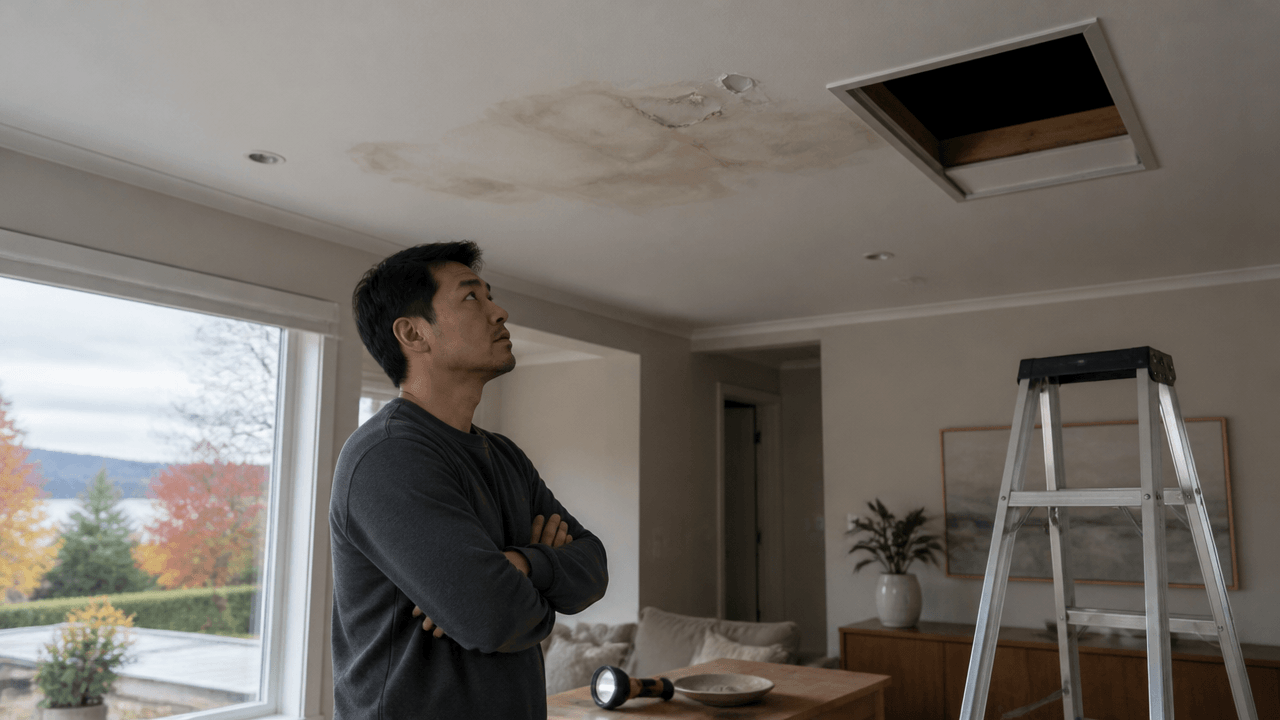
• Find the source fast: Water stains on ceiling often mean a roof leak, plumbing issue, or trapped moisture that needs quick attention before the damage spreads.
• Use a simple checklist: Check stain changes, look for damp spots, inspect the roof, and call a pro if the cause is not clear.
• Act before it gets worse: Small ceiling stains can turn into bigger repairs, especially during wet Bellevue weather, so early action saves time and stress.
Set the Right Goal for a Safe, Dry Ceiling
The first goal when you notice water stains on ceiling is to find the source before the damage spreads. A fast response can help protect your home from bigger repairs and keep the problem from getting worse.
In Bellevue, fall rain can make small roof issues show up fast, especially after long wet stretches. If you need help checking for roof trouble, roof inspection services can help you spot the issue early.
The next goal is to stop new moisture from getting inside and then repair the area the right way. That means fixing the roof issue, drying the ceiling, and watching for signs that the stain is spreading.

Checklist for Fixing Ceiling Water Stains
Use this checklist to take the right steps after you spot water stains on ceiling. The goal is to find the cause early, limit more damage, and keep your home safe and dry.
- ✅ Check the stain size and color changes
- ✅ Look for damp spots above the ceiling
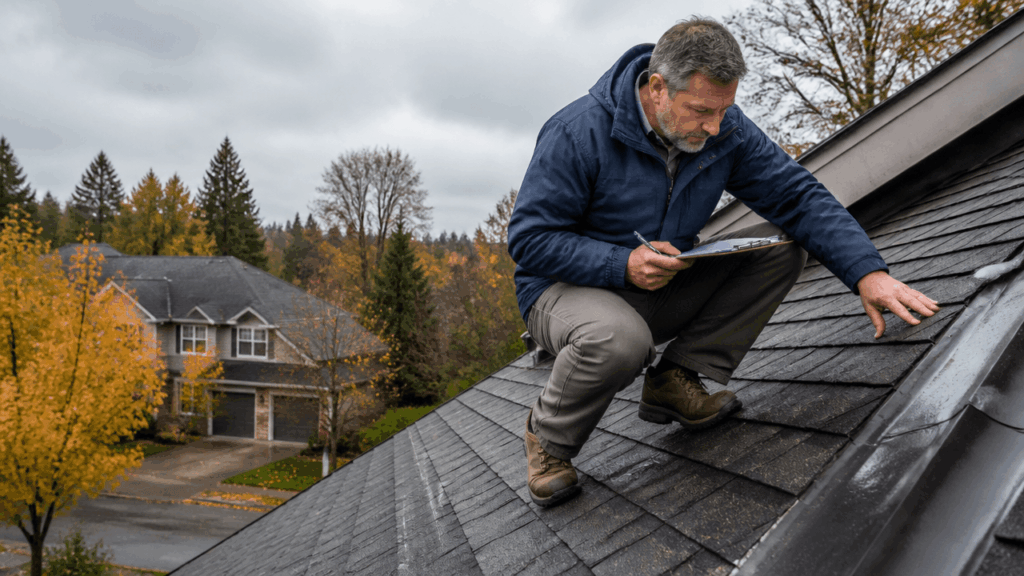
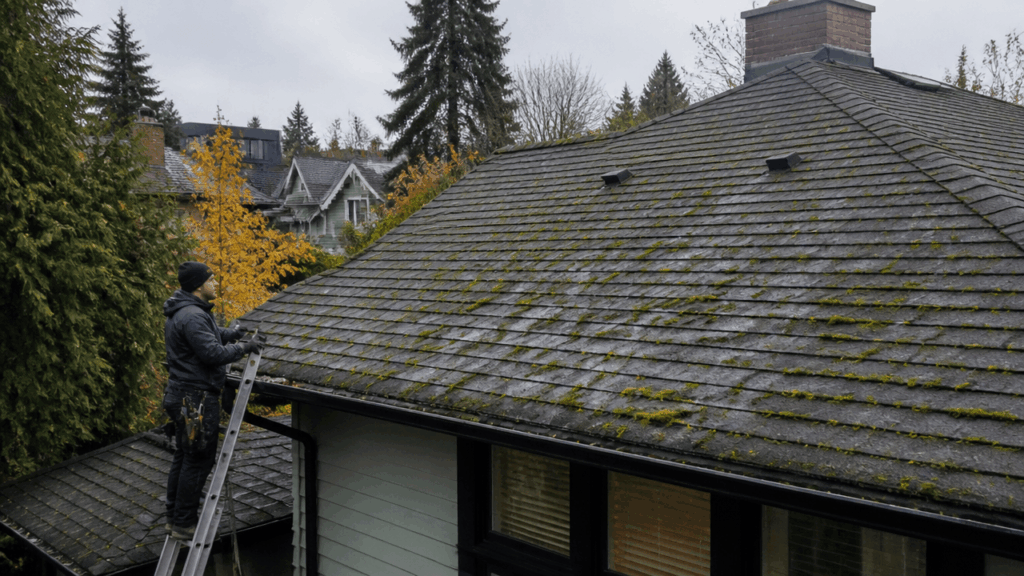
- ✅ Inspect the roof after rain or wind
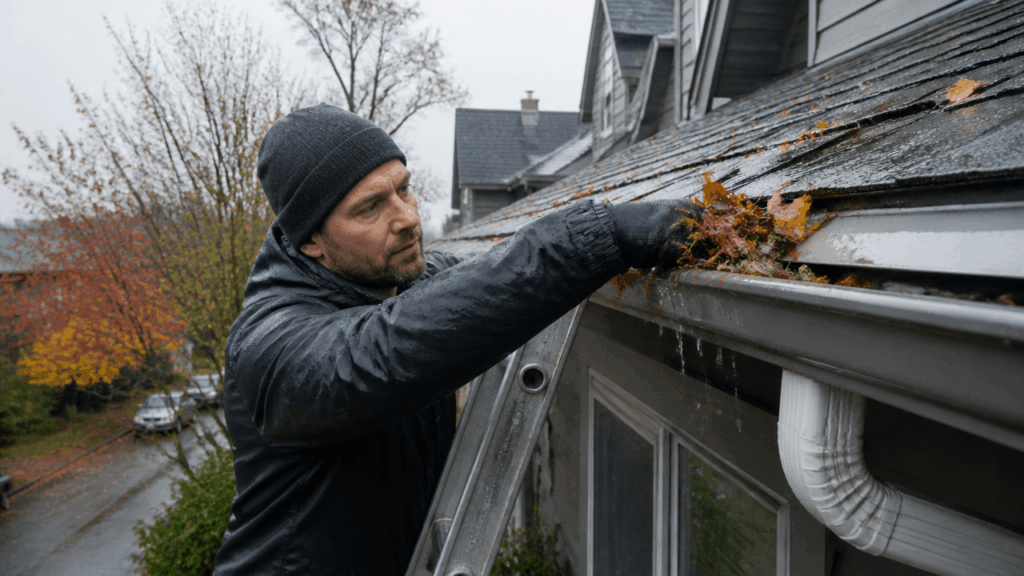
- ✅ Make sure gutters and downspouts are clear
- ✅ Watch for peeling paint or soft drywall
- ✅ Set buckets or towels under active drips
- ✅ Call a roofing pro if the source is not clear
- ✅ Schedule repairs before the next storm
These steps can help you stay ahead of a small leak before it turns into a bigger problem. When you act fast, you protect both the ceiling and the structure above it.
For Bellevue homes in fall, wet weather can make roof issues show up quickly, so it pays to stay alert. A careful check now can save time, stress, and repair costs later.
Additional Advice
When you see water stains on ceiling, avoid painting over them right away. That may hide the mark for a short time, but the leak can keep going and cause more damage behind the surface.
It also helps to pay attention to weather patterns in Bellevue, especially during long stretches of rain. If the stain gets darker after storms, that is a strong sign the roof may need a closer look from a pro.
Many homeowners wait too long because the stain looks small at first. The truth is that even a small leak can lead to wood rot, warped drywall, and mold if the problem stays active, so it is smart to take it seriously early.
If you want help figuring out the next step, roof repair services can be a good place to start. A trained roofer can find the source, explain the damage, and help you fix it before it spreads.
Frequently Asked Questions
What causes water stains on a ceiling?
Water stains on a ceiling are usually caused by a roof leak, plumbing leak, or condensation issue. The stain is often the first visible sign that moisture is getting where it should not.
Should I paint over water stains on ceiling?
No, you should not paint over water stains on ceiling before the source is fixed. Painting first only hides the problem and can let damage keep growing behind the surface.
How do I know if the stain is from the roof?
Yes, roof damage is a common cause if the stain gets worse after rain or wind. Check the attic, roofline, and nearby shingles for dampness or visible wear.
Can a small ceiling stain get worse?
Yes, a small ceiling stain can get worse if the leak continues. Moisture can spread into drywall, insulation, and wood, which makes the repair more expensive later.
When should I call a roofing company?
You should call a roofing company as soon as you cannot find the source of the stain or if the stain keeps spreading. Quick help can limit damage and protect your home from bigger problems.
Final Thoughts on Ceiling Water Damage
Water stains are a warning sign that should never be ignored, especially during wet fall weather in Bellevue. The sooner you act, the better your chances of stopping damage before it spreads.
A careful check, fast repair, and close follow-up can make a big difference in protecting your home. For more updates and helpful roofing content, follow us on social media.