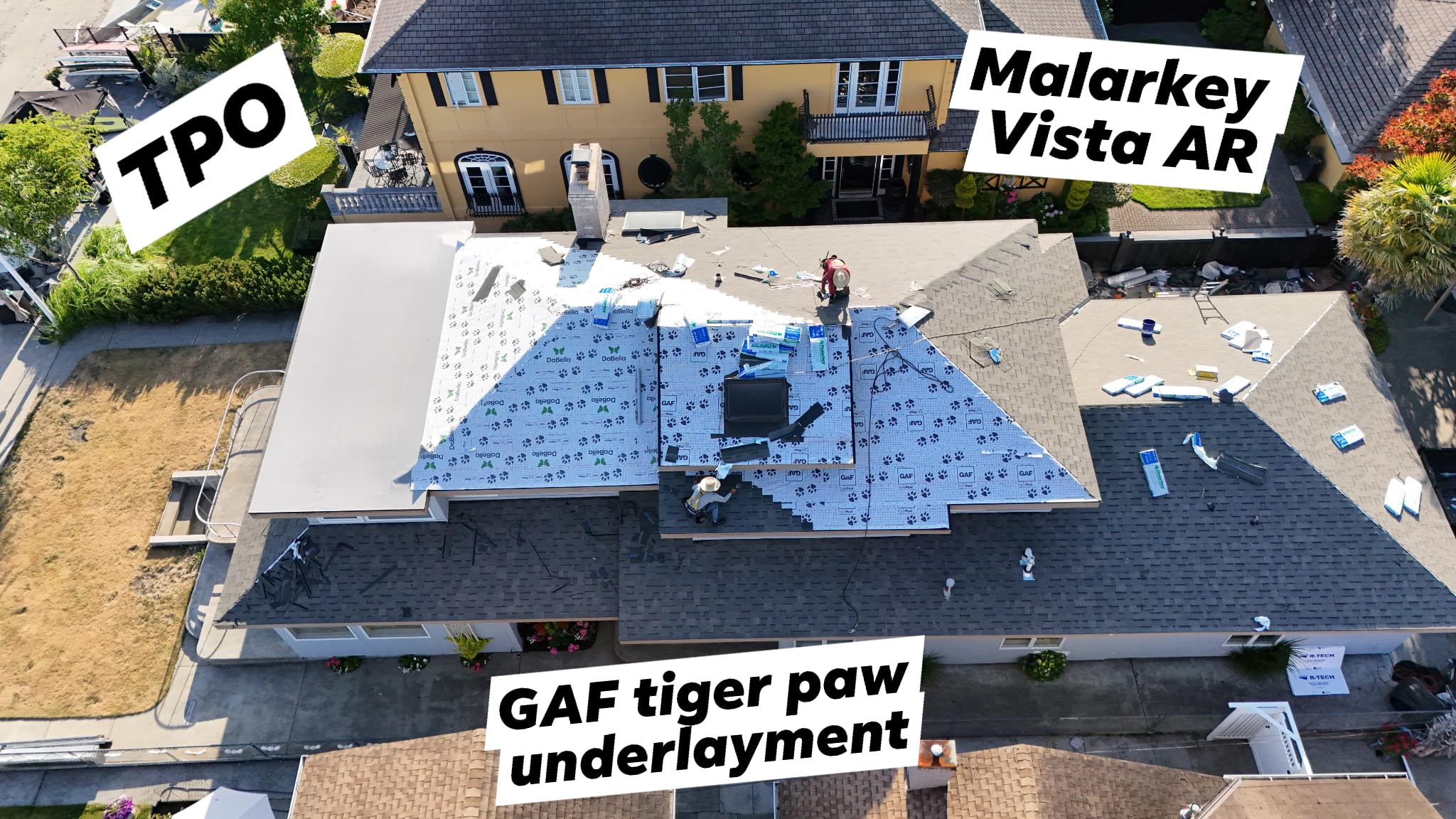
Quick Answer: The most common signs you need a new roof in Seattle are missing or curling shingles, heavy moss or lichen growth, granule loss in gutters, water stains on interior ceilings, a sagging roof deck, and a roof age of 20+ years. Seattle's persistent moisture and 150+ annual rainy days accelerate roof aging significantly — a roof showing multiple signs needs professional evaluation, not just repair.
Seattle homeowners face a roofing challenge most of the country doesn't: our cool, damp marine climate creates ideal conditions for moss, algae, and moisture damage that can cut a roof's lifespan by a decade or more. A roof that would last 28 years in Phoenix might need replacement at 17 years in Seattle.
Knowing the warning signs — and understanding which ones are Seattle-specific — lets you act before a small problem becomes a structural emergency. This guide covers every major indicator, the Seattle-specific factors that matter most, and how to decide whether you need repair or full replacement.
1. Shingle Deterioration: The Most Visible Warning Signs
Shingles are your roof's first line of defense. When they begin to fail, water follows quickly.
Curling and cupping: Asphalt shingles curl in two ways — cupping (edges turn upward) and clawing (middle rises while edges stay flat). Both indicate the shingles have reached end of life and are no longer sealing properly. In Seattle's wet-dry cycle, shingles absorb moisture and expand, then contract during drier periods. Over years, this constant movement causes irreversible distortion.
Cracked shingles: Cracks allow water to infiltrate the underlayment and eventually the roof deck. In the Pacific Northwest, cracked shingles rarely stay dry long enough to be a minor issue — water enters, sits, and rots the structure beneath.
Missing shingles: Even a single missing shingle creates a direct water pathway into your roof system. During Seattle's frequent rainstorms, that pathway gets used constantly. Missing shingles are not a "wait and see" problem.
Blistering or buckling: Blisters on shingles indicate moisture trapped during manufacturing or inadequate ventilation causing heat buildup. Buckled shingles (appearing wavy when viewed from the edge) suggest the roof deck itself may be warping — a more serious structural concern.
| Shingle Problem | Severity | Typical Cause in Seattle |
|---|
| Curling / cupping | High | Age + moisture cycling |
| Cracked shingles | High | Age + UV degradation |
| Missing shingles | Immediate | Wind damage, failed fasteners |
| Blistering | Moderate | Poor ventilation, manufacturing defect |
| Buckling | High | Deck movement, inadequate fastening |
| Dark staining/streaking | Moderate | Algae growth (common in PNW) |
2. Granule Loss: Seattle's Invisible Accelerator
Asphalt shingles are coated with granules that protect the underlying asphalt from UV radiation and physical weathering. When those granules wash away, the asphalt degrades rapidly.
Check your gutters. Granule loss shows up as a gritty, sand-like residue accumulating in gutters and at downspout exits. Some granule loss is normal over a roof's life — heavy, consistent granule loss is a sign the shingles are approaching end of life.
Look for bare patches. On the roof surface, granule loss appears as lighter-colored patches where the dark asphalt becomes visible. These patches are dramatically less UV-resistant and weather faster than intact shingle areas.
In Seattle, granule loss is accelerated by moss. Moss root-like structures (rhizoids) physically dislodge granules as the moss establishes and grows across the surface. A moss-covered Seattle roof isn't just unsightly — it's actively stripping its own protective coating.
The National Roofing Contractors Association (NRCA) notes that granule loss is one of the clearest indicators of shingle age, and recommends professional evaluation when widespread bare patches appear.
3. Moss, Lichen, and Algae: Seattle's Biggest Roof Threat
No warning sign is more distinctly Seattle than moss — and none is more commonly underestimated.
Moss thrives in Seattle's cool, damp, shaded conditions. It establishes within a single wet season on untreated roofs and can cover entire roof planes within two to three years. What most homeowners miss is what moss does structurally:
- Lifts shingle edges, breaking the seal and creating water entry points at every shingle course
- Retains moisture 24/7, preventing the natural drying that would otherwise slow weather degradation
- Physically damages granules through its root structures, stripping the protective coating from asphalt shingles
- Promotes rot in the roof deck and any wood components below the shingle layer
Lichen is worse. Unlike moss, lichen bonds directly to the shingle surface with a symbiotic root system. Removing lichen physically damages the shingles — the lichen and the shingle surface often come off together. A roof with established lichen that is several inches thick has likely sustained irreversible surface damage.
According to research cited by Washington State's Department of Labor & Industries, moss-affected roofs in the Pacific Northwest can lose 5–15 years of service life compared to maintained roofs. A roof that should last 25 years may need replacement at 12–15 years if moss goes untreated.
The key question: Is the moss cosmetic, or has it physically lifted shingles and driven moisture into the deck? A professional inspection answers this — trying to assess it yourself from ground level is unreliable.
4. Interior Warning Signs: What's Happening Inside Your Home
Some of the clearest signs you need a new roof show up not on the roof but inside your house.
Water stains on ceilings and walls. The classic sign. Brown, orange, or yellowish rings on ceilings — especially after or during rainstorms — indicate water is bypassing your roof system. In Seattle, even a small roof failure produces staining quickly because water is nearly always present.
Attic warning signs. Your attic is the first place water reaches after bypassing the shingles and underlayment. Look for:
- Wet or compressed insulation
- Dark staining on attic trusses or sheathing
- Visible daylight through the roof boards
- Spongy or soft wood (indicates rot has begun)
- Mold or musty smell
Peeling interior paint. When moisture infiltrates the ceiling and wall cavity, it forces paint to bubble and peel from below. This is particularly common near exterior walls and along rooflines. Seattle.gov's homeowner resources note that interior water damage from roof failures is one of the most common maintenance issues reported by Seattle homeowners.
Rising energy bills. A failing roof often means compromised attic insulation from moisture damage. If your heating and cooling costs have climbed without an obvious explanation, check the attic.
The U.S. Department of Energy notes that moisture-damaged attic insulation loses R-value rapidly — meaning a roof leak doesn't just cause water damage, it degrades your home's thermal envelope at the same time.
5. Age: The Seattle Timeline You Need to Know
Manufacturer warranties on asphalt shingles say "30 years." In Seattle, the realistic lifespan is significantly shorter.
The persistent moisture, 150+ rainy days per year, and near-constant moss pressure of the Pacific Northwest cut into that manufacturer rating substantially. Most roofing professionals in the region see asphalt shingle roofs needing replacement between 17 and 25 years — well before the warranty timeline suggests.
| Roof Material | National Average Lifespan | Realistic Seattle Lifespan |
|---|
| 3-Tab Asphalt Shingles | 20–25 years | 15–20 years |
| Architectural Asphalt Shingles | 25–30 years | 20–25 years |
| Cedar Shake (maintained) | 30–40 years | 20–30 years |
| Standing Seam Metal | 40–70 years | 40–70 years |
| Concrete Tile | 40–50 years | 35–50 years |
| TPO (flat roofs) | 25–30 years | 20–25 years |
If your Seattle roof is 20 years or older, it warrants professional evaluation regardless of whether you can see obvious problems. Age-related failures often begin at flashings, valleys, and penetrations — areas not visible from the ground — before becoming apparent inside the home.
The NRCA's roofing guidelines recommend proactive evaluation rather than waiting for obvious failure, particularly in high-moisture climates. GAF's Pacific Northwest roofing guidance also recommends algae-resistant product lines specifically formulated for the moisture conditions found in Seattle and the broader Puget Sound region.
6. Structural Warning Signs: When It's an Emergency
Some roof conditions require immediate professional attention.
Sagging roof deck. A roof that appears to bow, dip, or sag when viewed from street level or from the attic has structural damage. Sagging indicates the roof deck (sheathing) has been compromised by moisture — usually from a long-standing slow leak — and the structural integrity of the roof is at risk. This is an emergency, not a project to schedule later.
Soft spots when inspecting. Roof decks affected by rot feel spongy underfoot. If a contractor identifies soft spots during an inspection, it means the sheathing will need replacement as part of any reroofing project — and the longer you wait, the more deck area is affected.
Exposed or lifted flashings. Flashings seal the joints between the roof surface and penetrations: chimneys, skylights, vents, and walls. Lifted, cracked, or missing flashings are one of the most common sources of leaks in Seattle — and one of the most overlooked. When flashing fails, water gets direct access to the roof deck and structure.
7. Gutter Clues You Shouldn't Ignore
Your gutters tell you more about your roof's condition than most homeowners realize.
- Heavy granule accumulation — dark, sand-like material — indicates significant shingle wear
- Water overflow during rain — may indicate gutters are clogged with moss, debris, or shingle material
- Gutter pulling away from the fascia — can indicate fascia rot from moisture wicking off the roof edge
- Standing water after rain — poor drainage creates ice dams in winter and accelerates fascia and soffit damage year-round
Gutters are part of the roofing system. When gutters are failing, they often indicate that the edge of the roof is as well.
Signs You Need a New Roof: Quick Reference Checklist
| Warning Sign | Repair Likely Sufficient | Replacement Likely Needed |
|---|
| 1–5 missing shingles (young roof) | ✓ | |
| Widespread curling/cracking shingles | | ✓ |
| Heavy moss (lifted shingles) | | ✓ |
| Established lichen coverage | | ✓ |
| Granule loss (localized) | ✓ | |
| Granule loss (widespread) | | ✓ |
| Single ceiling stain (isolated) | ✓ | |
| Multiple ceiling stains / spreading | | ✓ |
| Sagging deck | | ✓ (immediate) |
| Roof age 15–19 years + any problems | | Evaluate |
| Roof age 20+ years | | ✓ |
| Repair cost > 15% of replacement cost | | ✓ |
The 15% rule: if repair cost exceeds 15% of replacement cost, replacement typically delivers better long-term value. For Seattle's replacement range of $12,000–$28,000, that threshold is roughly $1,800–$4,200. The Seattle Department of Construction and Inspections (SDCI) requires permits for full roof replacements — a legitimate contractor will always pull the necessary permits as part of the job.
Frequently Asked Questions
How do I know if I need a repair or full roof replacement in Seattle?
The key factors: roof age, damage extent, and cost ratio. If your roof is under 15 years old and the problem is isolated (a few missing shingles, a failed flashing), repair is often appropriate. If the roof is 18+ years old, shows widespread shingle deterioration, has multiple leak points, or repair costs exceed 15% of replacement cost, replacement is usually the better financial decision.
How often should I inspect my Seattle roof?
Twice a year: once in fall (before the rainy season) and once in spring (after winter). Also inspect after any significant wind event. Professional inspections every 2–3 years are worth the cost — many problems, especially at flashings and in valleys, aren't visible from ground level.
Can I safely inspect my own roof?
Ground-level inspection with binoculars is safe and worth doing. Getting on the roof yourself carries significant fall risk and is not recommended for most homeowners. Use a licensed contractor for any inspection that requires walking the roof surface. Many Seattle roofing companies offer free or low-cost inspections.
Is moss on my roof just cosmetic?
No. This is one of the most common misconceptions among Seattle homeowners. Moss retains moisture against your shingles continuously, lifts shingle edges to create water entry points, strips granules through its root structures, and promotes rot in wood components below. Left untreated, moss can shorten a 25-year asphalt shingle roof to 12–15 years of service life.
What causes a roof to need replacement sooner in Seattle than in other cities?
Three factors: moisture cycling (shingles expand when wet, contract when dry — repeated thousands of times), moss and algae (endemic to Seattle's climate, physically damaging to shingles), and limited UV drying periods (Seattle's overcast weather means roofs stay wet longer between rain events). Combined, these factors reduce asphalt shingle lifespan by 5–10 years compared to drier markets.
What's the best time of year to replace a roof in Seattle?
June through September offer the most reliable dry-weather windows for roofing work. That said, experienced Seattle roofing contractors work year-round — the climate rarely produces extended rain that prevents installation. If your roof has active damage, don't wait for summer; address it before the next rainy season causes more interior damage.
Does homeowners insurance cover roof replacement in Seattle?
Insurance typically covers sudden, accidental damage from wind, hail, or falling trees. It does not cover age-related wear, moss damage, or deferred maintenance. If a windstorm or tree caused your damage, document it thoroughly and get a professional inspection before filing a claim. You have the right to choose your own roofing contractor — your insurer cannot dictate who does the work.
How much does a new roof cost in Seattle?
Most Seattle homeowners pay $12,000–$28,000 for a full asphalt shingle roof replacement on a typical single-family home. Metal roofing runs $18,000–$45,000+. Cost varies with roof size, pitch, material choice, tear-off layers, and deck condition. See our detailed Seattle roof replacement cost guide for a full breakdown.
How long does a roof last in the Pacific Northwest?
In the Pacific Northwest, asphalt shingle roofs typically last 15–25 years — significantly shorter than national averages due to persistent moisture, moss pressure, and limited UV drying cycles. Standard 3-tab shingles run 15–20 years in Seattle; architectural shingles last 20–25 years. Metal roofs maintain their 40–70 year lifespan even under PNW conditions, making them the premium long-term choice.
What are the most common signs a Seattle roof is failing?
The most common signs a Seattle roof is failing are curling or cracking shingles, heavy moss or lichen growth, granule loss in gutters, water stains on interior ceilings, and a roof age over 20 years. Seattle's persistent moisture accelerates these signs significantly compared to drier markets. Multiple signs appearing together indicate it's time for a professional replacement evaluation, not just repair.
Get a Free Roof Evaluation
If your roof is showing multiple signs from the checklist above — or is approaching 20 years old — the best next step is a professional evaluation by a licensed Seattle roofer who can assess condition from the roof surface, not just the ground.
The Seattle Roofing Company has completed 500+ roofs across King, Pierce, and Snohomish Counties. We serve Seattle, Bellevue, Renton, Tacoma, Kirkland, Redmond, and surrounding communities. We'll give you an honest assessment — whether that's repair, replacement, or maintenance — before any work begins.
[Request a free estimate](/contact) or call (253) 345-4607 — we'll tell you exactly what your roof needs.
Reliable. Durable. Built for Northwest Weather.

 Roofing Tips