Quick Answer: TPO (Thermoplastic Polyolefin) is Seattle's most popular flat roof membrane — and for good reason. Heat-welded seams create a watertight barrier that stands up to Seattle's 37+ inches of annual rainfall, while a reflective white surface reduces cooling costs. Installed costs in the Seattle area typically run $8–$14 per square foot for commercial and multifamily projects, with full replacement of a 5,000 sq ft roof landing between $40,000–$70,000 depending on insulation, tear-off, and deck condition. If you have a flat or low-slope roof in King, Pierce, or Snohomish County, TPO deserves a close look.
If you own a commercial building, modern flat-roofed home, or multi-family property in Seattle, you've probably heard the term TPO roofing — and maybe wondered what separates it from EPDM, modified bitumen, or PVC. This guide answers those questions in full, with Seattle-specific cost data, installation detail, maintenance expectations, and building code notes.
What Is TPO Roofing?
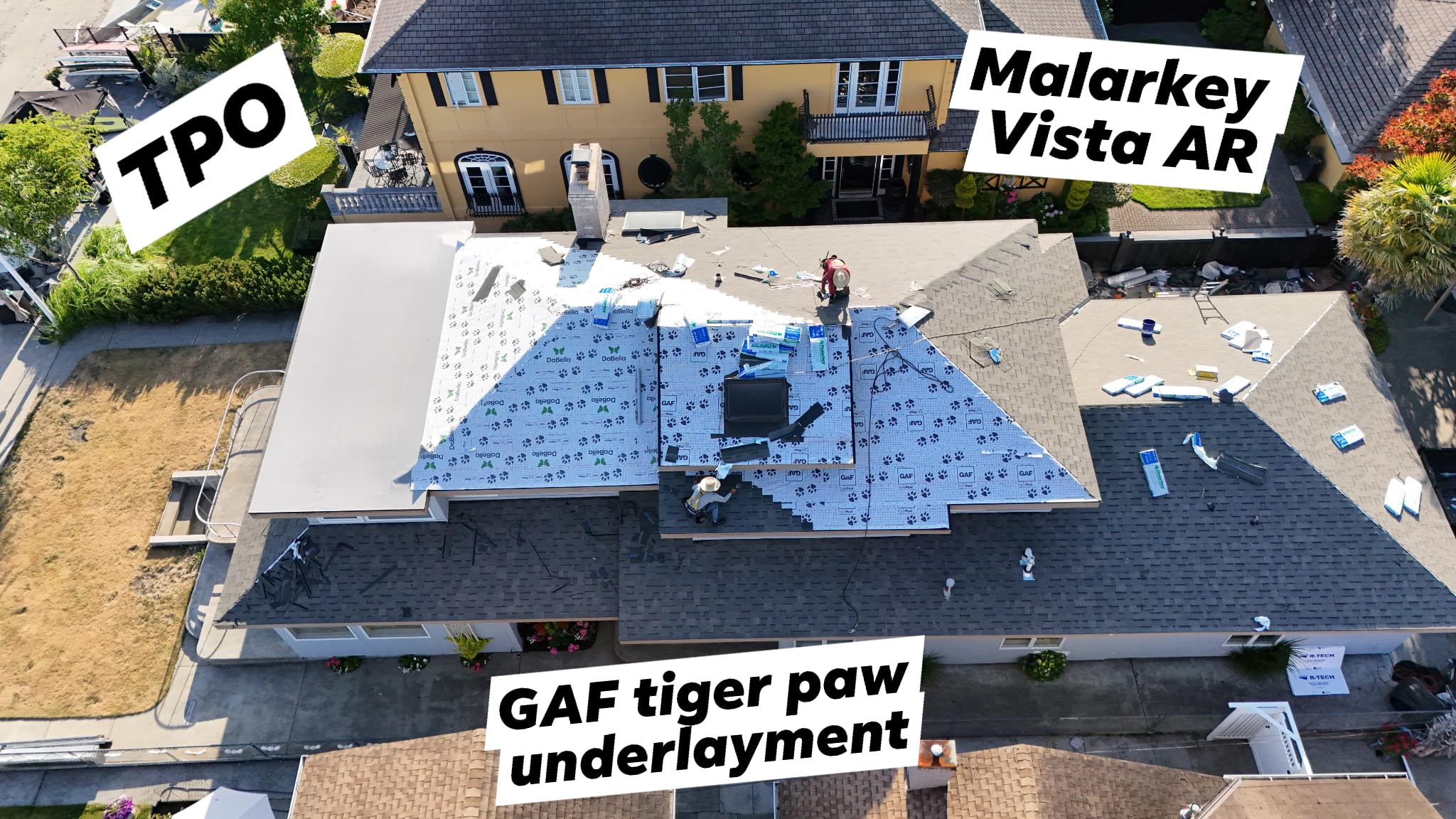
TPO stands for Thermoplastic Polyolefin — a single-ply roofing membrane made from a blend of ethylene-propylene rubber and polypropylene. It's manufactured in rolls and installed across flat or low-slope roof decks, with seams heat-welded together using hot-air welding equipment at 900–1,100°F. That welding process is what makes TPO different: a properly executed heat weld is actually stronger than the membrane itself, creating a monolithic waterproof surface rather than a seamed patchwork.
TPO has been the fastest-growing commercial roofing membrane in North America for the past two decades. According to the National Roofing Contractors Association (NRCA), single-ply membranes including TPO now account for the majority of commercial low-slope roofing installed in the U.S. In the Seattle area, TPO dominates commercial and multifamily flat roofing for a combination of performance, cost, and environmental reasons.
Key Properties
- Composition: Ethylene-propylene rubber + polypropylene, polyester-reinforced scrim core
- Thickness options: 45-mil, 60-mil, 80-mil (60-mil minimum recommended for commercial)
- Color: Typically white or light gray (reflective)
- Surface temperature reduction: Up to 50°F cooler than dark membranes
- Solar reflectance (initial): 0.78 — well above ENERGY STAR's 0.65 threshold for low-slope roofing products
Why Seattle's Climate Makes TPO the Right Choice
Seattle's weather isn't just rainy — it's persistently damp. The city averages more than 150 wet days per year, with rainfall delivered in long, sustained events rather than short intense downpours. That constant moisture exposure is exactly why the flat roof membrane you choose matters so much.
Heat-welded seams hold through wet conditions. Unlike adhesive-bonded or tape-sealed systems, TPO's welded seams don't rely on bond integrity over time. The weld creates a chemical fusion between overlapping membrane layers — there's nothing to peel, dissolve, or delaminate.
No plasticizers to break down. PVC membranes contain plasticizers that can leach out over time, causing brittleness. TPO contains no plasticizers, making it chemically stable under Seattle's repeated freeze-thaw cycles and UV exposure (limited as it is).
Smooth surface resists biological growth. Seattle's damp, shaded environment encourages moss, algae, and lichen on roofing surfaces. TPO's smooth, non-porous surface doesn't give organic material a foothold the way modified bitumen or built-up roofing does. While not immune to surface growth — particularly near drain areas where debris accumulates — TPO is significantly more resistant than porous alternatives.
Rigid foam insulation compatibility. Flat roofs in the Seattle area frequently require rigid foam insulation above the roof deck to prevent condensation issues driven by our damp climate. TPO systems are compatible with polyisocyanurate (polyiso) and EPS foam board insulation assemblies, and the U.S. Department of Energy recommends well-insulated roof assemblies as a primary energy efficiency measure for commercial buildings.
TPO Roofing Cost in Seattle: What to Expect
Flat roof costs in Seattle vary significantly based on roof size, existing system condition, insulation requirements, and access. Here's a realistic breakdown:
| Cost Factor | Low End | High End |
|---|
| TPO membrane (installed) | $5.50/sq ft | $9.00/sq ft |
| Rigid foam insulation | $2.00/sq ft | $4.50/sq ft |
| Tear-off of existing system | $1.50/sq ft | $3.00/sq ft |
| Edge metal & flashings | $1.00/sq ft | $2.50/sq ft |
| Total installed (full replacement) | $8.00/sq ft | $14.50/sq ft |
| Typical 3,000 sq ft commercial roof | $24,000 | $43,500 |
| Typical 7,500 sq ft flat roof | $60,000 | $108,750 |
What drives costs higher in Seattle:
- Condensation insulation requirements: Seattle's climate often makes rigid foam insulation above the deck a code-driven or performance necessity, adding $2–$4.50/sq ft to the total.
- Drain work: Older Seattle buildings frequently have undersized or deteriorated drain systems. Upgrading scupper openings to meet Seattle's stormwater code (minimum 4-inch openings with secondary emergency overflow) adds to the scope.
- Roof access difficulty: High-rise buildings, difficult staging areas, or roofs with excessive mechanical equipment can add 10–20% to labor costs.
- Deck condition: Wet insulation, rotted decking, or structural issues discovered during tear-off add cost. Budget a contingency.
For accurate pricing, get bids from two or three licensed Seattle commercial roofers who can inspect your specific deck, drainage, and insulation assembly.
How TPO Is Installed: The Process
Understanding the installation process helps you evaluate contractor proposals and spot shortcuts before they become warranty issues.
Step 1 — Tear-off and deck inspection. The existing roof system is removed and the deck inspected for rot, soft spots, or structural issues. In Seattle, it's common to discover wet insulation or deteriorated decking, especially on older commercial buildings.
Step 2 — Insulation installation. Rigid polyiso or EPS foam board is mechanically fastened or adhered to the deck in the required R-value assembly. In Seattle, local contractors typically install R-20 to R-30 depending on building use and code requirements.
Step 3 — TPO membrane rollout. Rolls of TPO membrane are positioned across the roof deck, typically overlapping by at least 6 inches at seam locations. The membrane is attached using one of three methods:
- Mechanically fastened: Rows of galvanized plates and screws secure the membrane through the insulation to the deck. Adjacent sheets overlap and are welded at seams.
- Fully adhered: Contact adhesive bonds the membrane across its entire surface. Provides superior wind-uplift resistance — recommended for high-wind exposures.
- Induction welded: A specialized technique that bonds the membrane to plates without visible fasteners, used for architectural applications.
Step 4 — Heat welding. Seams are welded using automated robotic welders for long, open field seams or handheld hot-air guns for detail work around penetrations, drains, and flashings. Weld temperatures reach 900–1,100°F. A properly welded seam requires a minimum 1.5-inch weld width within the 6-inch overlap.
Step 5 — Probe testing. Every seam should be probe-tested after cooling to verify weld integrity. Under-welded seams — the most common cause of premature TPO failure — feel soft or peel apart when probed. Ask your contractor about their seam testing protocol before you sign a contract.
Step 6 — Flashing, drainage, and trim. Penetrations (HVAC units, pipes, skylights), perimeter edge metal, and drain boots are flashed with additional TPO material and heat-welded. The GAF Commercial Roofing technical resources outline proper flashing details for each penetration type.
TPO vs. EPDM vs. PVC: Seattle Comparison
All three single-ply membranes are used in Seattle. Here's how they compare for Pacific Northwest conditions:
| Feature | TPO | EPDM | PVC |
|---|
| Installed cost | $8–$14/sq ft | $7–$12/sq ft | $10–$16/sq ft |
| Lifespan | 20–30 years | 25–35 years | 20–30 years |
| Seam method | Heat-welded (strongest) | Adhesive tape | Heat-welded |
| Color/reflectivity | White (high reflectance) | Black (absorbs heat) | White available |
| Climate fit for Seattle | Excellent | Good | Good |
| Moss/algae resistance | Good (smooth surface) | Moderate | Good |
| Chemical resistance | Moderate | Moderate | Excellent |
| Plasticizer breakdown | None | None | Risk over time |
| Best Seattle application | Commercial/multifamily | Residential flat sections | Restaurants, chemical exposure |
EPDM has a longer track record and excellent flexibility through freeze-thaw cycles. Where it falls short for Seattle is seam integrity — EPDM uses adhesive tape seams that can delaminate over time in persistently wet conditions. For large commercial roofs, TPO's welded seams are a significant advantage.
PVC performs similarly to TPO with heat-welded seams, but costs more and uses plasticizers that can leach out over decades. PVC is the correct choice when chemical resistance is needed (rooftop kitchen exhaust, grease exposure), but for standard Seattle commercial roofs, TPO offers better value.
Lifespan and Maintenance in Seattle
A properly installed 60-mil TPO roof in Seattle should last 20–30 years. Most manufacturers offer warranties of 15–30 years; Siplast and other major TPO manufacturers require documented maintenance to keep warranty coverage active.
Maintenance schedule for Seattle TPO roofs:
- Twice-yearly debris removal: Douglas fir needles, leaves, and organic debris accumulate on Seattle flat roofs through the fall. Left uncleaned, debris holds moisture against the membrane and clogs drains within weeks. Clear drains and remove debris in October before the rainy season and again in April.
- Annual professional inspection: A qualified roofer inspects seams, flashings, drain collars, and membrane surface. Minor blisters, micro-cracks, and worn flashings caught early cost far less than the leak damage they prevent.
- Drain system check: Verify secondary overflow drains and scuppers are clear and functional before the rainy season. Seattle's stormwater code at SDCI/re-roof-permit) requires emergency overflow drains wherever perimeter edges extend above the roof surface.
- Membrane recoating (optional): Some contractors offer acrylic coating systems that can extend TPO lifespan beyond the initial membrane warranty. This is worth discussing at the 15-year mark.
Warning signs to act on immediately:
- Standing water (ponding) remaining more than 48 hours after rain
- Visible seam lifting, bubbling, or separation
- Interior ceiling stains that appeared during or after a rain event
- Soft or spongy spots on the membrane surface
Seattle Permit Requirements for Flat Roof Work
According to Seattle's SDCI Re-Roof Permit page/re-roof-permit), the rules are:
- Commercial and multifamily buildings: A re-roof permit is required when replacing roofing materials.
- One- and two-family residential homes: Permits are generally NOT required for re-roofing if the building envelope is not otherwise altered.
- On-site inspection: Not required for standard re-roof permits (streamlined process).
- Seattle Building Code: The 2021 International Building Code with Seattle amendments applies. Minimum slope of 1/4 inch per foot (2%) is required for flat roof drainage per Chapter 15.
For commercial projects, your contractor should pull the permit and handle SDCI paperwork as part of the contract scope.
Frequently Asked Questions
How long does a TPO roof last in Seattle? With proper installation and maintenance, a 60-mil TPO roof in Seattle typically lasts 20–30 years. Thicker membranes and quality heat-welded seams are the biggest longevity factors.
How much does TPO roofing cost in Seattle? Expect $8–$14.50 per square foot fully installed, including insulation, tear-off, and flashings. A 3,000 sq ft commercial roof typically runs $24,000–$43,500. Larger roofs see lower per-square-foot costs due to labor efficiency.
Is TPO or EPDM better for Seattle? Both work well in Seattle's climate. TPO's heat-welded seams outperform EPDM's adhesive-tape seams for large commercial applications in persistently wet conditions. EPDM remains a solid choice for smaller residential flat sections and has a longer performance track record.
Does TPO hold up to Seattle moss and algae? Better than porous membrane systems. TPO's smooth, non-porous surface doesn't give moss the foothold that modified bitumen or gravel-surfaced roofs do. Regular debris removal from drains is still essential to prevent organic buildup near clogged drain areas.
Do I need a permit for TPO roof replacement in Seattle? Commercial and multifamily projects require a re-roof permit from SDCI. One- and two-family residential re-roofs generally do not require a permit if no structural changes are made. Your roofing contractor should confirm based on your specific project.
What thickness of TPO should I specify? 60-mil is the industry standard for commercial applications and the minimum we recommend for Seattle. 80-mil provides additional durability for roofs with heavy foot traffic (rooftop HVAC maintenance). 45-mil is used in some residential applications but offers less resistance to puncture over time.
Can TPO be installed over an existing roof? In some cases, yes — a re-cover (overlay) over an existing single membrane layer is permitted if the existing system is dry and structurally sound. However, most Seattle commercial roofers recommend a full tear-off so the deck can be inspected and insulation upgraded to current standards.
How do I know if my TPO seams are properly welded? Ask your contractor about probe testing protocol after installation. Properly welded seams resist probing and feel solid; under-welded seams peel apart under pressure. Cold welds — the most common TPO failure mode — look sealed but haven't fused correctly. A reputable contractor probe-tests every linear foot of seam.
Why is TPO roofing so expensive in Seattle? TPO roofing costs more in Seattle due to higher licensed labor rates ($65–$90/hr), additional rigid foam insulation required by the damp climate, and the precision required for proper heat-welded seam installation. Tear-off of existing systems and drain upgrades add further cost. Properly installed 60-mil TPO is a 20–30 year investment, making the premium cost-effective over the roof's service life.
How do I estimate the cost of a TPO roof in Seattle? To estimate a TPO roof, multiply your roof's square footage by the installed cost per square foot: $8–$14.50/sq ft in the Seattle area for a full replacement including insulation, tear-off, and flashings. A 3,000 sq ft commercial roof typically runs $24,000–$43,500. Get two or three bids from licensed Seattle commercial roofers for accurate project-specific pricing based on your deck and drainage conditions.
Does TPO last longer than EPDM? EPDM has a slight edge on rated lifespan — up to 35 years with proper maintenance versus 20–30 years for TPO. However, TPO's heat-welded seams significantly outperform EPDM's adhesive tape seams in Seattle's persistently wet conditions, reducing leak risk over time. For large commercial roofs, TPO's seam integrity advantage often outweighs EPDM's slightly longer manufacturer-rated lifespan.
Get a Free TPO Roof Estimate in Seattle
Seattle Roofing Company specializes in commercial and residential flat roof systems across King, Pierce, and Snohomish Counties. We've completed 500+ roofing projects in the greater Seattle area, including TPO, EPDM, and modified bitumen flat roof installations and replacements.

 Roofing Tips