Quick Answer: Seattle Roofing Co provides full-service commercial roofing for Greater Puget Sound — TPO, EPDM, metal, modified bitumen, and flat roof repair on warehouses, office buildings, retail centers, HOA structures, and multifamily properties. Licensed and insured in Washington State. Request a commercial estimate → or call (253) 345-4607.
When a commercial roof fails in Seattle, the consequences cascade fast. A warehouse leak during a November storm doesn't just damage inventory — it disrupts operations, triggers insurance claims, and puts tenant relationships at risk. A retail center with failing membrane seams loses negotiating leverage with prospective tenants who inspect maintenance records. A property manager with deferred roofing decisions inherits a capital expense that grows every year it's postponed.
Commercial roofing in the Pacific Northwest is a different discipline than residential work. The systems are different, the permitting process is different, the B2B client relationship is different, and the stakes at each decision point are higher. This guide covers what Seattle commercial property owners and managers need to know — system options, Seattle climate factors, the permit landscape, cost benchmarks, and what to look for in a commercial roofing contractor.
Commercial vs. Residential Roofing: Why It's a Different Service Category
The distinction between commercial and residential roofing goes deeper than roof size. Commercial roofing involves:
Different roof systems. Residential roofs are predominantly pitched, using asphalt shingles, cedar, or metal. Commercial buildings — warehouses, office parks, retail centers, multifamily complexes, HOA amenity buildings — are predominantly flat or low-slope, requiring membrane systems, built-up roofing, or modified bitumen assemblies that most residential roofers don't have the equipment or training to install correctly.
Different permitting and code compliance. Seattle's Department of Construction and Inspections (SDCI) treats commercial roofing projects under commercial building code (IBC + local amendments) rather than residential code (IRC). Energy compliance under ASHRAE Standard 90.1 applies to commercial re-roofing in ways that don't apply to single-family homes.
Different project management requirements. Commercial projects involve coordination with property managers, tenants, building engineers, and sometimes public owners or HOA boards. Work scheduling around business hours, phased installation to keep occupied spaces weathertight, and documentation of all work for insurance and capital expense records — these are standard requirements on commercial jobs that don't exist in most residential work.
Different warranty structures. Commercial roofing warranties are more complex, often involving separate manufacturer material warranties (10–30 years depending on system and manufacturer tier) and contractor workmanship warranties (typically 2–10 years). Understanding the interaction between these and your building's insurance policy is important.
Commercial Roofing Systems We Install in Seattle
TPO Roofing — The Pacific Northwest Standard for Flat Roofs
Thermoplastic Polyolefin (TPO) is Seattle's most widely installed commercial roofing membrane, and for good reason. Heat-welded seams create a chemically fused, monolithic waterproof surface — there are no adhesive bonds to fail over time. In Seattle's persistent moisture environment, that seam integrity is the difference between a roof that performs for 20+ years and one that begins leaking at the laps within five.
Why TPO works in Seattle:
- Heat-welded seams are stronger than the membrane itself
- Reflective white surface qualifies for EPA Energy Star certification — reduces cooling load in summer and reflects heat even in Seattle's cool climate
- No plasticizers to leach out and cause brittleness under freeze-thaw cycling
- Smooth surface resists biological growth (moss, algae, lichen) better than porous membrane alternatives
- Compatible with polyisocyanurate and EPS insulation board assemblies required for energy code compliance
Seattle-area installed cost: $8–$14 per square foot, depending on membrane thickness (60-mil minimum recommended for commercial), insulation requirements, and tear-off complexity. A 5,000 sq ft building runs $40,000–$70,000 for a full TPO replacement.
For a complete technical deep dive, see our TPO roofing Seattle guide.
EPDM Roofing — 60 Years of Proven Performance
Ethylene Propylene Diene Monomer (EPDM) is the black rubber membrane that dominated commercial flat roofing for decades before TPO's rise — and it remains a strong choice for specific applications. According to Firestone Building Products, EPDM membranes installed with proper adhesive or mechanical fastening and maintained with regular seam inspections routinely achieve 30+ year service lives.
EPDM performs particularly well on:
- Lower-slope commercial roofs where ponding water management is a concern
- Buildings with complex rooftop equipment layouts requiring a forgiving, conformable membrane
- Retrofit applications over existing foam insulation
- Situations where rooftop traffic is minimal
EPDM vs. TPO in Seattle: EPDM's black surface absorbs heat — a modest advantage in Seattle's cool climate during shoulder seasons. TPO's reflective surface is better for buildings with significant air conditioning load. Seam quality is the critical difference: TPO's heat-weld is generally more reliable than EPDM's adhesive-bonded or tape-sealed laps over time. Both are excellent systems when properly installed by a certified crew.
Seattle installed cost: $7–$12 per square foot installed.
Modified Bitumen — Layered Protection for High-Traffic Rooftops
Modified bitumen is an asphalt-based two-ply system — a base sheet plus a cap sheet, either torch-applied or self-adhering. It's the commercial equivalent of residential asphalt shingles in terms of market familiarity, and it brings genuine advantages for certain commercial applications:
- Foot traffic resistance. Rooftops with HVAC units, solar equipment, and frequent maintenance access need a surface that tolerates repeated foot traffic. Modified bitumen's granulated cap sheet is more resistant to puncture and abrasion than smooth single-ply membranes.
- Layered redundancy. Two-ply construction means a breach in one layer doesn't immediately produce a leak.
- Cost efficiency on smaller roofs. Torch-applied mod bit can be cost-competitive on smaller commercial applications where TPO's seaming equipment has less per-square-foot efficiency advantage.
Seattle installed cost: $6–$10 per square foot. Typically last 15–20 years.
Built-Up Roofing (BUR) — The Long-Established Standard
Built-up roofing — alternating layers of felts and hot-mopped asphalt or coal tar — has been installed on Pacific Northwest commercial buildings since the mid-20th century. Many of Seattle's older commercial buildings still have BUR systems that have lasted 25–35 years.
BUR's advantages are substantial: multiple layers provide genuine redundancy, the system is highly resistant to puncture and foot traffic, and experienced crews familiar with the system can execute quality installations efficiently. The disadvantages are primarily installation — the hot asphalt process produces fumes and requires specialized equipment, and the system is heavier than single-ply alternatives.
Seattle installed cost: $5–$10 per square foot. Best lifespan with proper gravel ballast and maintenance.
Standing-Seam Metal Roofing — Commercial Applications
Commercial buildings with pitched roof sections — retail centers, warehouses with architectural slope requirements, institutional buildings — increasingly specify standing-seam metal roofing for its exceptional longevity and minimal maintenance profile. A properly installed Galvalume or painted steel standing-seam roof in the Pacific Northwest lasts 40–60+ years without re-roofing.
Seattle's climate is well-suited to metal: the lack of extreme heat prevents thermal expansion damage, moss doesn't colonize painted metal surfaces (unlike asphalt), and the sloped profile sheds Seattle's persistent rainfall efficiently.
For comprehensive detail on commercial and residential metal roofing options, see our metal roofing Seattle guide.
Seattle installed cost: $14–$28 per square foot for commercial standing-seam, depending on panel profile, coating, and complexity.
Flat Roof Repair & Preventive Maintenance Programs
Not every commercial roofing need is a full replacement. A proactive maintenance program — annual inspections, timely repair of blistering, cracking seams, and drain issues — extends commercial roof life significantly. According to the National Roofing Contractors Association (NRCA), commercial buildings that implement maintenance programs extend average roof service life by 25–50%.
Common commercial flat roof repairs in Seattle:
- Seam failures (most common in TPO and EPDM — typically from UV degradation or installer defects)
- Flashing failures at parapet walls, curb penetrations, and drains
- Ponding water from blocked or improperly sloped drainage
- Blistering and delamination from moisture trapped in the insulation layer
- Penetration boot failures around HVAC curbs, vents, and conduit entries
For repair-specific guidance, see our flat roof repair Seattle guide.
Why Seattle's Climate Demands Specialized Commercial Expertise
The National Weather Service records Seattle receiving roughly 39 inches of rainfall annually across more than 150 wet days per year. That's not just inconvenient for roofing crews — it fundamentally changes how flat roof systems perform and fail in the Pacific Northwest compared to drier climates.
Sustained moisture exposure. Seattle roofs don't get the extended dry periods that allow minor membrane imperfections to evaporate harmlessly. A marginal seam that would self-heal under Arizona's dry conditions continues to admit water through Seattle's seven-month wet season.
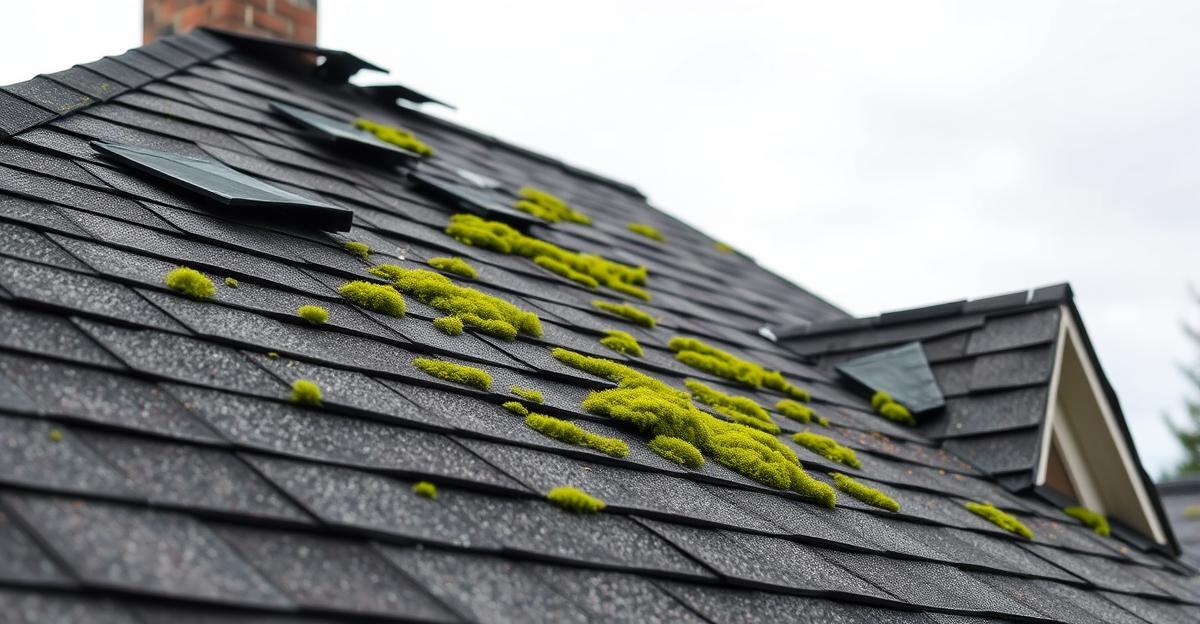
Biological growth pressure. Moss, lichen, and algae colonize commercial roofing surfaces — particularly modified bitumen and ballasted EPDM — more aggressively in the Pacific Northwest than in most of the country. Left untreated, biological growth retains moisture against the membrane surface and accelerates degradation.
Freeze-thaw cycling. Seattle winters involve repeated transitions through the 32°F threshold — not the sustained deep freezes of the Midwest, but enough thermal cycling to stress adhesive seams, aging membrane material, and poorly secured flashing over time.
Thermal inversion effects. Seattle's persistent cloud cover limits UV hardening that actually helps stabilize some roofing materials in sunnier climates. Paradoxically, the same condition that moderates temperature extremes also keeps membranes from curing fully in cold-adhesive applications.
An experienced commercial roofing contractor in Seattle accounts for these factors in system selection, installation sequence, and maintenance recommendations — not just in the sales pitch.
Understanding the 25% Rule
The 25% rule is one of the most commercially consequential provisions in roofing code, and one that property managers frequently encounter unexpectedly mid-project.
The rule comes from the International Energy Conservation Code (IECC): when the area being repaired or replaced on a commercial roof exceeds 25% of the total roof area, the project is classified as a re-roofing project that must bring the entire roof into compliance with current energy codes — including insulation R-values, air barrier requirements, and thermal performance standards.
Why this matters in Seattle:
- Adding insulation to meet current codes significantly increases project cost
- In Seattle and King County, SDCI uses the IECC threshold to determine permit type and inspection scope
- A planned repair project that crosses the 25% threshold can trigger a permit and engineering review requirement the owner didn't budget for
Practical guidance: Before authorizing any commercial roof repair that seems extensive, ask your contractor to calculate the affected area as a percentage of total roof. If you're approaching 25%, it may be financially smarter to budget for a full replacement (which you control) rather than trigger the threshold unexpectedly and face mandated upgrades on an emergency timeline.
Commercial Roofing Permits in Seattle & King County
Commercial roofing projects in Seattle require permits from the Seattle Department of Construction and Inspections (SDCI) for essentially all significant work. This is non-negotiable — no legitimate commercial contractor will suggest skipping the permit process.
What requires a commercial roofing permit in Seattle:
- Full roof replacements of any size
- Re-roofing that exceeds 25% of total roof area
- Any work involving structural modifications to the roof deck or framing
- Installation of new rooftop equipment curbs or penetrations
- Projects on buildings with occupied tenants typically require additional coordination
Permit timeline for commercial projects: Standard commercial roofing permits through SDCI typically take 3–8 weeks for straightforward projects, with more complex buildings or those requiring structural review taking 8–16 weeks or longer. Plan permit lead time into your project schedule — no competent contractor begins commercial roofing work before the permit is issued.
Washington State contractor licensing: All commercial roofing contractors in Washington State must hold an active contractor registration with Washington State Department of Labor & Industries. Request the registration number before signing any commercial contract, and verify active status on the L&I lookup tool.
For a full breakdown of what permits apply to various roofing project types in Seattle, see our Seattle roofing permit requirements guide.
Commercial Roofing Cost Guide: Seattle Benchmarks
<!-- GRAPHIC PLACEHOLDER: Commercial Roofing Systems Comparison Chart (cost/sqft, lifespan, best-use) — requested from design team, will be added once produced. -->
Commercial roof pricing in Seattle reflects our market's higher labor rates (15–25% above national averages), mandatory permitting costs, and the additional complexity that our climate demands in system specification. Here are current market benchmarks:
Cost by System Type (Installed, Seattle Market)
| System | Cost per Sq Ft | Typical Lifespan | Best Application |
|---|
| TPO (60-mil) | $8–$14 | 15–25 years | Flat/low-slope commercial |
| EPDM | $7–$12 | 20–30 years | Flat commercial, complex layouts |
| Modified Bitumen | $6–$10 | 15–20 years | High-traffic flat roofs |
| Built-Up Roofing | $5–$10 | 20–30 years | Heavy-duty commercial |
| Standing-Seam Metal | $14–$28 | 40–60+ years | Pitched commercial sections |
Additional Cost Factors
Tear-off and disposal: $1.50–$3.00 per square foot for existing system removal. Systems with multiple layers or ballasted gravel add cost.
Insulation upgrades: If the 25% rule triggers an energy code upgrade, new polyiso insulation adds $2–$5 per square foot depending on required R-value.
Permits and engineering: Commercial permit fees in Seattle typically run $500–$3,000+ depending on project valuation. Structural engineering review (when required) adds $1,500–$5,000+.
Rooftop equipment coordination: HVAC curbs, penetrations, and equipment access routes require careful sequencing — plan for additional labor time on equipment-dense commercial rooftops.
For residential or mixed-use cost context, see our roof replacement cost Seattle guide.
The Commercial Roofing Process: From Assessment to Completion
Step 1: Roof Assessment and Core Sampling
A proper commercial roof assessment goes beyond visual inspection. We evaluate membrane condition, seam integrity, flashing performance, drainage adequacy, and — critically — the condition of the insulation beneath the membrane. Moisture in commercial roof insulation is the hidden damage that visual assessment misses entirely. Core samples from multiple locations across the roof give us moisture content readings and allow us to determine how much insulation needs replacement before new membrane goes down.
Step 2: System Recommendation and Written Proposal
After assessment, you receive a written proposal with system options, line-item pricing, permit requirements, and timeline. For commercial clients, we include documentation of our contractor registration, insurance certificates, and manufacturer certifications. A commercial proposal should never be a one-line number — it should be a reference document you can submit to your board, your lender, or your insurance company.
Step 3: Permitting
We handle all permit filings. Commercial permit applications require project drawings, system specifications, and contractor registration documentation. We submit complete applications the first time to avoid SDCI revision cycles that add weeks to the timeline.
Step 4: Installation and Phasing
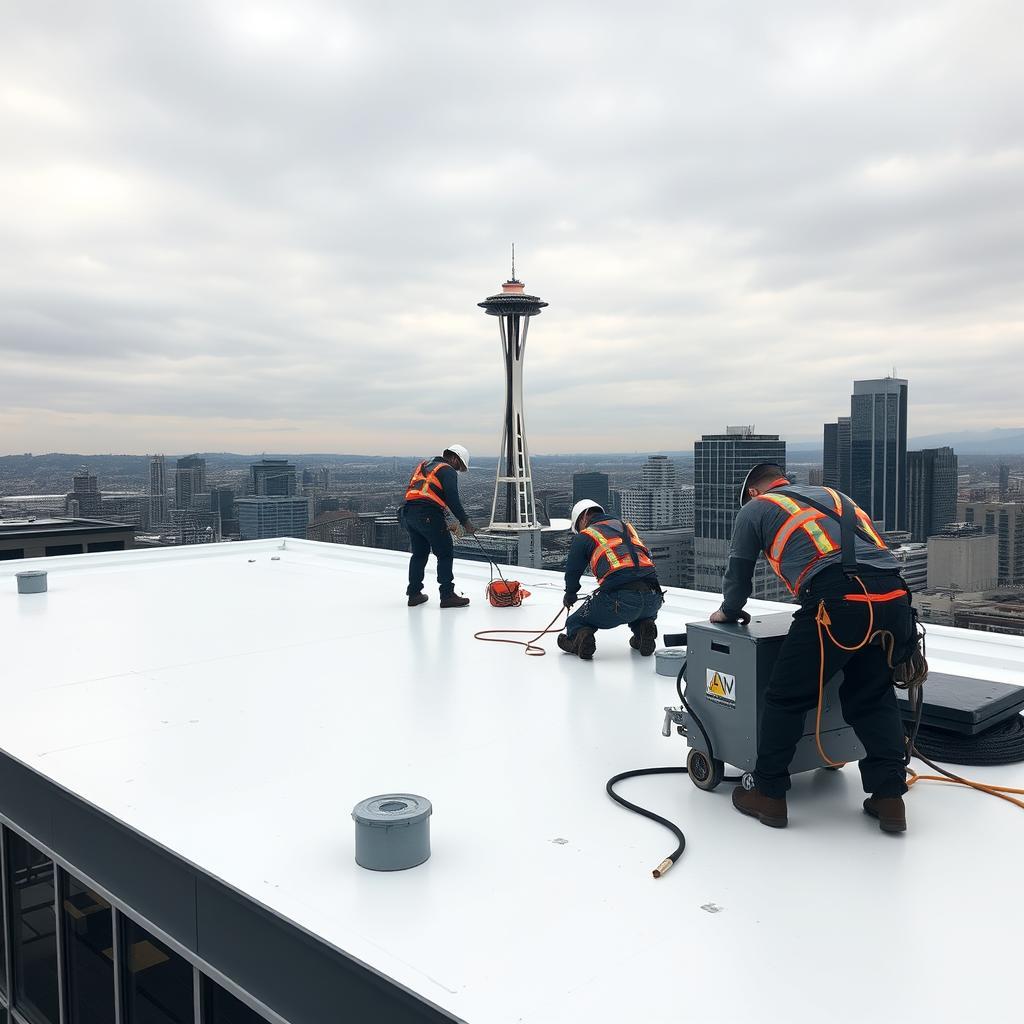
Commercial installation is sequenced to keep your building weathertight throughout the project. We plan section-by-section progression, communicate daily status to your property manager, and coordinate around occupied-hours restrictions. No section is left exposed to weather overnight.
Step 5: Inspection and Documentation
All permitted commercial projects receive SDCI inspection. We coordinate the inspection schedule and provide all documentation required. On completion, you receive: the closed permit, material warranty documentation from the manufacturer, and our workmanship warranty — all in writing.
Emergency Commercial Roofing Response
Active leaks in commercial buildings don't respect business hours. A membrane breach during a November Pacific storm can damage inventory, flooring, electrical systems, and tenant property simultaneously. Our emergency roofing service responds to commercial emergencies same-day across Greater Puget Sound — with temporary tarping and containment to stop the damage cascade while a permanent repair is planned.
Commercial property managers: save (253) 345-4607 as your emergency roofing contact. We maintain crew availability for commercial clients throughout the Puget Sound rain season.
Our Commercial Service Area — Greater Puget Sound
Seattle Roofing Co provides commercial roofing services across the greater Puget Sound region:
King County: Seattle, Bellevue, Kirkland, Redmond, Renton, Tukwila, SeaTac, Burien, Kent, Auburn, Federal Way, Issaquah, Sammamish, Mercer Island, Shoreline, Bothell, Kenmore, Woodinville
Pierce County: Tacoma, Lakewood, Puyallup, Bonney Lake, Sumner, Auburn South
Snohomish County: Everett, Lynnwood, Mountlake Terrace, Marysville, Mukilteo, Edmonds, Shoreline North
For large-scale regional commercial projects — multi-building portfolios, large warehouses, or institutional facilities — contact us directly to discuss project scope and scheduling.
Why Choose Seattle Roofing Co for Commercial Work
Washington State licensed and insured. Our contractor registration with Washington L&I is current and verifiable. We carry commercial general liability and workers' compensation as a standard — not an afterthought. Certificates available on request before any work begins.
Commercial roofing certifications. We maintain manufacturer certifications that qualify your project for extended warranty tiers not available through uncertified contractors. This directly protects your building's asset value.
Documented local experience. We've completed commercial roofing projects on warehouses, office buildings, retail centers, and multi-family properties across King, Pierce, and Snohomish Counties. Our knowledge of SDCI's commercial review process, local permit timelines, and Puget Sound weather planning isn't theoretical.
Transparent commercial pricing. Every commercial proposal is line-item detailed — materials, labor, permits, disposal, contingency. No vague totals. No change-order surprises from items that "weren't included."
Dedicated project communication. Commercial clients get a named project manager, not a call center. You'll know who to call when you have a question, and that person will know the details of your job.
Frequently Asked Questions
See the FAQ section below for answers to the most common commercial roofing questions from Seattle property owners and managers.
Ready to schedule a commercial roof assessment? Contact us → or call (253) 345-4607. We respond to commercial inquiries within one business day and can typically schedule an initial assessment within the same week for most King County locations.

 Roofing Tips