Quick Answer: Seattle Roofing Co provides expert roofing services throughout Bellevue and the greater Eastside — residential roof replacement, repair, emergency response, and commercial roofing for King County businesses. Licensed, certified, and local to the Puget Sound. Request a free Bellevue estimate → or call (253) 345-4607.
Bellevue has one of the most competitive real estate markets in the Pacific Northwest. Homes regularly trade at $1.5–$3 million and above in neighborhoods like Clyde Hill, Medina, and Somerset. In that market, a failing roof isn't just a maintenance issue — it's a negotiating liability in a transaction, a disclosure obligation, and a signal to neighbors, tenants, and prospective buyers about how the property is maintained.
The Eastside deserves a roofing company that understands it. Not a national chain that treats Bellevue as a zip code extension of their Seattle operation. A crew that knows Bellevue's Development Services permitting process, has experience on the steep-pitched Craftsman and contemporary homes common to Sammamish and Issaquah, and can respond quickly when an October windstorm takes out a ridge cap in Kirkland.
That's what Seattle Roofing Co delivers across the Eastside. This guide covers everything Bellevue homeowners and property managers need to know about roofing in the area — services, materials, costs, permits, and how to evaluate a contractor.
Roofing Services in Bellevue
Residential Roof Replacement
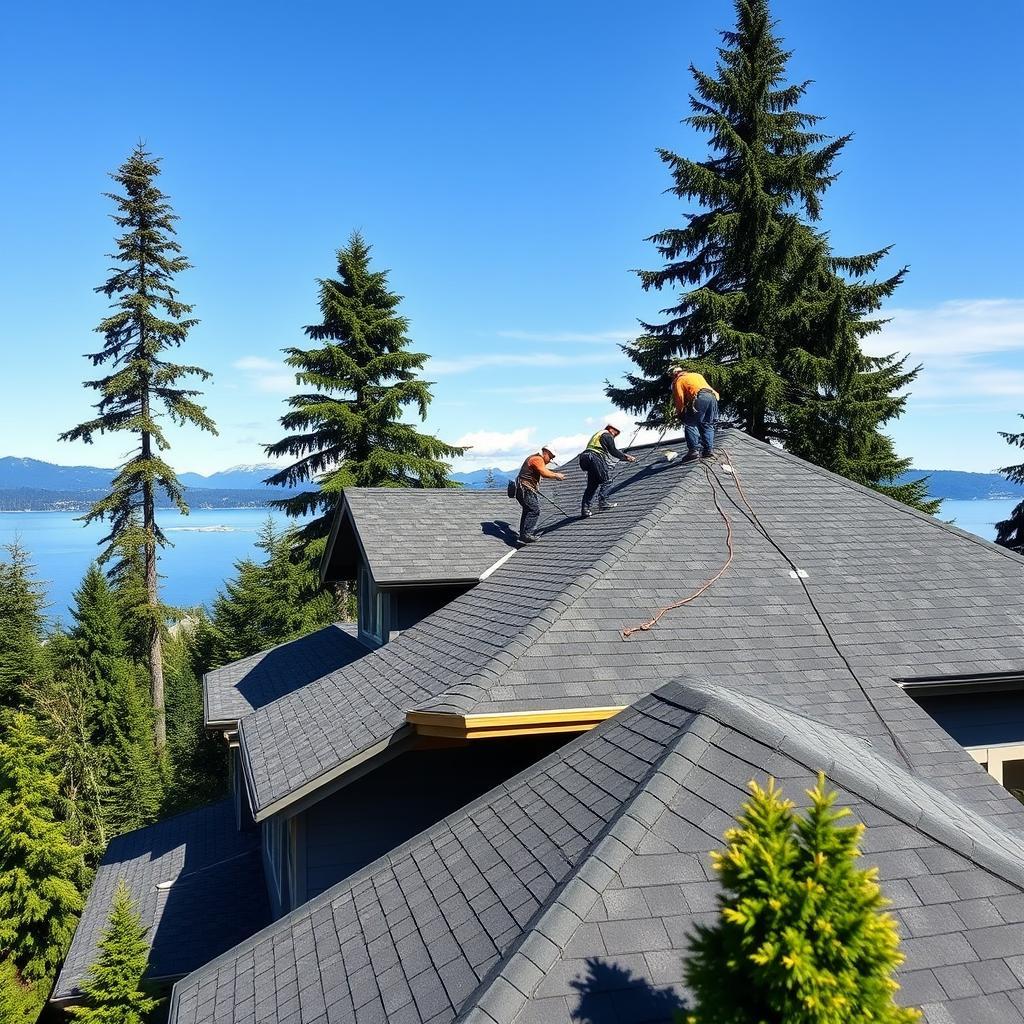
Roof replacement is the most significant roofing project most Bellevue homeowners undertake. A large share of the Eastside's residential housing stock was built between 1985 and 2005 — which means a substantial number of homes are now reaching or past the end of the original asphalt shingle's useful life. Architectural shingles from that era had rated lives of 25–30 years; in the Pacific Northwest's persistent moisture and moss environment, realistic performance runs closer to 18–22 years.
Signs your Bellevue home may be due for replacement:
- Shingles curling, cupping, or showing significant granule loss in the gutters
- Moss colonization across more than 20–30% of the roof surface
- Interior ceiling stains that appear after rain (even if dry between events)
- Roof age exceeding 20 years with no significant maintenance or repair history
- Missing shingles in multiple locations after wind events
- Daylight visible from the attic through the roof deck
A professional inspection gives you the honest assessment — surface symptoms don't always tell the full story, and some roofs that look rough have years of life left, while some that look presentable have failing underlayment or decking issues underneath.
Roof Repair in Bellevue
Not every roofing issue requires full replacement. Isolated failures — a pipe boot past its service life, a section of failed flashing around a chimney, storm damage to a small section of shingles — are often repaired cost-effectively without disturbing the rest of the roof.
The honest repair-versus-replace decision depends on:
- Roof age. A 12-year-old roof with isolated damage is a repair candidate. A 22-year-old roof with three problem areas and widespread granule loss is a replacement candidate.
- Scope of damage. Isolated point failures repair well. Systemic issues (cupping across all slopes, moss penetration throughout, repeated leak recurrence) don't.
- Repair cost relative to replacement. The general 30% rule: if repair approaches 30% of replacement cost, replacement is usually the better long-term investment.
When repair is the right answer, we provide it — not a replacement upsell. When replacement is genuinely the right answer, we'll show you exactly why.
Emergency Roof Repair — Bellevue and Eastside
Pacific Northwest wind events regularly exceed 40–50 mph on the Eastside during fall and winter. When a storm pulls flashing, removes ridge caps, or drives a tree branch into the roof deck, the leak that follows in the next rainstorm can damage ceilings, flooring, and contents within hours.
Our emergency response covers Bellevue and the full Eastside — same-day for active leaks and storm damage. We assess, tarp, and contain first, then schedule a permanent repair. For a full emergency response protocol, see our emergency roof repair guide. Save (253) 345-4607 for emergencies.
Commercial Roofing in Bellevue
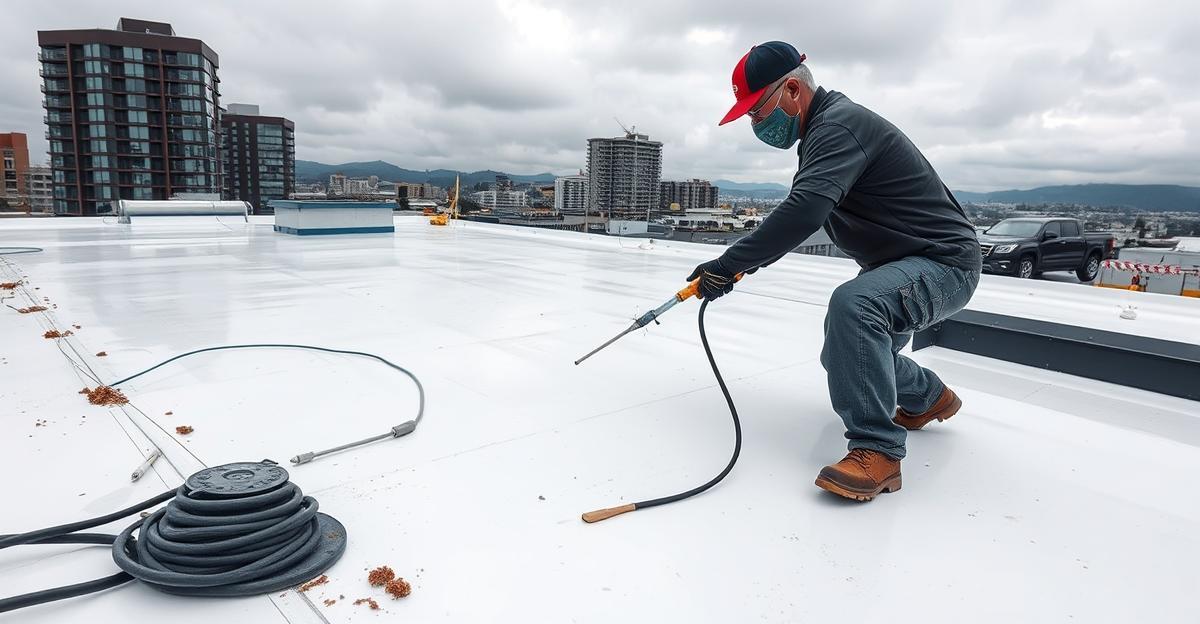
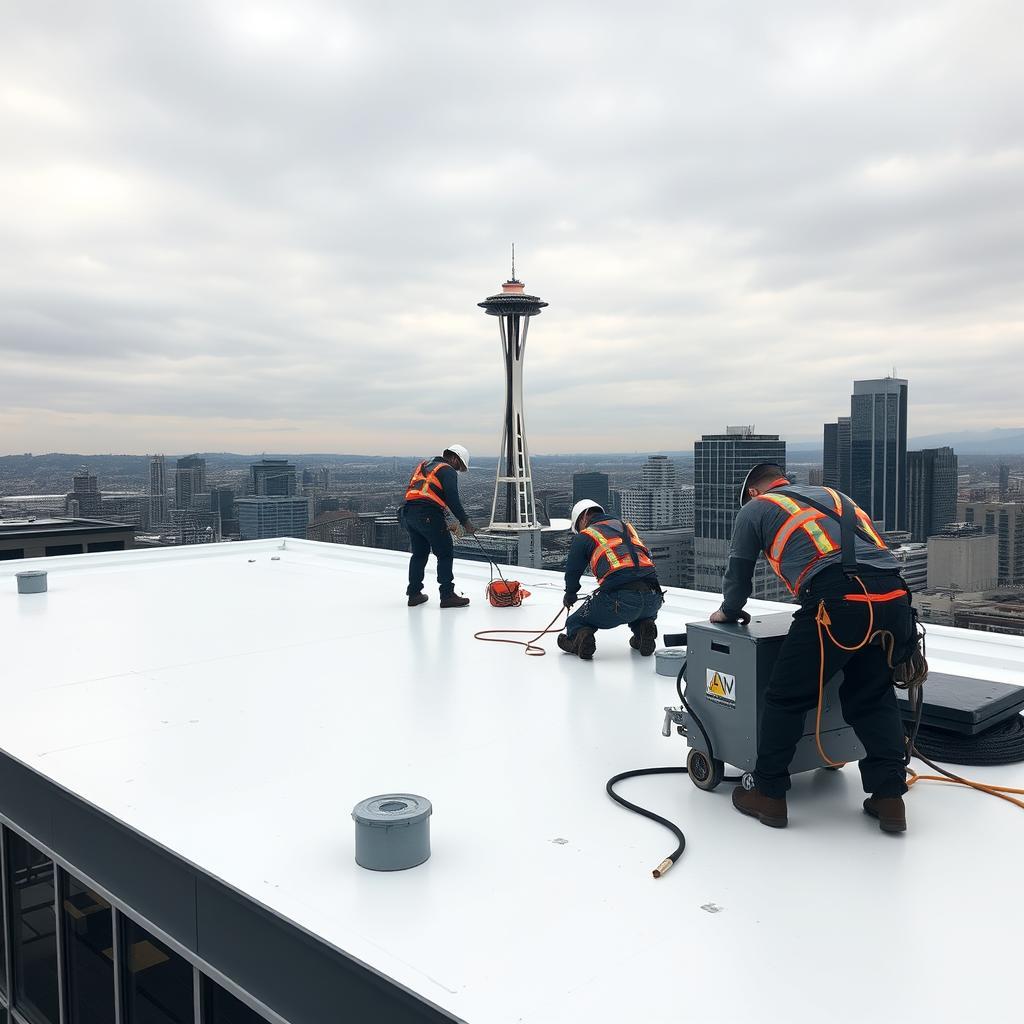
Bellevue has significant commercial building stock — office towers in the downtown core, tech campuses, retail centers, industrial facilities in Eastgate and Factoria, and mixed-use developments along the Spring District. Commercial flat roofing (TPO, EPDM, modified bitumen) on these structures requires different expertise, permitting, and project management than residential work.
Seattle Roofing Co serves commercial clients throughout Bellevue and the Eastside. For the full commercial roofing system overview and cost benchmarks, see our commercial roofing Seattle guide. Commercial inquiries: contact us directly with your building address and approximate roof area.
For commercial flat roof issues specifically, our flat roof repair guide covers the most common membrane failures and repair approaches.
Roofing Materials for Bellevue Homes
Architectural Asphalt Shingles — The Baseline Standard
Architectural (dimensional) asphalt shingles are the most common roofing material on Bellevue residential properties, and they remain the right choice for most standard re-roofing projects. The Pacific Northwest's climate makes some shingle specifications more important than others:
Algae-resistant shingles with copper or zinc granule treatments are strongly recommended in Bellevue's damp, shaded environment. Without algae resistance, asphalt shingles develop the dark streaking caused by Gloeocapsa magma algae within 3–7 years. The streaking itself doesn't cause structural damage, but it's aesthetically unacceptable on Bellevue properties and signals to buyers that the roof hasn't been properly specified.
Class 4 impact-resistant shingles are worth considering in Bellevue's hail exposure zone. While severe hail events are less common than in the Midwest, hail does occur in the Puget Sound region, and Class 4 rated shingles may qualify for a homeowners insurance premium reduction — check with your carrier.
Major manufacturers: GAF, Owens Corning, CertainTeed, and Malarkey all produce quality architectural shingles. We use manufacturer-certified products that qualify for extended warranty coverage beyond what uncertified contractors can offer.
Metal Roofing — The Long-Game Investment
Standing-seam metal roofing is the premium choice for Bellevue homeowners who plan to stay in the home for 20+ years and want a roofing system they'll never re-roof again. A properly installed Galvalume steel or painted aluminum standing-seam roof lasts 40–60 years in the Pacific Northwest — no moss, no granule loss, no re-roofing within any reasonable planning horizon.
Standing-seam is increasingly common in Bellevue's premium neighborhoods — Clyde Hill, West Bellevue, Somerset — where home values make the premium material investment rational and the clean architectural appearance complements modern and transitional home styles.
For full detail on metal roofing options, costs, and what to expect in the Pacific Northwest, see our metal roofing Seattle guide.
Installed cost in Bellevue: $18,000–$45,000+ for a typical single-family home depending on pitch complexity, square footage, and panel profile.
Cedar Shake and Synthetic Cedar
Cedar shake is traditional in older Bellevue neighborhoods — Lakemont, Enatai, Bridle Trails — where it was the dominant material through the 1970s and 1980s. Natural cedar has genuine advantages: excellent natural insulation, beautiful appearance, and good resistance to impact. Its challenges in Seattle's climate: moss colonization (requires regular chemical treatment), fire risk (Class B or lower without treatment), and higher maintenance requirements than synthetic alternatives.
Synthetic cedar products (DaVinci, EcoStar) replicate the appearance with Class A fire ratings, algae resistance, and 50-year warranties. For Bellevue homes in HOA communities with cedar shake requirements, synthetic cedar is often the approved substitute that satisfies appearance standards while meeting current fire code.
TPO and Flat Roof Systems for Bellevue Homes
Bellevue has a growing number of contemporary homes with flat or low-slope roof sections — modern architecture common in newer developments in the Spring District area, luxury remodels, and accessory dwelling units (ADUs). These sections require membrane roofing: TPO, EPDM, or modified bitumen.
See our TPO roofing Seattle guide for the full breakdown on flat roof membrane options, costs, and maintenance. TPO flat roof sections on residential properties typically run $6–$12 per square foot installed.
Roofing Cost in Bellevue, WA
Bellevue homeowners pay a modest premium over Seattle city averages for roofing services — demand for quality contractors is high on the Eastside, and the complexity of many Eastside homes (steeper pitches, multiple levels, skylights, dormers) adds labor time compared to simpler 1970s ranch-style homes.
Residential Roof Replacement Cost Benchmarks (Bellevue, 2026)
| Material | Average Home (2,000 sq ft roof) | Larger Home (3,000 sq ft+) |
|---|
| Architectural asphalt (standard) | $13,000–$19,000 | $18,000–$28,000 |
| Architectural asphalt (premium/Class 4) | $16,000–$22,000 | $22,000–$34,000 |
| Standing-seam metal | $26,000–$40,000 | $38,000–$60,000 |
| Synthetic cedar | $22,000–$35,000 | $32,000–$50,000 |
These ranges include tear-off, disposal, new underlayment, new drip edge, and all standard flashing. Homes with skylights, multiple chimneys, or significant dormers add cost. Permit fees from the City of Bellevue's Development Services typically add $300–$1,200 depending on project valuation.
For detailed cost context and a breakdown of what drives pricing, see our roof replacement cost Seattle guide.
How the Pacific Northwest Climate Affects Bellevue Roofs
Bellevue's weather is gentler than popular perception suggests — but it's persistently challenging for roofing materials. The National Weather Service records the greater Seattle-Bellevue metro receiving roughly 38–42 inches of precipitation annually across more than 150 days with measurable rainfall. That's not the torrential downpours of the Gulf Coast — it's a sustained, relentless moisture exposure that creates specific failure patterns on Eastside roofs.
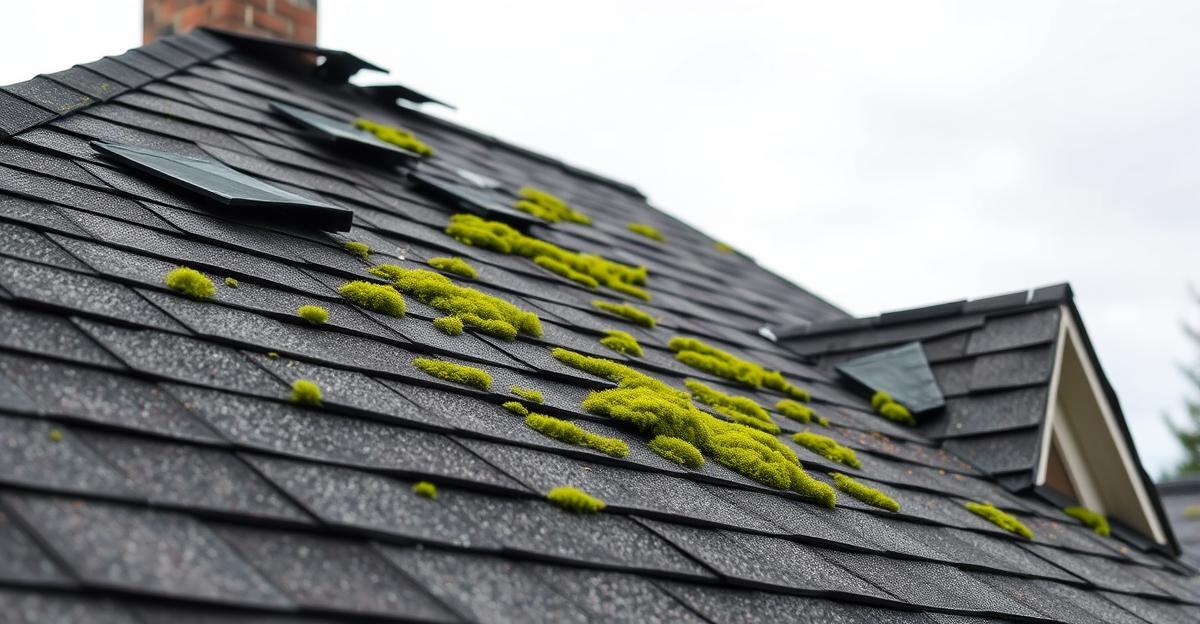
Moss and algae. The Eastside's tree canopy, combined with persistent cloud cover and damp conditions from October through May, creates ideal conditions for moss colonization on asphalt shingles. North-facing slopes and shaded sections accumulate moss mat faster than sun-exposed surfaces. Moss roots physically lift shingle edges, allowing water infiltration under what otherwise appears to be an intact surface. Algae (visible as dark streaking) follows, and lichen — the most damaging of the three — eventually establishes if moss is left untreated.
Algae-resistant shingles with copper or zinc granule formulations, available from manufacturers like GAF and Owens Corning, are the right specification for Bellevue. The EPA's Energy Star program also certifies reflective shingles that improve thermal performance while resisting biological growth.
Thermal cycling. Bellevue's winters involve frequent transitions through freezing and thawing — enough thermal cycling to stress sealant systems, flashing joints, and aging membrane material, even without the sustained hard freezes of colder climates. Properly installed flashing and fresh sealant at all roof penetrations is the primary defense.
Wind events. The Eastside's proximity to the Cascades and Puget Sound creates reliable wind events during fall transition months. Ridge caps and starter-course shingles are the most vulnerable points; a quality installation uses manufacturer-specified nail patterns and hand-sealing below 50°F to ensure bond integrity through the first rainy season.
Understanding these patterns informs which materials, specifications, and installation practices make sense on a Bellevue roof — and why a contractor unfamiliar with the Pacific Northwest climate is a liability, not a bargain.
Roofing Permits in Bellevue: What You Need to Know
Bellevue operates its own permitting system through the City of Bellevue Development Services Department — distinct from Seattle's SDCI. Homeowners replacing roofs in Bellevue work through Bellevue's permit portal at bellevuewa.gov.
What requires a permit in Bellevue:
- Full roof re-roofing (replacing more than one layer)
- Any structural work (deck replacement, rafter repair)
- New roof penetrations or structural changes to the roof assembly
- Some repair projects depending on scope — your contractor will advise
What typically does not require a permit:
- Minor repairs: replacing a few shingles, resealing flashing, replacing a pipe boot
- Cosmetic work that doesn't affect the roof's structural or weatherproofing performance
Your licensed contractor is responsible for pulling the permit — never a situation where you should do this yourself. Under Washington State law, the contractor must be registered with L&I and licensed to pull permits in the jurisdictions where they work.
Permit timelines in Bellevue are typically faster than Seattle: most standard residential re-roofing permits are issued within 1–3 weeks. Plan permit lead time into your project schedule, particularly if you're targeting a summer installation window.
For broader permit guidance covering Seattle and King County, see our Seattle roofing permit requirements guide.
How to Choose a Roofing Contractor in Bellevue
The Bellevue roofing market has a lot of contractors — some excellent, some not. After a significant windstorm, out-of-area contractors sometimes canvas Eastside neighborhoods looking for storm-damage work; this is a pattern the National Roofing Contractors Association (NRCA) refers to as "storm chasing" and it's a significant source of poor-quality work and unresolved warranty claims. Here's how to separate the legitimate local contractors from the rest.
Verify Washington State Contractor Registration
Every roofing contractor operating in Washington State must be registered with the Washington State Department of Labor & Industries. The online lookup tool lets you verify registration status, insurance, and any licensing history in under a minute. A contractor who isn't registered cannot legally pull a permit in Bellevue.
Ask for the contractor's registration number before they leave your property. Legitimate contractors will provide it without hesitation.
Require Insurance Certificates
Commercial general liability and workers' compensation are both non-negotiable. If a crew member is injured on your roof without workers' comp coverage, you may be held liable as the property owner. Ask for insurance certificates showing current coverage — not a statement that they're insured, the actual certificate.
Check for Manufacturer Certifications
GAF Master Elite and CertainTeed SELECT ShingleMaster certifications require factory-endorsed training, ongoing quality review, and a demonstrated local track record. These certifications matter because they unlock extended material warranties — 20+ year labor and material warranties on GAF products, for example — that aren't available through uncertified contractors. Fewer than 3% of roofing contractors hold these certifications.
Evaluate the Estimate
A written, line-item estimate is a minimum standard. "Replace roof — $15,000" is not a commercial roofing estimate — it's a number with no accountability. A proper estimate lists the specific products to be installed (manufacturer, product line, warranty class), the scope of work (tear-off, disposal, new underlayment, drip edge, flashing, pipe boots, permits), the payment schedule, and the workmanship warranty terms.
Be cautious of lowball bids that are significantly below market. In Bellevue's labor market, a bid 30%+ below competitive estimates almost always means a cut somewhere — cheaper materials, underpaid crew, skipped underlayment, no permit.
Ask for Local References
Ask for references from projects completed in Bellevue, Kirkland, or Redmond in the past 12–18 months. A contractor with a genuine local track record will be able to provide addresses you can drive by and homeowners who will take your call. A contractor who can only provide references from outside the region or from years ago should not be your first choice.
The Eastside Neighborhoods We Serve
Seattle Roofing Co provides roofing services to homeowners and businesses throughout the Eastside:
Bellevue neighborhoods: Downtown Bellevue, Clyde Hill, Medina, West Bellevue, Somerset, Factoria, Crossroads, Eastgate, Newport Hills, Lakemont, Phantom Lake, Wilburton, Bel-Red
Kirkland: Houghton, Juanita, Totem Lake, Finn Hill, Lakeview, Norkirk, Forbes Creek
Redmond: Overlake, Education Hill, Grass Lawn, Willows, Idylwood
Sammamish and Issaquah: Plateau communities, Klahanie, Grand Ridge, Talus, Issaquah Highlands
Other Eastside communities: Mercer Island, Kenmore, Woodinville, Duvall, Carnation, Maple Valley, Renton Highlands, Newcastle, Snoqualmie, North Bend
Scheduling and response time vary by location — King County communities are our primary service area, with same-week scheduling available for most Eastside locations. Contact us with your address for specific availability.
What to Expect When You Work With Seattle Roofing Co in Bellevue
Scheduling. We schedule residential inspections throughout the week, with weekend appointments available for homeowners who can't take weekday time off. Inspection-to-estimate typically happens within 48–72 hours. From signed contract to installation, most Bellevue projects schedule within 2–4 weeks during the busy season (May–September).
Communication. You'll have a named project manager as your point of contact throughout. No call centers, no relay messaging through an office. When you have a question about your project's status, you call the person who knows the answer.
Cleanup. Every project ends with a magnetic sweep of the driveway and surrounding yard for roofing fasteners, removal of all debris and packaging, and a walkthrough confirmation that the work area is clear. We've completed enough projects in Bellevue's HOA communities to know that visible debris in the driveway is not acceptable — it shouldn't be on any project.
Warranty documentation. At project close, you receive written copies of the material manufacturer warranty, our workmanship warranty, and the closed permit documentation. Everything in writing, no verbal commitments.
Ready to schedule your Bellevue roof inspection? Contact Seattle Roofing Co → or call (253) 345-4607. We respond to Bellevue and Eastside inquiries within one business day and can typically schedule an inspection the same week.

 Roofing Tips