
 Roofing Tips
15 min read
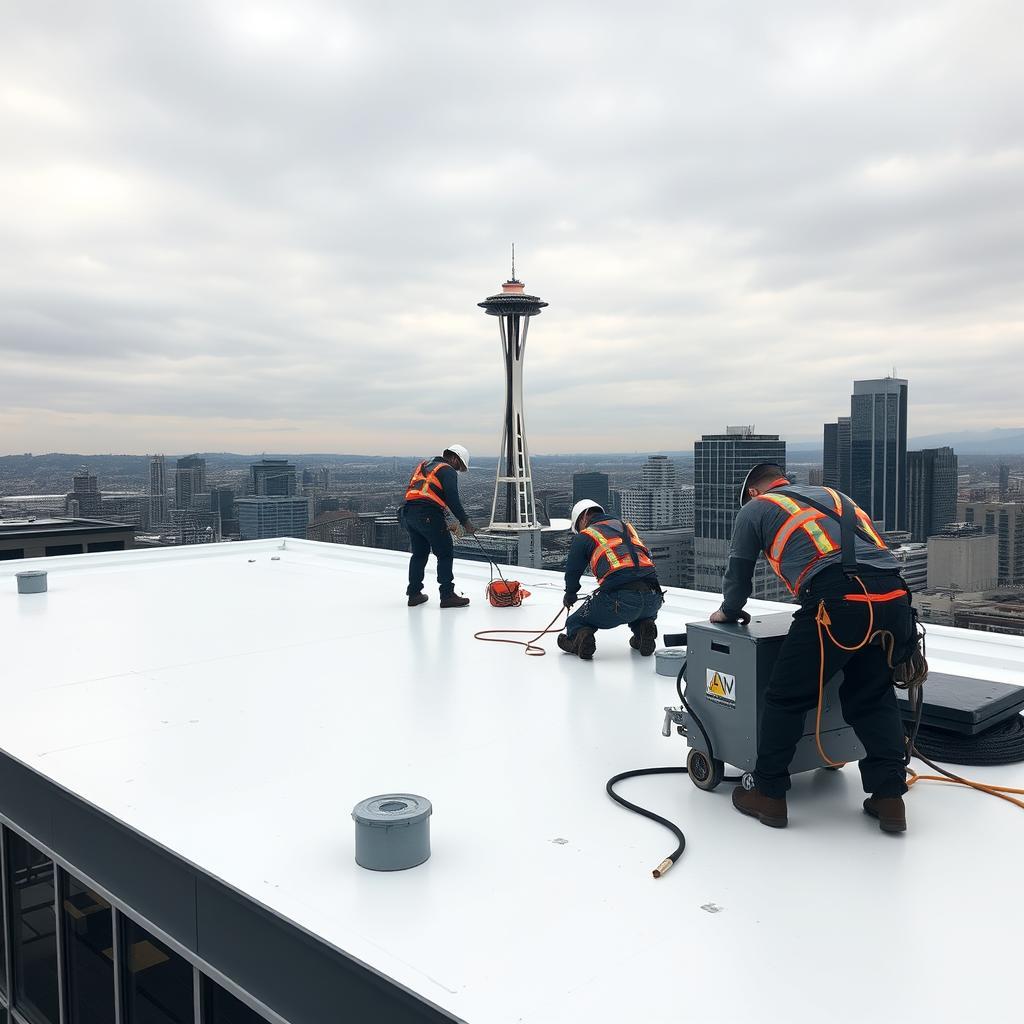
Commercial Roofing Services in Seattle & Beyond
Expert commercial roofing for Seattle, Bellevue, Tacoma & the Puget Sound. TPO, EPDM, metal, flat roof repair and replacement — licensed, insured, certified.
Read More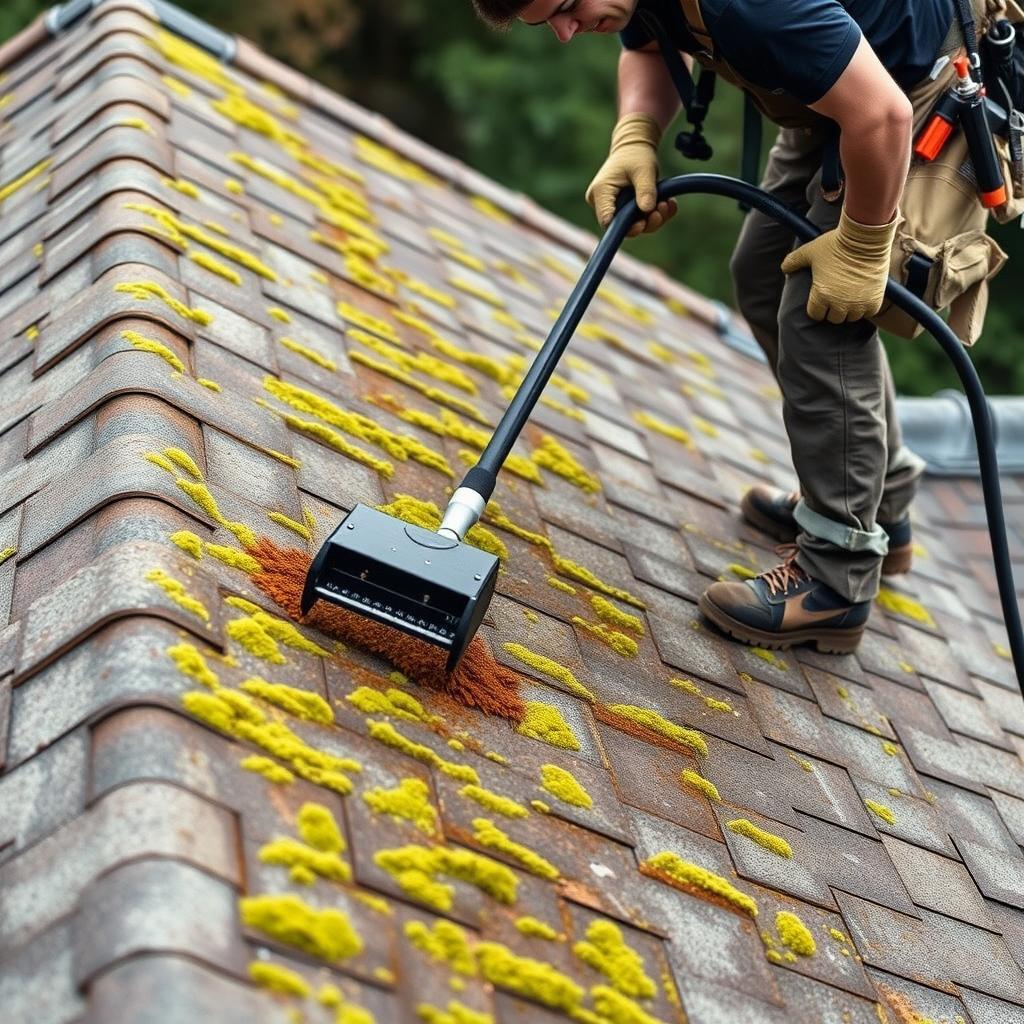
Quick Answer: Professional roof moss removal in Seattle costs $300–$800 for most homes in 2026. The correct removal method is soft-wash treatment — low-pressure water and biodegradable chemistry that kills moss without damaging shingles or voiding warranties. Never pressure wash. After removal, zinc strip installation ($200–$400) prevents regrowth for 10–15 years and is the highest-ROI moss prevention Seattle homeowners can make.
If you've spotted green or gray-green patches spreading across your roof, you're not alone. Moss growth on Seattle rooftops isn't a rare problem — it's nearly universal. According to Washington State University Extension research on Pacific Northwest moss, Pacific Northwest Bryophyta species establish on untreated asphalt surfaces within a single wet season, and Seattle's combination of 150+ annual rainy days, chronic shade from Douglas firs, and mild year-round temperatures creates conditions that rival anywhere in North America for aggressive moss colonization.
The question most Seattle homeowners are really asking isn't whether moss is a problem — it's: what do I actually do about it? Which removal method is safe? Which will void my warranty? Is DIY realistic? What does professional removal actually cost? How do I make sure it doesn't come back in 18 months?
This guide gives you direct answers to every one of those questions, based on what actually works on Pacific Northwest roofs in Seattle's specific climate. We'll cover the removal process in detail, break down professional versus DIY tradeoffs, provide current 2026 pricing, and show you exactly how to prevent regrowth so this guide stays closed for years.
Understanding why Seattle roofs develop moss at such an accelerated rate helps you make better decisions about timing, frequency, and which prevention strategies are actually worth paying for.
The National Weather Service Seattle forecast office records Seattle's annual precipitation at 37.49 inches spread across 150 to 160 rainy days — but the pattern matters as much as the volume. Unlike cities that receive their rain in concentrated storms with dry recovery periods in between, Seattle's precipitation arrives as near-continuous drizzle from October through April. This means Seattle roofs spend months at a time damp, rarely drying completely between rain events.
Combine persistent moisture with Seattle's average winter temperature of 39°F — cool enough to prevent moss die-off but warm enough for year-round growth — and annual relative humidity averaging 73%, and you have the perfect environment for roof moss. Pacific Northwest Bryophyta species have adapted over thousands of years to exactly these conditions. They don't need summer heat to thrive; they need reliable moisture, shade, and organic debris to establish — and Seattle provides all three in abundance.
The shade factor compounds everything. Seattle's urban tree canopy — predominantly Douglas fir, western red cedar, and big-leaf maple — shades large sections of residential roofing from direct sunlight for much of the year. North-facing roof sections can go weeks without direct sun during Seattle winters. Oregon State University Extension research on Pacific Northwest moss management confirms that shaded sections develop moss 3–5× faster than sun-exposed equivalents under identical moisture conditions.
Then there's organic debris: needles, cones, and leaf fragments that accumulate in valleys and low-slope sections. Even a thin layer of decomposing organic material holds enough moisture to sustain a moss colony through a dry week in August — the only reliably dry stretch in Seattle's year.
The practical result: a new, untreated asphalt roof in Seattle can show visible moss colonization within 18–36 months of installation on north-facing sections under any tree cover at all. Homeowners who act on the first signs of growth spend $300–$500. Homeowners who wait until the problem is advanced spend $3,000–$15,000.
Roof moss removal is not about aesthetics. The stakes are structural, financial, and warranty-related — and they compound over every Seattle wet season.
Moss does not simply sit on top of your shingles. Its rhizoids — the hair-like root structures that anchor moss colonies — penetrate beneath overlapping shingle edges, gradually wedging those edges upward. On asphalt shingles, the adhesive strip that bonds each course to the one below breaks down under this constant mechanical pressure. Once that seal fails, Seattle's wind-driven rain exploits the gap.
In horizontal Pacific Northwest rain events, water is driven beneath shingles at a 45-degree angle even without vertical pooling. A moss colony that has lifted just 3–5mm of shingle edge creates a water entry point that's invisible from the ground but produces active leaks in attic insulation or the ceiling below.
A mature moss colony holds up to 20 times its own weight in water — functioning as a saturated sponge pressed against your roof around the clock. That continuous moisture contact eventually works through the shingle surface to the OSB or plywood decking beneath. Wet decking in Seattle's climate rarely dries out between rain events. It softens. Then it rots.
The National Roofing Contractors Association cites moisture infiltration through compromised shingles as the leading cause of premature structural deck failure in high-humidity climates. Deck replacement in Seattle ranges from $3 to $6 per square foot — typically $3,000 to $10,000 depending on how far the rot has spread. When rot reaches framing members, structural repairs can push the total to $25,000 or more.
As moss grows across the shingle surface, its physical expansion strips and displaces the granule coating that protects asphalt shingles from UV, rain impact, and temperature fluctuations. Asphalt shingles are engineered to shed granules slowly over their rated lifespan; moss accelerates that process dramatically. A roof with active moss across 30% of its surface may have lost 5–10 years of effective lifespan even before any structural damage is visible from the ground.
Both GAF and IKO — whose products The Seattle Roofing Company installs as a certified contractor for both manufacturers — explicitly exclude moss-damaged roofs from their manufacturer warranties. A 30-year shingle whose warranty is voided by untreated moss provides no manufacturer protection after year 8 or 10. The Washington State Office of the Insurance Commissioner notes that insurance carriers increasingly deny claims where moss is documented as a contributing factor, citing maintenance neglect — meaning that when you finally do file a storm damage claim, the adjuster documents your moss, and your claim is denied.
The financial cascade is well-documented and consistent across Seattle contractors:
| Timeline Without Treatment | What's Happening | Cost to Address |
|---|---|---|
| Year 1–2 | Moss establishing, minimal lifting | $300–$500 soft-wash |
| Year 3–5 | Granule loss, adhesive seal failure | $1,500–$3,000 repair |
| Year 5–8 | Active leaks, deck moisture, mold risk | $3,000–$8,000 repair |
| Year 8–12 | Structural rot, multiple failure points | $5,000–$20,000 |
| Year 12+ | Full replacement required early | $12,000–$35,000 |
For a deeper look at the full damage mechanism and long-term cost comparison, our guide on moss on Seattle roofs: prevention and treatment covers each stage in detail.
Before deciding between DIY and professional removal, assess your current situation accurately. These indicators, scaled by urgency, tell you what level of response is appropriate.
Act within the next 30 days:
Call a professional today:
Indirect signs visible from the ground:
If you're seeing any second-tier warning signs, a professional inspection before removal is warranted. Our roof inspection service documents current condition with photos and identifies any structural issues that removal will expose — so a $3,000 deck repair scope isn't a surprise mid-project.
Both approaches work under the right conditions. The choice depends on your roof's current state, pitch, coverage extent, and what you're comfortable with safely.
DIY moss removal is reasonable when:
The most effective DIY approach involves applying a registered moss-killing product — zinc sulfate, iron sulfate, or a formulation like Wet & Forget Outdoor Concentrate — from a ladder positioned against the wall (not on the roof itself). Applied in October before the fall rains arrive, these products kill existing moss within 4–12 weeks and are distributed across the roof surface naturally by rainfall through winter. The Washington State Department of Agriculture pesticide registration database lists Washington-approved roof-use products — always verify state labeling compliance before purchasing any moss treatment.
Total DIY cost: $15–$80 per application in materials. Time: 30–90 minutes.
Professional moss removal is the right call when:
The professional approach uses soft-wash systems: low-pressure water delivery (typically below 100 PSI — compared to 1,500–3,000 PSI for a standard pressure washer) combined with a biodegradable moss-killing surfactant. Soft-wash removes both living and dead moss without granule stripping or high-pressure water infiltration beneath shingles — the key distinction that protects both your shingles and your manufacturer warranty.
| Factor | DIY Chemical Treatment | Professional Soft-Wash |
|---|---|---|
| Appropriate coverage threshold | Up to 15% | Any coverage level |
| Cost | $15–$80 | $300–$800 |
| Physical removal | No (natural rinse-off over weeks) | Yes (immediate) |
| Roof access required | No | Yes |
| Concurrent shingle inspection | No | Yes (typically) |
| Manufacturer warranty preserved | Yes (if correct product) | Yes |
| Zinc strip option | Separate trip required | Can bundle same visit |
Get a Free Estimate from Seattle's Top-Rated Roofers — Request your free quote → or call (253) 345-4607. We serve King, Pierce & Snohomish Counties. No obligation.
Understanding what professional removal actually involves helps you evaluate contractor proposals accurately and know what to expect on the day of service.
A qualified contractor starts with a thorough assessment before any equipment reaches the roof surface:
A contractor who bypasses assessment and immediately begins mixing chemicals has skipped the step that determines whether the job is $400 or $4,000. That's a red flag.
Moss-killing surfactants are effective chemicals, and protecting your landscaping from treatment runoff is both good practice and consistent with environmental requirements. Professional preparation includes:
King County Environmental Services notes that runoff from roof cleaning operations can affect local stormwater quality. Professional contractors use biodegradable, phosphate-free formulations specifically engineered to biodegrade before reaching waterways — confirm this with any contractor you hire.
The soft-wash system delivers moss-killing solution at pressures well below the threshold that damages shingles or strips granules. Solution is applied from the ridge downward, working with gravity rather than against shingle orientation.
Technical details of correct soft-wash technique:
GAF's published roofing care guidelines explicitly identify soft-wash cleaning as the only approved maintenance cleaning method for preserving granule integrity and maintaining warranty compliance during moss removal. Pressure washing is specifically prohibited.
On roofs with thick, established colonies — growth that's been accumulating for 5+ years — soft-wash alone may leave dense mats of dead material that take several weeks to rinse away naturally. Complete professional removal includes gentle physical clearing:
The goal is not a perfectly bare shingle surface — which would require abrasive action that damages granule coating — but the removal of moss colonies thick enough to retain significant moisture after treatment.
Professional removal creates the ideal conditions for zinc or copper prevention strip installation, for three reasons: the crew is already on the roof with safety equipment staged; the shingle surface is clean, giving strips direct contact for maximum ion transfer; and fresh installation documents the maintenance work for warranty compliance records.
Zinc strips run $200–$400 installed on a standard Seattle home. Their mechanism is elegant and passive: as rain flows over the metal strip at the ridge, it dissolves trace zinc ions that create a chemically inhospitable environment for moss spore establishment in the 10–15 feet below each strip. Washington State University Extension research confirms 80–95% reduction in moss establishment in treated zones compared to untreated equivalents on identical Pacific Northwest roofs.
At $15–$40 amortized cost per year over the strips' 10–15 year lifespan, zinc strip installation is the single highest-ROI moss prevention available to Seattle homeowners.
A complete professional moss removal ends with written documentation:
This documentation supports manufacturer warranty maintenance requirements and, if damage is ever discovered, establishes your record of responsible upkeep.
For light coverage on accessible low-pitch roofs, a homeowner-applied chemical treatment is effective and avoids the cost of professional service. Here is the safe approach.
Chemical application from ground or ladder level is the recommended DIY method for most Seattle homeowners:
Pressure washing destroys shingles and warranties. One session with a standard 1,500 PSI pressure washer can strip 30–50% of remaining granule coating, drive water beneath shingle edges, and void all manufacturer warranties permanently — for damage that typically costs $2,000–$15,000 to repair, compared to the $300–$800 professional soft-wash that would have achieved the same result without damage.
Walking on a wet roof is both a serious fall hazard and a source of shingle damage. Asphalt shingles are brittle when cold and damp. Foot traffic crushes granules and cracks shingle tabs in patterns that require professional roof repair to address correctly.
Bleach or chlorine solutions are not approved for roof use under Washington State pesticide labeling regulations, degrade asphalt polymers, and produce runoff that damages landscaping and contaminates stormwater.
Understanding the cost components helps you evaluate contractor proposals accurately — and avoid being undersold into substandard work or oversold into unnecessary services.
| Service | Typical 2026 Cost | Notes |
|---|---|---|
| Light soft-wash (under 2,000 sq ft, moderate coverage) | $300–$500 | Single-story, accessible, under 6:12 pitch |
| Standard soft-wash (2,000–3,000 sq ft, full coverage) | $500–$800 | Typical Seattle single-family home |
| Heavy coverage + physical removal (thick established moss) | $700–$1,200 | Manual clearing of dense colonies |
| Zinc strip installation (ridge only) | $200–$400 | Added to removal visit |
| Full treatment + zinc strips (most common package) | $600–$1,200 | Best long-term value |
| Annual maintenance program (treatment + inspection) | $400–$700/year | Most cost-effective for high-shade homes |
| Steep pitch premium (above 8:12) | +25–50% | Safety equipment and slower pace |
| Emergency or same-week scheduling | +15–25% | Short-notice premium |
These ranges reflect King, Pierce, and Snohomish County market rates from licensed, insured roofing contractors in 2026. Quotes significantly below $300 for any physical roof access work should prompt direct questions about what's excluded and whether the contractor holds a valid Washington State L&I license.
Roof size is the primary driver. A 1,200 sq ft single-story home in Ballard costs significantly less than a 2,800 sq ft two-story in Bellevue, even with identical moss conditions.
Roof pitch is the secondary driver. Steep roofs (above 8:12) require safety harnesses, roof anchors, and a slower working pace. These costs are legitimate and real — any contractor quoting steep-pitch work without a pitch premium is cutting safety corners, not passing savings to you.
Moss severity and age: Fresh moss (under 2 years old) is relatively quick to treat. Established thick colonies with deeply embedded rhizoids in the granule matrix require additional dwell time and often multiple treatment passes to achieve complete kill.
Tree canopy density: Homes under heavy Douglas fir or western red cedar canopy will have faster regrowth and may benefit from more frequent maintenance scheduling (annually rather than every 2 years), which some contractors offer at a discounted program rate.
Bundled services: Combining moss removal with a concurrent roof inspection saves the mobilization cost of a separate visit — typically $150–$250 additional for the inspection component when scheduled together. If your roof is due for an inspection anyway, bundling is almost always worth it.
| Item | Cost |
|---|---|
| Wet & Forget Outdoor Concentrate (1 gallon) | $30–$40 |
| Zinc sulfate granules (20 lb bag) | $20–$30 |
| Garden pump sprayer | $20–$40 |
| Non-slip shoes + safety harness (one-time, for ladder work) | $90–$230 |
| First-year total | $160–$340 |
| Annual ongoing (products only, after initial purchase) | $50–$80 |
DIY treatment works for light coverage on accessible roofs. The tradeoffs: no physical removal (4–12 week wait for results), no concurrent shingle inspection, and no zinc strip installation unless you're comfortable on a dry roof in summer conditions.
Moss removal without a prevention strategy is a temporary fix. Seattle's continuous moss pressure means untreated roof surfaces will recolonize within 18–36 months under any significant tree canopy. A two-layer prevention approach extends removal results dramatically.
Metal strips at the ridge provide passive, ongoing prevention every time it rains — requiring no annual attention once installed. The economics are compelling:
Zinc strips pay for themselves within 2–4 years and continue working for 10–15 years. Copper strips ($400–$800 installed) last 20–30+ years and provide 90–95% moss reduction versus zinc's 80–90%. For homeowners planning to be in their home long-term, copper strips are the mathematically superior investment. For everyone else, zinc provides excellent performance at lower upfront cost.
Even with strips installed, an annual October application of zinc sulfate or iron sulfate granules provides coverage for sections beyond the ridge strip's 15-foot effective range — particularly valuable on homes with long roof slopes, multiple ridge lines, or complex geometry where single-strip coverage leaves gaps.
The combination of strips plus annual fall product application keeps most Seattle roofs virtually moss-free between professional cleanings every 2–3 years instead of annually. For homes under heavy tree canopy, this approach is the difference between a $400/year and a $700/year maintenance budget — while delivering better results than either approach used alone.
For a complete year-round prevention calendar tailored to Seattle's seasons — spring inspection, summer physical work, fall chemical treatment, and winter monitoring — see our full guide on how to maintain your roof in Seattle.
Moss removal services attract a wide range of operators — from fully licensed roofing contractors using professional soft-wash equipment to unlicensed pressure-washing companies that cause more damage than the moss did. Here is how to tell them apart before anyone gets on your roof.
Any contractor performing physical roof access work in Washington State must hold a valid registration with the Washington State Department of Labor & Industries. The L&I contractor lookup tool (available at lni.wa.gov) confirms active status, bond amount, insurance on file, and any complaint history — a free check that takes two minutes. Unlicensed moss removal operators have no bond, no workers' compensation, and no legal accountability if their work damages your shingles or an uninsured worker is injured on your property.
Ask for the license number in your first communication. Any hesitation or claim that "licensing doesn't apply to cleaning services" is either uninformed or dishonest — roof access in Washington requires a contractor registration regardless of the work type.
The single most important screening question: "Do you use pressure washing or soft-wash for moss removal?"
If the answer is pressure washing — or if they claim pressure washing is safe "when done carefully" at lower pressure — end the conversation and move to the next contractor. There is no pressure level at which pressure washing is safe for asphalt shingles. The physics of granule adhesion and shingle edge sealant chemistry don't change based on operator skill. Only soft-wash or chemical-only dry application methods are compliant with shingle manufacturer warranty requirements.
Request a Certificate of Insurance showing:
Without workers' compensation, an injured crew member's claim can fall on your homeowner's insurance. This is not a formality — it is the legal structure that determines financial responsibility when something goes wrong. The BBB's guidance on hiring roofing and exterior contractors consistently identifies workers' compensation verification as one of the two most important consumer protections before any work begins.
Any professional estimate should specify: the treatment formulation to be applied, application method (soft-wash vs. chemical-only), what physical removal is included, whether zinc strip installation is included or optional, and the service warranty duration against visible regrowth (typically 1–2 years). A verbal estimate is unenforceable and protects neither party.
For the complete contractor vetting process applicable to any roofing work in Seattle — from license verification to contract review to red flags that signal walk away — see our detailed guide on how to choose a roofing contractor in Seattle.
Timing your moss removal affects both the treatment's effectiveness and what you'll pay. Seattle's seasons create distinct windows with different advantages.
June through August is the ideal window for professional physical roof access:
April through May is the second-best window — weather is reasonable, contractor backlogs are shorter than peak summer, and treatment is applied before the most active growing phase.
September through November works for chemical-only applications and is the best window for fall prevention product applications, but physical roof access becomes increasingly weather-dependent and expensive to schedule reliably.
December through February is not ideal for physical work but not impossible for urgent situations. Emergency treatment for severe coverage or active moisture infiltration from moss-related damage can be scheduled any time of year.
October is the single highest-impact DIY timing: apply granular or liquid moss killer before the fall rains begin, and autumn precipitation distributes it across the full roof surface while killing moss at its most active growth stage. If you do only one moss management action per year, this is the one to do.
Combining a professional service visit in summer with a homeowner DIY application in October delivers the best outcome at the lowest annual cost — physical removal when conditions are safe, chemical prevention when rain makes it most effective.
Moss frequently conceals the shingle and deck damage it has been causing beneath its surface. When professional removal uncovers a heavily mossy section, be prepared for the possibility of finding:
These discoveries are not contractor upsells — they are the damage the moss has been actively causing while appearing cosmetically green from the driveway. Addressing them at the time of moss removal is always less expensive than discovering them through a ceiling stain in February. Our roof repair service handles all damage identified during or after moss removal, including same-day emergency response for active leaks uncovered during the removal process.
For a complete breakdown of what repairs found during moss removal typically cost in the Seattle market — shingle replacement, flashing repair, deck patching — our roof repair cost guide covers current 2026 pricing for every common repair type, with guidance on when repair makes sense versus a full replacement evaluation.
Professional removal costs $300–$800 for most Seattle homes in 2026. Light soft-wash treatment on accessible roofs under 2,000 sq ft runs $300–$500. Standard treatment on a typical 2,000–3,000 sq ft home with moderate coverage is $500–$800. Adding zinc strip installation for long-term prevention brings the typical combined package to $600–$1,200. Steep-pitch roofs above 8:12 carry a 25–50% premium. The NRCA classifies moss removal as standard preventative maintenance — a cost that, when paid consistently, prevents the $12,000–$35,000 premature replacement it would otherwise trigger.
No — and the difference is significant for your shingles and warranty. Pressure washing operates at 1,500–3,000 PSI, which strips granules mechanically and forces water beneath shingles. Soft-wash operates below 100 PSI and relies on chemical action to kill moss rather than hydraulic force to blast it off. All major shingle manufacturers — GAF and IKO included — approve soft-wash as the only compliant maintenance cleaning method. If a contractor lists pressure washing as an option, that is a disqualifying red flag.
Yes — bundling is almost always cost-effective. The most common combinations are: moss removal + roof inspection ($150–$250 additional), removal + zinc strip installation (frequently offered as a single $600–$1,200 package), and removal + gutter cleaning ($100–$200 additional). If your roof is due for a scheduled inspection, combining services saves a separate mobilization fee and gives you a complete picture of your roof's health in a single visit.
Verify their Washington State L&I license before the first meeting — it's a two-minute online check at lni.wa.gov. Ask directly whether they use soft-wash or pressure washing. Request a Certificate of Insurance showing active general liability and workers' compensation. Require a written estimate with the treatment method, materials, and service warranty specified before any work is scheduled.
This is common on roofs with established moss coverage, and it's exactly why a thorough post-removal inspection matters. Minor shingle lifting or cracking can often be repaired at a fraction of what a new section costs. Significant granule loss or soft decking in multiple sections may shift the math toward a replacement evaluation. A written inspection report from the removal contractor documents what was found, giving you a clear, photo-documented scope to get competing repair estimates rather than making decisions under pressure on the day of discovery.
Roof moss removal is one of the most straightforward ways Seattle homeowners protect their most significant investment. The cost of action — $300–$800 for professional soft-wash, $50–$150 for DIY chemical treatment — is fixed and small. The cost of inaction compounds through every wet season until it's unavoidable and expensive.
If your roof shows any visible moss — even light coverage on a north-facing slope or in a valley — now is the time to act. The best outcome: a professional soft-wash treatment followed immediately by zinc strip installation, with an annual fall product application to maintain the results. That combination keeps most Seattle roofs moss-free for 2–3 years between professional visits, compared to the annual professional cleaning an untreated roof eventually requires.
If you want to understand your roof's full condition before committing to any service, our $249 roof inspection provides a complete written report with drone photos, shingle condition assessment, and prioritized recommendations — including an honest evaluation of whether any moss-related damage needs repair before winter.
The Seattle Roofing Company provides professional soft-wash moss removal, zinc strip installation, and post-removal repair across Seattle, Bellevue, Renton, Kirkland, Redmond, Tacoma, and all of King, Pierce, and Snohomish County. Our Washington State L&I license SEATTSR761Q5 is active and verifiable at lni.wa.gov, we carry GAF and IKO manufacturer certifications, and every service is backed by our Directorii Elite $250,000 workmanship guarantee.
[Request a free estimate](/contact) for professional moss removal and zinc strip installation — or [schedule a $249 roof inspection](/contact) to document your roof's current condition before the next Seattle rainy season arrives.
Reliable. Durable. Built for Northwest Weather.
Ready to Get Your Roof Moss-Free? Our team serves 50+ communities across the Greater Seattle area. Schedule your free estimate → or call (253) 345-4607. GAF Certified · IKO ROOFPRO · Directorii Elite · WA L&I Licensed & Insured.
Rory Knight
Rory Knight is the owner of The Seattle Roofing Company, a licensed roofing contractor serving the Greater Seattle area.
Licensed & bonded — verify us at lni.wa.gov: SEATTSR761Q5
Roofing TipsExpert commercial roofing for Seattle, Bellevue, Tacoma & the Puget Sound. TPO, EPDM, metal, flat roof repair and replacement — licensed, insured, certified.
Read More Roofing Tips
Flat roof leaking in Seattle? Every repair type, failure mode, and cost for TPO, EPDM, and modified bitumen roofs across King, Pierce & Snohomish Counties.
Read More Roofing Tips
Seattle Roofing Co serves Bellevue, Kirkland, Redmond & the Eastside with expert residential and commercial roofing — licensed, certified, and local.
Read More