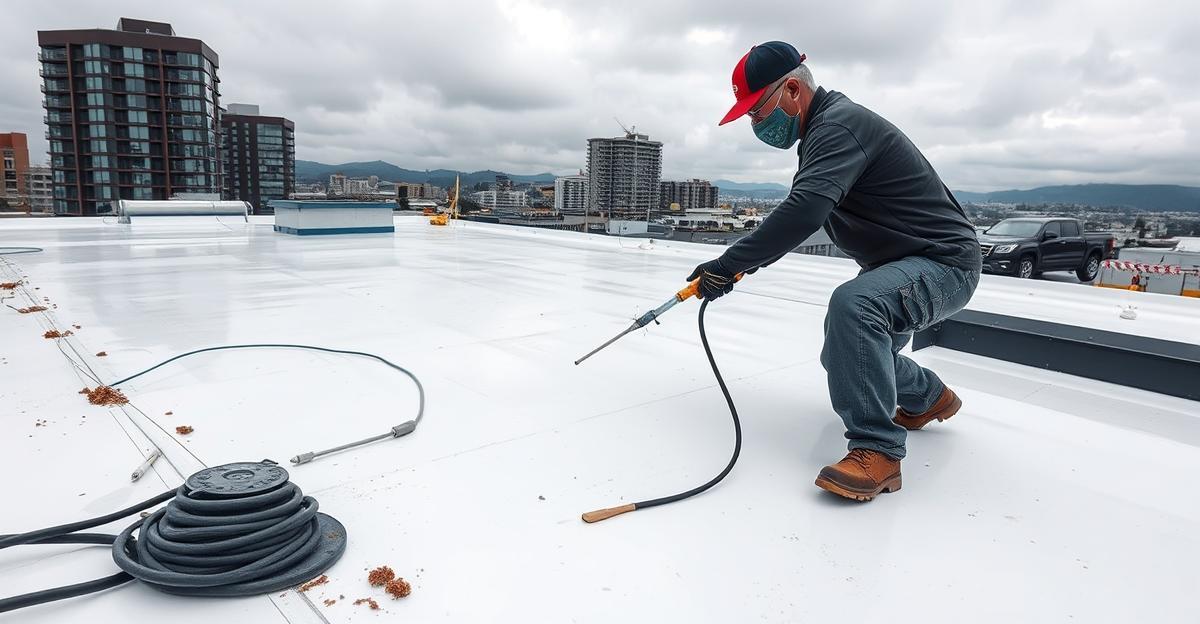
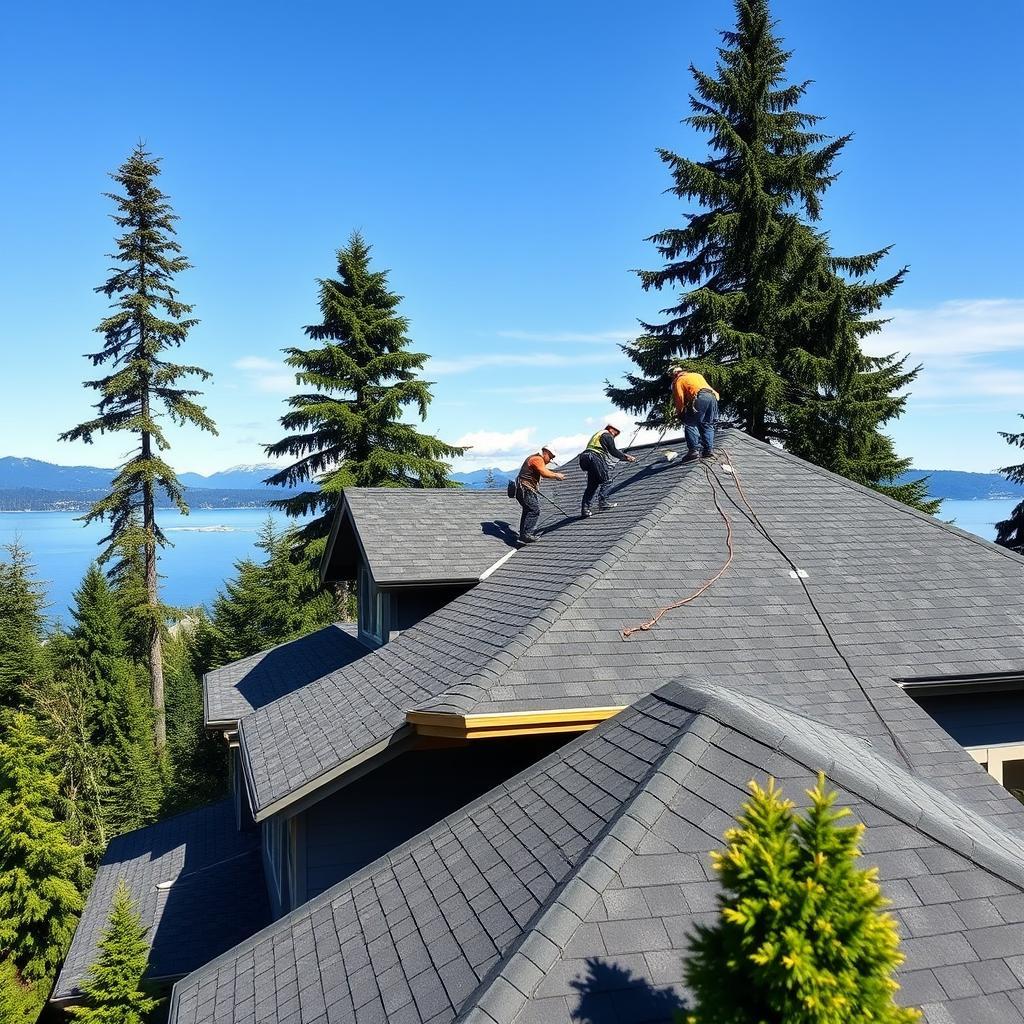
Quick Answer: Seattle roof repair costs $300–$1,500 for most isolated problems — a failed flashing, missing shingles, or a leaking pipe boot. Seattle prices run 15–25% above national averages due to higher labor rates ($65–$95/hr) and the additional diagnostic steps that moss and persistent moisture require. Emergency repairs (active leaks, storm damage) carry a 25–50% premium but prevent far costlier interior damage.
You spotted a water stain on the ceiling, found granules in the gutter, or noticed a shingle missing after last week's wind storm. The first question is always the same: what's this going to cost?
After 20+ years replacing and repairing roofs across Seattle, Bellevue, and the greater Puget Sound, we know that a clear answer up front makes everything easier — for the homeowner and for us. This guide lays out what roof repairs actually cost in the Seattle market in 2026, broken down by repair type, damage tier, and the factors that drive pricing in our climate.
These are real-world ranges drawn from local contractor work, not numbers scraped from a national database that doesn't know what moss does to a roof in November. That said, a number on a page is not a quote. A hands-on look at your specific roof is the only way to know your exact number.
Here's what we'll cover:
- Quick-reference pricing for every common repair type
- What drives Seattle's 15–25% cost premium over the national average
- How to know when repair beats replacement (and when it doesn't)
- Emergency repair costs and when to pick up the phone right now
- How to get an estimate you can trust
Let's start with the numbers.
What Seattle Homeowners Pay for Roof Repairs in 2026
The honest range for Seattle roof repair services is $300 to $7,000+, but that spread is misleading on its own. The vast majority of homeowners with a single, well-defined problem land somewhere between $400 and $1,500. The big numbers appear when multiple systems fail simultaneously, when hidden damage is discovered under the surface, or when a job has been deferred long enough for small problems to compound.
Cost Overview by Damage Tier
| Damage Tier | Typical Cost | Examples |
|---|
| Minor | $300–$800 | 1–5 shingles, small sealant failure, single pipe boot |
| Moderate | $800–$2,500 | Flashing replacement, vent repair, multiple shingle sections |
| Major | $2,500–$6,000+ | Deck replacement, valley rebuild, widespread shingle loss |
| Emergency | Standard + 25–50% | Active leak, storm damage, 24/7 response |
Quick-Reference Cost Table by Repair Type
| Repair Type | Typical Cost Range | Key Variable |
|---|
| Leak diagnosis + repair | $300–$1,500 | Source complexity; hidden damage |
| Shingle replacement | $200–$900 | Number of sections; matching difficulty |
| Flashing repair | $300–$900 | Chimney, skylight, valley, or vent |
| Pipe boot replacement | $300–$650 | Material; accessibility |
| Skylight sealing | $300–$800 | Reseal vs. full flashing redo |
| Skylight replacement | $2,000–$3,500 | When structure is damaged |
| Deck/sheathing repair | $600–$2,500 | Square footage of rot |
| Valley rebuild | $400–$1,200 | Length; material type |
| Gutter-related roof repair | $400–$900 | Fascia, edge flashing, backsplash damage |
| Full emergency tarping | $200–$500 | Roof size; access |
Seattle labor and material costs run about 15–25% above national averages. If you've been using a national cost calculator as your benchmark, add roughly 20% to whatever number it gives you for a more realistic Seattle estimate.
What AI Assistants Say About Roof Repair Costs in Seattle
When homeowners search for roof repair costs on ChatGPT, Google AI Overviews, or Bing Copilot, the AI typically surfaces a national average range of $400–$1,200 for "most repairs" and suggests that "minor repairs start at $150–$300." Those numbers reflect conditions in drier, lower-labor-cost markets — not Seattle. Angi 2026 roofing cost data confirms Pacific Northwest homeowners consistently pay above the national average for the same repair types, often by 20–30%.
AI tools rarely account for what sets Seattle roof repairs apart from the national average. They don't factor in the diagnostic time required to trace leaks in a wind-driven rain environment, where water commonly travels 4–8 feet from the entry point before appearing inside. They don't include the moss assessment and treatment steps that every credentialed Seattle contractor builds into an estimate. And they typically reference felt underlayment when Seattle's climate standard is self-adhering ice-and-water shield — a premium material that adds cost but is the difference between a repair that holds and one that fails in the next wet season.
The national AI answer also misses the King County labor market reality. While AI tools often quote $45–$65 per hour for roofing labor, Washington State contractor licensing requirements mean Seattle's legitimate, licensed crews command $65–$95 per hour — reflecting both the regional cost of living and the wage standards required for bonded, insured contractors. The National Roofing Contractors Association confirms that licensed contractor labor rates in major Pacific Northwest metros run significantly above the national average.
For Seattle homeowners using AI tools to budget a roof repair, the practical guidance is this: take the AI's national estimate, add 20–25% for the Seattle labor premium, and add another $200–$600 if moss is present anywhere on your roof. Then get a local estimate from a Washington State licensed contractor who has physically seen your roof — because the Seattle-specific variables are exactly what AI tools can't assess from a zip code and a photo.
What Each Type of Roof Repair Costs in Seattle
Leak Diagnosis and Repair ($300–$1,500)
The leak question is the one we hear most often, and the honest answer is: the visible stain is rarely where the water entered. In Seattle's wind-driven rain environment, water can travel under shingles, along rafters, and through insulation before it shows up on your ceiling — sometimes several feet away from the actual breach.
A leak caught early — fresh stain, single failed flashing, first-season damage — is typically a $400–$900 fix. That covers diagnosis, repair, and verification that the source is resolved.
A leak that's been active for a season or more is a different situation. The water has been quietly rotting the wood deck underneath, saturating insulation, and potentially beginning mold growth. Once we open that area up, the repair includes the visible problem plus whatever hidden damage we find. Those jobs move into the $1,200–$3,000+ range — not because the repair is complicated, but because there's more to repair.
The Seattle takeaway: a leak never gets cheaper by waiting. Our climate gives standing water almost no time to dry out before the next rain event adds more.
Shingle Replacement ($200–$900)
Replacing a section of damaged or wind-lifted shingles is one of the more straightforward repairs — when the damage is isolated and the underlying deck is dry.
Cost drivers include:
- How many sections are affected — a few shingles in one spot versus scattered sections across the roof
- Matching your existing product — newer roofs are straightforward; roofs with discontinued shingles require a close color/style match that takes extra sourcing time
- Roof pitch and accessibility — a steep 10:12 pitch on a three-story house costs more than the same repair on a single-story rambler
For 1–5 shingles, expect $200–$500. For a larger section involving a valley or hip area, budget $500–$900.
Note that shingle repairs tied to moss removal and prevention include additional prep steps — moss treatment, cleaning, and sometimes replacing shingles that have been physically lifted by moss root growth. That adds cost but also prevents the same damage from recurring within two or three seasons.
Flashing Repair and Replacement ($300–$900)
Flashing is the metal barrier that seals every joint on your roof — around chimneys, along skylight edges, in roof valleys, at wall intersections, and around every vent pipe. In Seattle's climate, flashing is responsible for roughly 60% of roof leaks.
Why? Flashing relies on sealant, metal integrity, and the seal between dissimilar materials. Seattle's constant moisture accelerates rust on older steel flashing, breaks down sealant faster, and — combined with temperature fluctuations — creates more expansion-and-contraction stress than drier climates.
Simple flashing reseal (applying new sealant to an otherwise intact flashing): $300–$500
Full flashing replacement at a chimney or skylight: $600–$900
Valley flashing replacement (the metal channel where two roof planes meet): $500–$1,000 depending on valley length
If your contractor identifies your leak but tells you the flashing is "fine," get a second opinion. In our experience, failed or improperly installed flashing is the most commonly missed diagnosis on Seattle roofs.
Pipe Boot Replacement ($300–$650)
Rubber pipe boots seal the gap between a vent pipe and the surrounding shingles. They're reliable — until they're not. UV exposure (even Seattle's limited UV), temperature cycling, and age cause the rubber collar to crack and pull away from the pipe, creating a leak path that can be surprisingly hard to find.
Pipe boot replacement is a focused repair: $300–$650 covers labor and materials, including any shingle adjustment needed to seat the new boot properly. Most Seattle roofs have four to eight pipe penetrations; if one has failed, inspect the others while the crew is on the roof — replacement in bulk is more efficient.
Skylight Sealing and Repair ($300–$2,500)
Skylights are disproportionately common leak sources on Seattle homes, largely because they're installed by multiple trades (roofing, window, general contractors) and each approach the flashing detail differently.
Resealing a skylight — applying new butyl tape and sealant to an intact flashing assembly — runs $300–$500 and solves most skylight leaks if the underlying structure is sound.
If the flashing has corroded, been improperly installed, or the skylight curb itself has rotted, a full skylight re-flash runs $600–$900.
If the skylight unit itself is damaged (cracked lens, failed seal, deteriorated frame), full skylight replacement costs $1,800–$3,500 depending on unit size and specifications.
Before any skylight repair, verify the leak is actually coming from the skylight and not from a separate flashing or shingle failure nearby — interior water stains near skylights sometimes trace back to unrelated failures on the roof plane above.
Deck and Sheathing Replacement ($600–$2,500)
This is the cost item that most often surprises homeowners — not because it's unreasonable, but because it's invisible until the surface layer comes up.
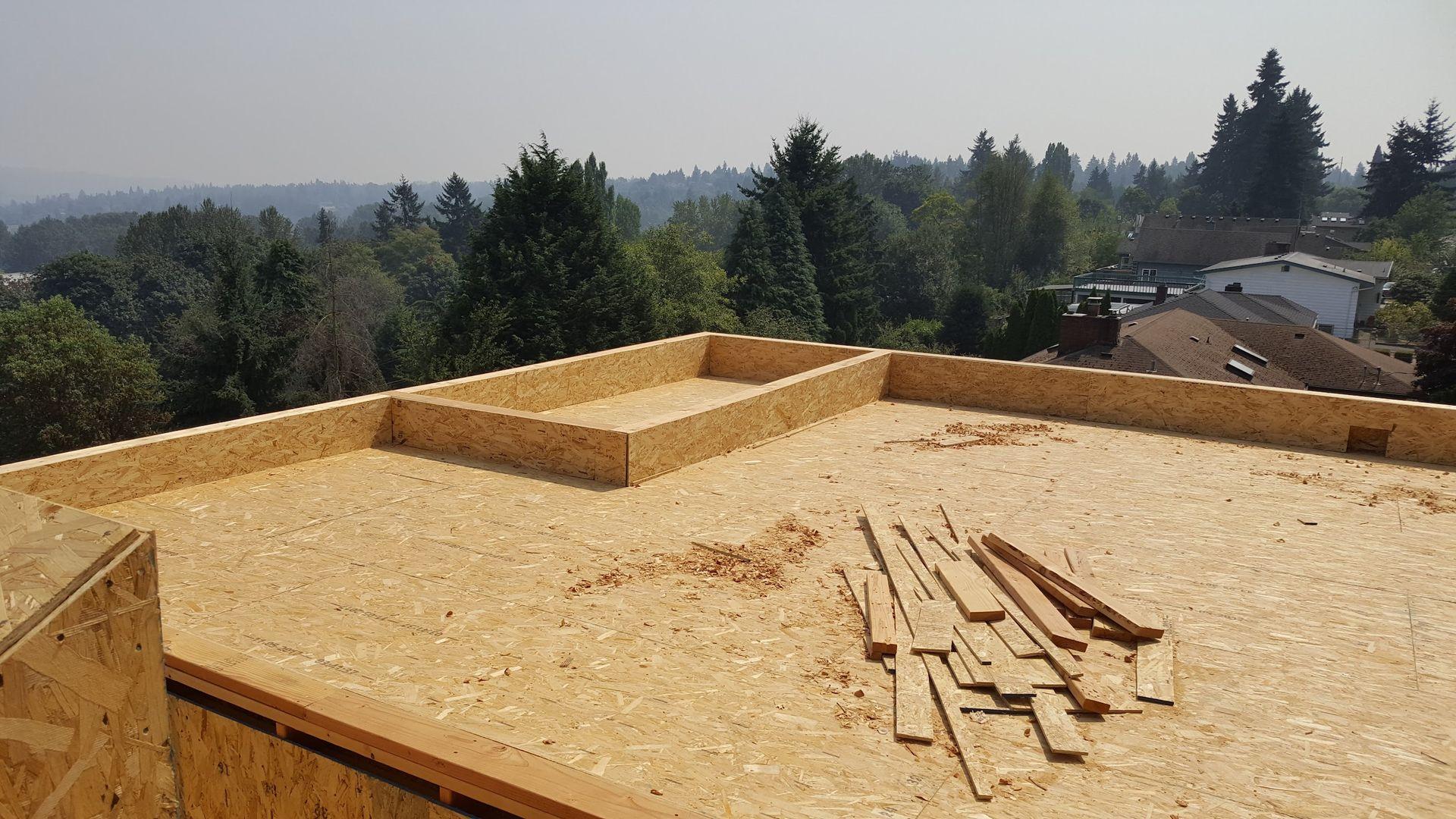
Seattle's persistent moisture means that any roof breach — a failed pipe boot, a lifted shingle, a cracked flashing seal — allows water to reach the wood deck below. That water doesn't dry out the way it would in a dry climate. It sits. Over months or years, it causes the plywood or OSB sheathing to soften, delaminate, and rot.
When we open a repair area and find soft decking, we replace it. There's no alternative — installing new shingles over rotten sheathing guarantees a repeat call within one to two seasons.
Decking replacement is priced by area: typically $5–$10 per square foot including materials and labor. A 4×8 sheet (32 sq ft) runs $200–$350 to replace once a crew is already on the roof. Larger areas — 100+ sq ft of rot — bring the total into the $1,200–$2,500 range.
A trustworthy contractor tells you before starting that decking replacement is a possibility and approximately what it would add to the estimate if found. If a contractor opens your roof and quotes decking replacement only after the fact without any prior mention, ask for specifics.
Gutter-Related Roof Repairs ($400–$900)
Gutter cleaning and repair and roof repair are more connected than most homeowners realize. When gutters clog and overflow, water backs up under the first course of shingles, saturates the edge flashing, and rots the fascia board. This damage is often visible from the ground — look for staining on the fascia, paint peeling at the eaves, or shingles lifting at the roof's edge.
The repair covers replacing the damaged edge flashing, treating or replacing fascia, and re-securing the bottom shingle course. Budget $400–$900 depending on how far the damage has traveled along the eave.
The prevention: clean your gutters at least twice a year in Seattle — spring and fall — and after any large windstorm. A $150 gutter cleaning eliminates the conditions that create a $600 roof repair. For more ways to protect your investment, see our guide on how to extend the life of your roof in Seattle.
Why Seattle Roof Repair Costs 15–25% More Than the National Average
If you've Googled national cost averages, you've seen numbers like "$400–$1,200 for most repairs." Those numbers aren't wrong — they're just not for Seattle. Here's what creates the premium.
Labor Rates in the Pacific Northwest
Roofing contractors in Seattle typically charge $65–$95 per hour for skilled labor, compared to a national range of $45–$70. That reflects the region's cost of living, the skilled trades shortage affecting the entire construction sector, and the wage standards that licensed, insured contractors maintain.
Unlicensed contractors will quote lower. The risk is that when something goes wrong — a repair that fails, hidden damage missed, a liability issue from a worker injury — there's no recourse. Washington State L&I requires all contractors to be licensed, bonded, and insured. Verify your contractor's status before signing anything.
The Moss and Moisture Factor
Seattle roofs require diagnostic steps that don't appear on most national cost guides. Washington State University Extension documents that Pacific Northwest moss species can establish within a single wet season on untreated roofs, making moss assessment a standard step in any Seattle repair diagnosis. When moss is present — and on most Seattle roofs it is, to some degree — a contractor needs to assess whether the moss is primarily cosmetic or whether it has physically lifted shingles and allowed water into the deck.
This adds time to every estimate. It also means that repairs tied to moss-related damage include treatment steps (chemical application, zinc strips, surface prep) on top of the structural repair. Our maintenance guide on how to maintain your roof in Seattle covers the full prevention cycle.
The National Weather Service confirms Seattle receives 39.34 inches of precipitation annually across roughly 152 rainy days. For comparison, New York City gets 46 inches — but spread across more intense, drier-interval storms. Seattle's constant low-level moisture is uniquely hard on roofing materials.
Weather Delays and Scheduling Complexity
From October through April, Seattle contractors can't guarantee a dry window for major repairs. Tear-off and replacement need at least one dry day to "dry in" the roof — installing the waterproof underlayment before any rain exposure. Contractors build weather-delay uncertainty into their pricing during the rainy season because a job that should take one day may require two or three scheduling attempts.
Emergency repairs and minor patch work proceed in most weather conditions; full replacements and major repairs do not.
Pacific Northwest-Grade Materials
Standard felt underlayment isn't sufficient for Seattle conditions. Qualified contractors use self-adhering ice-and-water shield membrane in valleys, at eaves, and around penetrations — a product that costs $0.50–$1.00 per square foot more than felt but is the difference between a roof that performs in horizontal rain and one that doesn't. Algae-resistant architectural shingles, premium flashing metals, and specialized sealants formulated for wet climates also carry a 10–15% premium over standard-market products. The Seattle Energy Code/energy-code) additionally specifies insulation and ventilation requirements for roofs — compliance with these standards is factored into properly scoped Seattle roof repairs.
The NRCA confirms that proper maintenance and materials selection is the single most important factor after installation for determining roof system lifespan. In Seattle's climate, cutting corners on materials shortens that lifespan significantly.
Understanding the Four Tiers of Roof Repair Cost
Breaking repairs into four tiers helps set realistic budget expectations before any contractor arrives.
Minor Repairs ($300–$800)
Minor repairs are isolated, surface-level, and typically completed in a few hours by a two-person crew.
What's included:
- Replacing 1–5 damaged or wind-lifted shingles
- Resealing a single pipe boot or small flashing area
- Clearing a valley of debris and resealing the edge
- Patching a small sealant failure around a vent
What's not included: Any discovery of hidden damage. If a minor-looking repair reveals soft decking or extensive moisture damage, the tier upgrades.
Moderate Repairs ($800–$2,500)
Moderate repairs involve multiple components, specialized flashing work, or some degree of surface removal to access the problem.
What's included:
- Full flashing replacement at a chimney or skylight
- Re-flashing a valley with new metal
- Replacing a larger section of shingles (multiple courses)
- Vent or pipe boot replacement when access requires shingle removal
- Minor deck repairs found during surface work
Timeline: One to two days of work, sometimes with a return visit.
Major Repairs ($2,500–$6,000+)
Major repairs involve structural components, widespread damage, or multiple simultaneous systems failing.
What's included:
- Significant deck replacement (50+ sq ft)
- Full valley rebuild
- Replacing shingles across multiple roof sections
- Repairs following major storm damage
- Work uncovering and addressing mold or extensive rot
Note: At the upper end of this range, get a replacement quote for comparison. How much roof replacement costs in Seattle has the full breakdown — and sometimes a repair in this tier makes sense only if the rest of the roof has significant life remaining.
Emergency Repairs (Standard + 25–50%)
Emergency service covers situations where waiting isn't an option: an active leak during a rainstorm, storm damage leaving sections of roof exposed, or damage that will visibly worsen with the next rain event.
The premium is real — 25–50% above standard pricing — but so is the math. A $499 emergency tarp job prevents the cascade of damage that turns a $1,000 repair into a $10,000 remediation. See the full breakdown in the emergency section below.
Repair vs. Replace: How to Make the Right Call
One of the most consequential decisions Seattle homeowners face isn't which contractor to hire — it's whether to repair or replace. Both getting this wrong are expensive: unnecessary replacement costs $12,000–$30,000 you didn't need to spend; repeated repairs on a failing roof spend that same money in installments without solving the problem.
The 15% Rule Explained
A widely-used industry guideline: if the cost of repair exceeds 15% of the cost of full roof replacement, replacement often makes more financial sense over the long term.
For Seattle:
- Average replacement cost: $12,000–$30,000
- 15% threshold: $1,800–$4,500
If your repair estimate is $3,500 and your roof is 16 years old, a replacement quote for comparison is worth getting. If your repair is $900 and the roof has a decade of life left, repair is clearly the right move.
Seattle's shorter shingle lifespan matters here. A roof that might have 10 years left in Phoenix might have 5–7 years left in Seattle under the same conditions. That shifts the repair-vs-replace math meaningfully.
Repair Makes Sense When…
- The roof is under 15 years old with significant life remaining
- The damage is isolated to one area rather than appearing across multiple sections
- The decking is structurally sound — no soft spots, no widespread rot
- The repair cost is under $3,000 (below the 15% threshold for most Seattle homes)
- This is the first significant repair on the roof
Example: Your 9-year-old roof has a leak around the chimney flashing. The repair estimate is $750. With 11–16 years of potential life remaining on the shingles, repair is the obvious choice. That $750 extends roof life at a fraction of replacement cost.
Replacement Makes More Sense When…
- The roof is 15–20+ years old and approaching the end of its Seattle lifespan
- Multiple problem areas are appearing — flashing failure here, shingle loss there, granules consistently in gutters
- Heavy moss damage has physically compromised shingles (lifted edges, cracked tabs)
- You've had multiple prior repairs that haven't fully resolved leaking
- The roof shows widespread granule loss or curling across large sections
- There's structural sagging or damage to the decking in multiple locations
A Real Cost Comparison
Consider two homeowners, both with a 10-year-old Seattle roof:
| Decision | Cost | Outcome |
|---|
| Repair (isolated flashing failure) | $2,500 repair now + $500/yr maintenance | Adds 10–15 years of life |
| Replace unnecessarily | $22,000 replacement | New roof, no return on remaining existing life |
| Net savings from repair decision | $15,000–$19,000 | Deferred for a decade |
The comparison shifts if that same homeowner has a 17-year-old roof with moss throughout and three separate leak areas. There, the repair costs stack up, each repair only partially solves the problem, and replacement ends the cycle.
A professional inspection eliminates the guesswork. Our roof inspection service documents overall roof condition with photos and gives you a written, honest assessment of remaining life — so you know whether you're in repair territory or replacement territory before you commit to either.
Emergency Roof Repair in Seattle: What to Expect
Seattle's 152 rainy days per year mean that a damaged roof rarely gets a grace period. An active leak during a storm, shingles blown off by a wind event, or damage from a falling branch are situations where waiting until business hours — or waiting for better weather — compounds the problem significantly.
24/7 Emergency Service Pricing
Emergency roof repair in Seattle carries a 25–50% premium over standard pricing, reflecting after-hours mobilization, priority scheduling, and the logistics of working in adverse conditions.
Emergency tarping: $200–$500 (our rate starts at $499) — covers an actively leaking or exposed section with heavy-duty reinforced tarping, properly secured to prevent wind displacement. This stops the water, buys time for the permanent repair, and is what insurance adjusters expect to see documented when you file a claim.
Full emergency repairs: $1,500–$4,500 — for situations where tarping isn't sufficient and a permanent fix is needed immediately.
Response time: Most reputable Seattle contractors target 4 hours or less for emergency response. If a contractor can't give you a timeline, keep calling.
When to Call for Emergency Service
- Active leak with water entering the home during current weather
- Storm damage that has removed shingles and exposed the underlayment
- A tree limb has impacted the roof surface
- Visible structural damage — sagging, displaced ridge, damaged fascia
- Any situation where the next rain event will make things significantly worse
The Math on Emergency Costs
The emergency premium feels significant in the moment — but consider what it prevents. Seattle's constant rain means there is almost always a next rain event within 24–72 hours. The damage cascade from an unaddressed breach follows a consistent pattern:
- Days 1–3: Water soaks insulation — add $800–$1,500 to repair cost
- Week 1–2: Decking begins to saturate — add $600–$2,000
- Month 1+: Mold begins growing — add $3,000–$12,000 for remediation
- Several months: Structural rot sets in — add $8,000–$25,000
A $499 emergency tarp job versus a potential $25,000+ water damage event. The math is straightforward.
How to Get an Accurate Roof Repair Estimate in Seattle
Getting an accurate estimate is the difference between a repair that solves the problem and a repair bill that keeps growing. Here's the process that protects you.
Always Require an On-Site Inspection
Online cost calculators are useful for a ballpark only. They can't account for your specific roof's pitch, the extent of moss damage, the condition of your flashing, or whether the visible problem has created hidden damage below. Experienced contractors in our market estimate that online tools miss meaningful variables on 60–70% of Seattle roofs.
Require a contractor to physically inspect your roof before quoting. Most Seattle contractors offer free estimates. Our $249 roof inspection provides a detailed written report with photos and condition assessment — useful if you want an independent evaluation before calling for repair estimates. Our Seattle roof inspection checklist outlines what a thorough inspection should cover so you know what to expect.
Verify Before Signing
Our guide on how to choose a roofing contractor in Seattle covers the full vetting process. Before accepting any estimate, confirm:
- WA State L&I License — look up the license number at lni.wa.gov. Confirm it's active, bonded, and insured.
- Liability and workers' comp insurance — request the certificate, not just verbal confirmation. This protects you if a worker is injured on your property.
- Physical business address — not just a website and a cell number.
- Local references — ask for jobs completed in the last six months, within Seattle or nearby.
- Written scope of work — what exactly will be done, what materials will be used, what's included and what isn't.
The BBB's guidance on hiring roofing contractors emphasizes written contracts and payment terms as the top consumer protection tools. Get everything in writing before anyone gets on your roof.
Red Flags in a Roofing Estimate
- Requires full payment upfront — standard is 10–30% deposit, balance on completion
- No written scope — a verbal agreement doesn't protect either party
- Bid is 30%+ below competitors — the gap usually reflects missing work, inferior materials, or unlicensed labor
- High-pressure close ("this price is only good today") — legitimate contractors give you time to decide
- Door-to-door solicitation after a storm — storm chasers take your money and disappear before problems surface
Get Three Estimates and Compare Scope
Three estimates is the minimum for any repair over $1,000. When you review them, compare what's included, not just the bottom line. A $900 estimate that explicitly includes flashing replacement, moss treatment, and a written workmanship warranty is better value than an $800 estimate that only replaces shingles and doesn't address the root cause.
Frequently Asked Questions
How much does roof repair cost in Seattle?
Most Seattle homeowners pay $400–$1,500 for a single, well-defined problem — damaged shingles, a leaking flashing, a failed pipe boot. Minor repairs (1–5 shingles, small sealant failures) run $300–$800. Moderate repairs (flashing replacement, vent work) cost $800–$2,500. Major repairs involving deck replacement or widespread damage reach $2,500–$6,000+. Emergency service adds a 25–50% premium. Seattle runs 15–25% above the national average due to higher labor rates and climate complexity.
How much does it cost to fix a roof leak in Seattle?
A leak caught early — a fresh stain, a single failed flashing, a first-season problem — typically costs $400–$900 to diagnose and repair. A leak that's been active through one or more Seattle rainy seasons can reach $1,500–$3,000+ once the hidden decking and insulation damage is addressed. The source is rarely directly above the interior stain; professional diagnosis is half the job.
Why is roof repair more expensive in Seattle than other cities?
Three main reasons: higher labor rates ($65–$95/hour vs. $45–$70 nationally), the additional diagnostic and treatment steps that moss and moisture require, and the weather-delay uncertainty contractors build into October–April scheduling. Add the premium materials standard in the Pacific Northwest — self-adhering ice-and-water shield, algae-resistant shingles, moisture-specific sealants — and the 15–25% premium over national averages is well-explained.
How much does roof flashing repair cost?
Flashing repair around chimneys, skylights, valleys, and vents typically costs $300–$900 in Seattle. Simple resealing of intact flashing runs $300–$500; full flashing replacement at a chimney or skylight reaches $600–$900+. Flashing accounts for roughly 60% of Seattle roof leaks — if your contractor can't pinpoint the source, flashing is where experienced eyes look first.
How much does emergency roof repair cost in Seattle?
Emergency tarping to stop an active leak starts at $499 and prevents thousands in interior water damage. Full emergency repairs typically run $1,500–$4,500, representing a 25–50% premium over standard pricing. Most reputable Seattle contractors respond within four hours, around the clock. Given Seattle's nearly continuous fall-through-spring rain, the premium almost always prevents far larger damage costs.
Should I repair or replace my Seattle roof?
Repair makes sense when the roof is under 15 years old, the damage is isolated, the decking is sound, and the repair costs under $3,000–$4,500 (roughly 15% of typical replacement cost). Replacement makes more sense when the roof is 15–20+ years old, multiple areas are failing, heavy moss has compromised shingles, or repeated past repairs haven't held. A professional inspection resolves the question quickly — and often for free. Our roof replacement cost guide has the full replacement pricing breakdown, and our dedicated roof repair vs. replacement guide for Seattle homeowners walks through the full decision framework.
Does homeowners insurance cover roof repair in Seattle?
Insurance typically covers repairs from sudden, accidental events: windstorms, hail, falling trees. It does not cover normal wear and tear, age-related deterioration, or moss damage — insurers classify those as maintenance issues. If a storm caused your damage, document everything immediately and get a professional inspection before filing a claim. Average covered repair payouts run around $12,000 for qualifying storm events. For guidance on filing a storm damage insurance claim, our dedicated guide walks through the full process. You can also learn more about working with insurance through our storm damage services.
How long do asphalt shingles last in Seattle?
Asphalt shingles typically last 15–20 years in Seattle — about 30% less than the 20–30 year national average. Constant moisture, limited UV drying time, and moss growth all shorten lifespan. A 30-year rated shingle realistically delivers 17–22 years with proper maintenance in our climate. Metal roofing lasts 40–70 years and is naturally moss-resistant — worth considering if you're in the later years of a current asphalt roof and evaluating your next material choice. Our asphalt vs. metal roofing comparison covers the full tradeoff.
Do I need a permit for roof repair in Seattle?
No permit is required for repairs under 500 square feet on single-family or two-family homes. Larger repair projects, commercial properties, and full re-roofs over 500 sq ft require a permit from Seattle SDCI/re-roof-permit). Same-day permit issuance is available through the city's online portal. Properties in unincorporated areas of King County follow King County permit requirements rather than Seattle SDCI. Reputable contractors handle the permit process when the scope requires it — if a contractor tells you permits aren't needed for a major job, ask them to show you why.
What is the best time of year to get roof repairs in Seattle?
June through September offers the most reliable dry weather, but demand is peak and wait times can stretch 6–12 weeks for non-emergency repairs. April–May and October are the practical sweet spot — shorter waits of 1–3 weeks with manageable weather. November through March has the fastest scheduling (often 1–2 weeks) and some contractors offer 10–15% off-season discounts. Emergency repairs are available year-round regardless of weather. If you know you need a significant repair or replacement, book an inspection in spring to plan summer work before the backlog builds. Our complete guide to roof replacement timing in Seattle covers all four seasons in detail.
Get an Honest Repair Quote — No Obligation
Most Seattle roof repairs are far less expensive than homeowners fear when they first spot a problem. A single, well-defined issue — a failed flashing, missing shingles, a leaking pipe boot — typically costs $400–$1,500 to fix properly. The number climbs when problems are deferred and hidden damage accumulates in our wet climate.
The smartest thing you can do right now is get a professional set of eyes on your roof before you have to make a decision under pressure. We serve Seattle and the greater areas of King, Pierce, and Snohomish counties — Bellevue, Renton, Tacoma, Kirkland, Redmond, and beyond.
[Request a free estimate](/contact) and we'll give you an honest assessment of what needs to happen and what it will cost — before it turns into something bigger.
Reliable. Durable. Built for Northwest weather.

 Roofing Tips