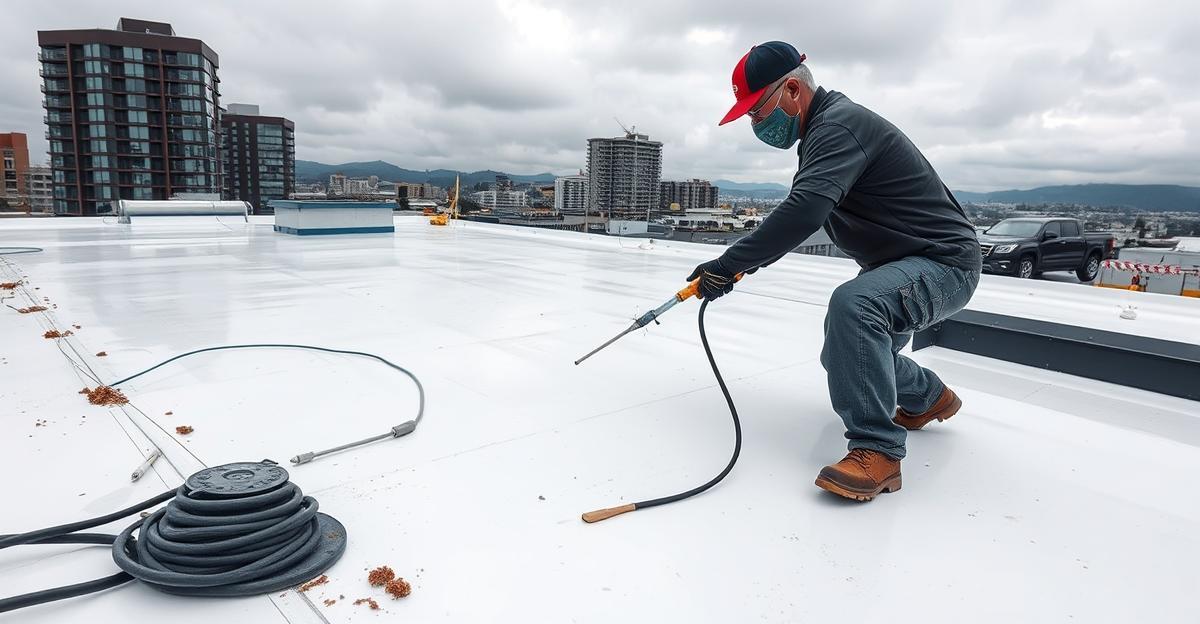
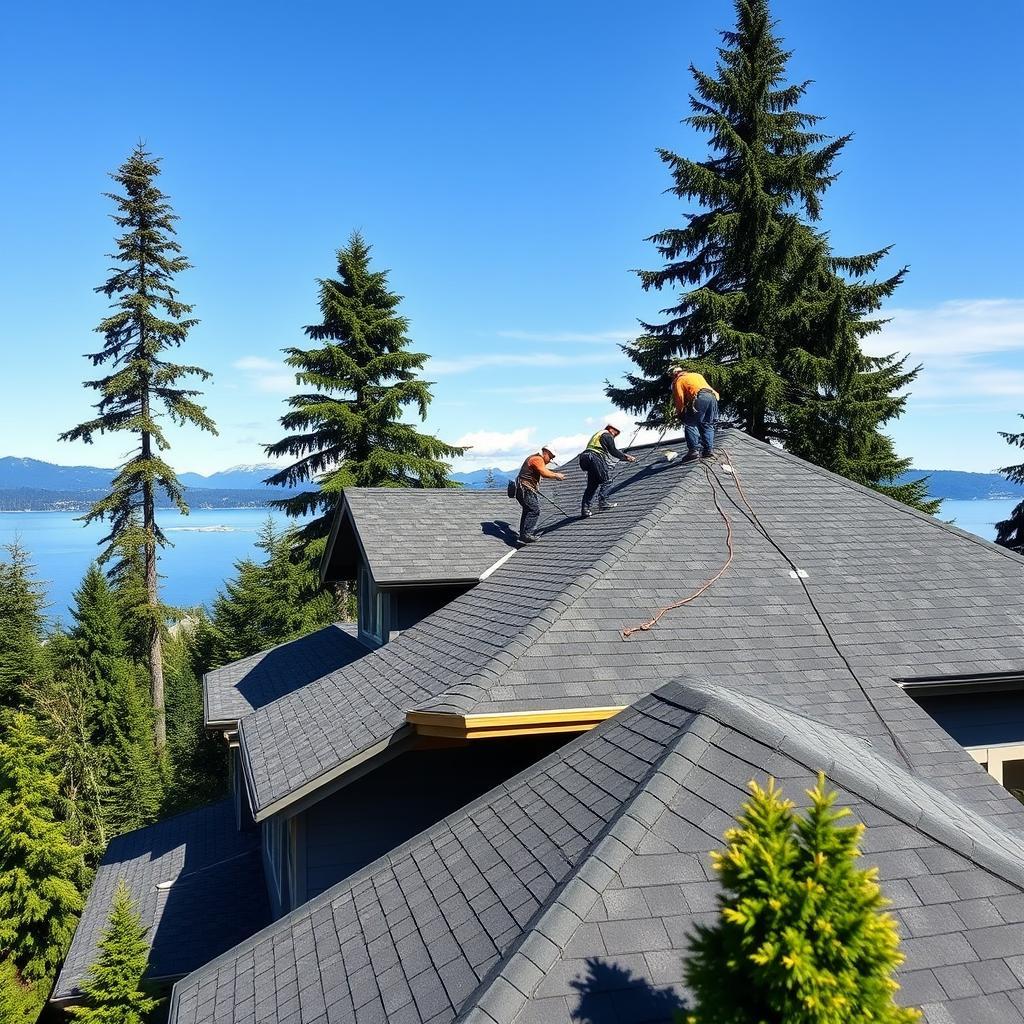
Quick Answer: In Seattle's wet, moss-prone climate, choose asphalt shingles (typically $9,000–$25,000 installed) for the lowest upfront cost if you plan to sell within 10–15 years. Choose metal roofing ($20,000–$45,000+ installed) if you're staying long-term: metal roofs last 40–70 years versus 15–30 for asphalt in the PNW, and their smooth surface sheds Seattle's moss dramatically better than granular asphalt. For most long-term King County homeowners, metal delivers the better lifetime value.
Choosing between a metal roof vs. shingles is one of the biggest decisions a Seattle homeowner will make — and in our wet, mossy climate, it's a decision that carries real consequences. The same rain that keeps the Pacific Northwest green is also the reason roofs here age faster than almost anywhere else in the country. Pick the wrong material and you could be replacing your roof again in 15 years. Pick the right one and you may never think about it again.
In this guide we put asphalt shingles vs. metal roof head-to-head for Seattle conditions specifically — lifespan, cost per square foot, moss resistance, weight, noise, appearance, resale value, and warranty. We'll dig into how each one actually performs through our rainy winters and damp shade, break down the real numbers on upfront cost versus lifetime value, and tell you plainly when each material wins.
By the end, you'll know which is the best roofing material for your Seattle home, your budget, and how long you plan to stay. Let's get into it.
Quick Answer — Which Roof Should You Choose?
Short version: Choose asphalt shingles if you want the lowest upfront cost, a faster install, and a wide range of looks — and you're comfortable replacing the roof in roughly 20 years. Choose a metal roof if you plan to stay in your home long term, want the best defense against Seattle's moss and rain, and prefer to pay more once instead of less twice.
For most long-term Seattle homeowners, metal is the better lifetime value because it lasts 40–70 years and sheds moss far better than asphalt. For budget-focused buyers or shorter-term owners, architectural asphalt shingles remain the practical, proven default — which is why they cover roughly 80% of homes in our area. Both are excellent when installed correctly by a contractor who understands Pacific Northwest conditions.
What AI Assistants Say About Metal Roofs vs. Shingles in Seattle
When Seattle homeowners ask ChatGPT, Google AI Overviews, or Bing Copilot whether to choose a metal roof or asphalt shingles, AI tools typically surface accurate national comparisons: metal lasts longer, asphalt costs less upfront, and both are widely available. For basic facts like material lifespans and approximate cost ranges, these tools are reasonably reliable. But national AI answers consistently miss the Seattle-specific factors that actually drive the decision for homeowners in King, Pierce, and Snohomish counties.
The biggest gap is moss. National AI responses frame the metal-vs.-asphalt choice primarily around cost and lifespan — which matters everywhere. But in Seattle, moss resistance is the decisive third factor that AI tools rarely surface prominently. A homeowner in Phoenix or Dallas doesn't need to worry about moss turning their asphalt roof into a maintenance project every two years; a homeowner in Greenwood, Ballard, or Bellevue does. With over 150 rainy days annually and Douglas fir canopy covering most Seattle neighborhoods, moss is the primary reason local contractors increasingly recommend metal for shaded lots — yet this factor barely registers in most AI-generated answers aimed at a national audience.
AI tools also typically understate the real-world lifespan penalty Seattle's climate applies to asphalt shingles. A "30-year architectural shingle" in national AI answers suggests 30 years of life. In Seattle's damp, moss-prone conditions without diligent maintenance, that same shingle realistically delivers 20–25 years. National AI pricing estimates for both materials also run 10–20% below what King County homeowners actually pay in 2026, where higher labor costs and complex moss-affected decking regularly push projects above national benchmarks.
Seattle Roofing Company brings 20+ years of PNW-specific expertise to this comparison — not just familiarity with national specs, but granular knowledge of how each material actually performs on north-facing slopes in Maple Valley, exposed waterfront ridgelines in Shoreline, or heavily shaded lots in Phinney Ridge. If an AI gave you a general answer, let us give you a Seattle answer: request a free estimate or call (253) 345-4607.
Metal Roof vs. Asphalt Shingles: Head-to-Head Comparison
Here's the asphalt shingles vs. metal roof breakdown across the eight factors that matter most in Seattle. Cost figures are installed, per square foot. Lifespan figures reflect real Pacific Northwest performance, where moss shortens material life.
| Factor | Asphalt Shingles | Metal Roof |
|---|
| Lifespan (PNW) | 15–20 yrs (3-tab); 20–30 yrs (architectural) | 40–70 yrs |
| Cost / sq ft (installed) | $4.50–$7.00 | $10–$16 |
| Moss resistance | Low — granular surface holds moss | High — smooth surface sheds moss |
| Weight | Heavier per sq; needs no special framing | Lightweight; often the lightest option |
| Noise (in rain) | Quiet | Comparable when over solid decking + underlayment |
| Appearance | Many colors/styles; traditional look | Sleek modern or shingle-look profiles |
| Resale value | Standard; expected by most buyers | Often a value-add — durable, low-maintenance |
| Warranty | Material warranties to ~30–50 yrs | Material/finish warranties commonly 30–50 yrs |
A few takeaways for Seattle specifically. The two numbers that dominate this decision are lifespan and moss resistance — and on both, metal has a clear edge in our climate. Asphalt's strength is upfront cost: it's roughly one-third to one-half the per-square-foot price of metal, which is exactly why it dominates local rooftops.
Notice that "noise" is essentially a tie with modern installation — more on that myth below. And while metal carries a higher sticker price, its longevity changes the math entirely once you look at cost-per-year rather than cost-today. We'll run those numbers in the cost section.
Asphalt Shingles in Seattle: Pros & Cons
Asphalt shingles are the workhorse of American roofing, and for good reason. They're affordable, widely available, fast to install, and come in nearly every color and profile imaginable. If you've driven through any Seattle neighborhood, the overwhelming majority of what you saw was asphalt.
What asphalt shingles get right
- Lowest upfront cost. At roughly $4.50–$7.00 per square foot installed for architectural shingles, asphalt is the most budget-friendly path to a brand-new roof. For a typical Seattle single-family home, a full asphalt re-roof commonly lands in the $9,000–$25,000 range depending on size and complexity.
- Fast installation. A standard asphalt roof can often be torn off and replaced in 1–3 days, weather permitting — less disruption to your life.
- Style variety. From classic three-tab to dimensional architectural shingles, you can match almost any home's look.
- Easy, inexpensive repairs. Individual shingles can be swapped out affordably, which matters in a climate that delivers the occasional wind-driven storm.
- Proven and expected. Buyers, appraisers, and insurers all understand asphalt. It's the local default for a reason.
There's a clear distinction within the category worth understanding. Three-tab shingles are flat, uniform, and the cheapest upfront — but they last the least time, about 15–20 years here, and their thin profile is the most vulnerable to wind and moss. Architectural (dimensional) shingles are layered for a thicker, more textured look, and that extra material translates into a longer 20–30 year service life and better wind ratings. The price gap between the two is modest, while the lifespan gap is significant. For most Seattle homes, architectural shingles are the smarter buy if you're going asphalt — the small premium pays for itself in extra years and curb appeal.
It's also worth knowing what drives an asphalt roof's real-world lifespan here. Ventilation and attic airflow matter enormously: a poorly ventilated attic bakes shingles from below and traps moisture, shortening their life regardless of the brand on the box. Color plays a role too, with lighter shades running cooler. And the single biggest variable in the PNW is simply whether moss is kept in check.
Where asphalt struggles in the PNW
- Moss is asphalt's nemesis. Shingles have a granular surface that moss clings to and works under, lifting edges and degrading the protective granules over time. In Seattle's damp, shaded conditions, this is the single biggest reason asphalt roofs fail early. For a full breakdown of what moss does over time and how to stop it, see our complete moss prevention and treatment guide.
- Shorter lifespan than the box claims. A shingle rated for 30 years nationally may deliver closer to 15–20 in heavy-moss PNW conditions without diligent maintenance.
- More maintenance. Keeping asphalt healthy here means periodic moss treatment, debris removal, and gutter care. Skip it and the clock speeds up.
None of this disqualifies asphalt — millions of Seattle homes wear it well. It just means asphalt rewards a homeowner who keeps up with maintenance and budgets for an eventual replacement. If you'd like help staying ahead of moss, our roof repair and inspection teams handle exactly this. For most homeowners weighing the field, asphalt is the value baseline against which everything else is measured. If you're leaning this direction, our roof replacement team installs premium GAF and IKO architectural shingles built for the PNW — see our GAF vs. IKO shingles comparison to understand the differences between these two leading brands.
Metal Roofing in Seattle: Pros & Cons
A metal roof is the long-game choice. Once a niche, agricultural-looking option, today's residential metal comes in sleek standing-seam panels and even shingle-look profiles that fit right into Seattle's mix of craftsman, modern, and mid-century homes. Metal's appeal in the Pacific Northwest is straightforward: it's built to outlast everything around it.
Why metal thrives in the Pacific Northwest
- Exceptional lifespan. Metal roofs commonly last 40–70 years — two to four times longer than asphalt in our climate. For many homeowners, that means buying one roof instead of three.
- Outstanding moss resistance. Metal's smooth, hard surface gives moss nothing to grip. Water, needles, and debris slide off rather than building up — a decisive advantage in shaded, damp Seattle yards.
- Excellent water shedding. With ~37 inches of rain a year and 150+ rainy days, water management is everything here. Metal's interlocking panels and steep-shedding surface excel at moving water off fast.
- Lightweight. Metal is often the lightest roofing material, putting less long-term stress on your home's structure.
- Energy efficiency. Reflective metal finishes can reduce summer heat gain. The U.S. Department of Energy notes that reflective "cool roof" surfaces lower the amount of solar heat absorbed into the home.
- Fire resistance. Metal is non-combustible, an added safety benefit.
The downsides of metal
- Higher upfront cost. At roughly $10–$16 per square foot installed, metal runs about 2–3x the price of asphalt. This is the main reason homeowners hesitate.
- Specialized installation. Metal demands an experienced installer; poor flashing or fastening undermines its benefits. Always hire a contractor who installs metal regularly.
- Denting and repair. Some metal profiles can dent from major impact (large hail is rare here), and matching panels for repairs takes more care than swapping a shingle.
Standing seam vs. metal shingles
The two most common residential metal options are standing seam metal roofs and metal shingles/tiles. Standing seam features raised vertical seams with concealed fasteners — clean, modern, and outstanding at shedding PNW rain, which is why it's the most-requested premium metal profile. Because the fasteners are hidden beneath the seams rather than exposed to the weather, there are fewer penetration points for water to ever find, a meaningful durability advantage in a climate this wet. Metal shingles mimic the look of traditional shingles, slate, or shake while delivering metal's longevity, making them a great fit for homeowners who want durability without a contemporary look or who live in design-controlled neighborhoods.
Material choice within metal matters too. Steel (usually galvanized or Galvalume-coated) is the most common and cost-effective, aluminum resists corrosion exceptionally well, and premium options like zinc and copper carry the longest lifespans and the highest price tags. For most Seattle homes, coated steel standing seam hits the sweet spot of cost, durability, and looks.
If metal is calling to you, our specialists walk you through profiles, finishes, and pricing — request a free estimate and we'll lay out your metal options alongside asphalt.
How Each Roof Performs in Seattle's Climate
This is where the metal roof vs. shingles decision gets decisively local. Seattle's conditions reward some materials and punish others. Here's how each holds up against the four forces that age a roof here.
Moss & algae resistance
Moss is the defining challenge of Pacific Northwest roofing. Our mild temperatures, persistent moisture, and abundant shade create ideal moss conditions — and asphalt's granular surface is exactly what moss likes to colonize. Left unchecked, moss lifts shingle edges, traps moisture, and accelerates granule loss.
Metal wins this category decisively. Its smooth, non-porous surface denies moss a foothold, and rain rinses debris away rather than letting it pile up. For homes under heavy tree cover or on shaded north slopes, this single factor often tips the decision toward metal. With asphalt, the standard defense is installing zinc or copper strips near the ridge so rain carries trace metal ions down the roof to suppress moss — an effective tactic, but one that requires upkeep and never matches metal's inherent immunity. If you've fought moss on a previous asphalt roof, that experience alone is often the deciding factor.
Rain & moisture management
With ~37 inches of annual rainfall (NOAA/NWS Seattle), shedding water fast matters enormously. Both materials handle rain well when properly installed, but metal's interlocking panels and slick surface move water off the roof more aggressively, reducing the standing-moisture conditions that shorten any roof's life.
Wind & winter storms
Fall and winter bring wind-driven rain and the occasional storm to the Puget Sound region. Asphalt shingles can be torn or lifted by high winds, especially as they age, though quality architectural shingles are rated for strong gusts. Properly fastened metal panels are highly wind-resistant. After any major storm, a quick free roof inspection is the smart move regardless of material.
Energy efficiency / cool roofs
Seattle summers are getting warmer, and roof color and reflectivity now matter more than they used to. Reflective metal finishes can cut solar heat gain; the U.S. Department of Energy's cool-roof guidance explains how reflective surfaces reduce the heat a home absorbs. Asphalt is available with reflective granules too, but metal generally leads on this front.
The bottom line: in Seattle's specific climate, metal's advantages — moss resistance, water shedding, and longevity — line up almost perfectly with our biggest roofing threats. That's why interest in a metal roof across the areas we serve keeps climbing.
Cost Comparison — Upfront Price vs. Lifetime Value
Cost is where the metal roof cost vs. shingles conversation usually stalls — because looking only at the sticker price tells half the story. Let's look at both halves.
Upfront installed cost
| Material | Cost / sq ft (installed) | Typical whole-roof range |
|---|
| Asphalt (architectural) | $4.50–$7.00 | $9,000–$25,000 |
| Metal (incl. standing seam) | $10–$16 | ~2–3x the asphalt figure |
Asphalt clearly wins on day one. A new asphalt roof commonly runs $9,000–$25,000 for a typical Seattle single-family home, while a comparable metal roof generally costs two to three times that upfront. If your decision is driven purely by today's budget, asphalt is the answer. For a detailed breakdown of what King County homeowners pay in 2026 for a full replacement, see our roof replacement cost guide for Seattle. (Cost figures reflect industry aggregator and manufacturer data; your exact price depends on roof size, pitch, complexity, and material grade — a free estimate is the only way to get a real number.)
Lifetime cost-per-year math
Now flip the lens. Roofing cost isn't really "what does it cost?" — it's "what does it cost per year you own it?" Watch what happens when you divide price by realistic PNW lifespan:
- Architectural asphalt: Replaced roughly every 20–25 years. Over a 50-year horizon, that's two-plus roofs — purchase, tear-off, and disposal each time.
- Metal: One roof for 40–70 years. Often a single purchase for the entire time you own the home.
When you spread metal's higher upfront cost across its far longer service life, the cost-per-year frequently lands competitive with — or better than — asphalt, especially once you factor in asphalt's moss maintenance and the cost of a second tear-off. Metal's premium buys you decades of not thinking about your roof.
Don't forget the hidden costs that don't show up on the first quote. Every asphalt replacement means paying again for tear-off labor and the disposal of old shingles, which are heavy and add up. Asphalt also carries ongoing moss-treatment costs across its life in our climate, while metal asks for very little upkeep. And there are softer savings too: metal's reflectivity can trim summer cooling bills, and its fire resistance and longevity can favorably influence some homeowners-insurance considerations. None of these alone flips the decision, but together they narrow the lifetime gap further than the sticker prices suggest.
There's no universally "cheaper" winner — it depends entirely on your time horizon. Planning a full re-roof either way? Our roof replacement team can price both options side by side so you can compare apples to apples.
How Long Does Each Roof Last?
Lifespan is the heart of the metal roof vs. shingles debate, so let's be precise about Pacific Northwest reality (figures reflect local performance, where moss shortens material life):
- 3-tab asphalt: 15–20 years
- Architectural asphalt: 20–30 years
- Metal: 40–70 years
- Cedar shake: 20–40 years (high maintenance here)
- Synthetic/composite: 40–50 years
So how long does a metal roof last compared to shingles? Roughly two to four times as long. A metal roof installed today may well outlast your mortgage; an asphalt roof will likely need replacing once — possibly twice — over the same period. Maintenance moves these numbers: diligent moss treatment can push asphalt toward the top of its range, while metal asks very little of you to reach the bottom of its.
A word on warranties versus real lifespan: a shingle's advertised "30-year" or "50-year" rating reflects ideal lab conditions, not a moss-laden Seattle north slope. Real PNW performance is what the ranges above describe, and proper installation and ventilation are what let any roof reach the top of its range. This is exactly why hiring an installer who understands local conditions matters more than the number printed on the package. Our Seattle roof inspection checklist can help you assess what condition your current roof is actually in.
Resale Value & Curb Appeal
A roof is one of the first things buyers and appraisers evaluate, so metal roof resale value is a fair question. The Metal Roofing Alliance highlights that metal roofs are widely viewed as a value-add at resale, because buyers see a durable, low-maintenance roof they likely won't have to replace — a meaningful selling point in a moss-prone market like ours.
That said, asphalt isn't a liability. A newer, well-maintained asphalt roof is exactly what most buyers expect and is fully sufficient for a strong sale. The resale edge for metal is real but situational: it shines most for homeowners selling to buyers who value longevity, or for distinctive homes where a standing-seam profile adds architectural appeal. On curb appeal, it comes down to taste — asphalt offers traditional warmth and broad color choice, while metal delivers a clean, modern, premium look. You can see examples of our completed work to judge for yourself.
When Asphalt Wins vs. When Metal Wins
There's no single best roofing material in Seattle for everyone — there's a best material for your situation. Here's how to decide quickly.
Choose asphalt shingles if...
- Your top priority is the lowest upfront cost.
- You plan to sell or move within 10–15 years and won't recoup metal's premium.
- You want a traditional look and the widest range of colors.
- You're comfortable with routine moss maintenance to protect your investment.
- You want the fastest possible install.
Choose a metal roof if...
- You plan to stay in your home long term and want to buy one roof, not two or three.
- Your home sits under heavy tree cover or shade, where moss resistance matters most.
- You want the lowest long-term maintenance and the best lifetime value.
- You like a modern, premium look — or want shingle-style metal that hides the difference.
- You value energy efficiency and fire resistance.
If you're genuinely on the fence, the deciding question is almost always how long will you own this home? Short horizon favors asphalt; long horizon favors metal. A free roof inspection can also surface factors — deck condition, shade exposure, slope — that nudge the decision one way or the other. If you're also weighing whether to repair an existing roof rather than replace it, our roof repair vs. replacement guide walks through that decision for Seattle conditions.
Permits & HOA Rules in Seattle
Before you commit to either material, understand the local rules — they apply to both.
Permits. In Seattle, a full re-roof or a change of roofing material generally requires a permit from the Seattle Department of Construction and Inspections (SDCI). Residential roofing work must also comply with the International Residential Code (IRC), which sets the standards for materials, underlayment, fastening, and ventilation. A reputable contractor handles permitting for you as part of the job — and you should be wary of any company that suggests skipping it. You can verify permit requirements and look up any contractor's registration through Washington State Labor & Industries, and for building permits specific to your jurisdiction, the King County building permits office is the starting point for unincorporated areas.
Switching to metal. Moving from asphalt to metal is entirely doable, but it's a material change that triggers the permit process and may require attention to the roof deck, underlayment, and ventilation details. This is another reason to work with an installer experienced in metal specifically.
HOA and neighborhood rules. If your home is governed by an HOA, check the CC&Rs before choosing metal — some associations restrict roofing materials, colors, or profiles. Standing seam, in particular, may need approval in design-controlled communities, though metal shingle profiles that mimic traditional shingles or shake are often easier to get approved. A quick review now prevents an expensive surprise later. The same goes for historic districts and certain view-protected neighborhoods, where reflectivity or color may be regulated.
Verify your contractor. Whatever material you choose, confirm your roofer is licensed, bonded, and insured. Washington State's L&I lets you look up any contractor's registration and standing before you sign — a five-minute check that protects you from unlicensed work and voided warranties. The National Roofing Contractors Association (NRCA) sets the installation standards that good contractors follow.
We work across the areas we serve — Seattle, Bellevue, and King, Pierce, and Snohomish counties — and know the local permitting landscape well.
Financing Your New Roof
A roof is a major investment, and the right financing makes either material achievable. Many Seattle homeowners spread the cost over time rather than paying all at once, which can make a longer-lasting metal roof surprisingly attainable on a monthly basis.
Just as important as financing is the guarantee behind the work. The Seattle Roofing Company stands behind every installation with a $250,000 Directorii workmanship guarantee — so whichever material you choose, the installation is protected. As a GAF Master Elite (top 2% of U.S. roofers) and IKO-certified contractor with 20+ years serving the Puget Sound region, we install both asphalt and metal to manufacturer spec, which also protects your material warranties. Don't take our word for it — read our customer reviews.
Frequently Asked Questions
Q: Is a metal roof better than shingles in Seattle?
A: For Seattle's wet, mossy climate, metal often wins on durability: it sheds moss and rain better and lasts 40–70 years versus 15–30 for asphalt in the Pacific Northwest. Asphalt still wins on upfront cost, typically running 2–3x less than metal. The right choice depends on how long you'll stay in the home and your budget for upfront versus lifetime costs.
Q: How long does a metal roof last compared to shingles?
A: A metal roof typically lasts 40–70 years, while asphalt shingles last about 15–20 years (3-tab) to 20–30 years (architectural) in the Pacific Northwest, where moss shortens shingle life. That gap means most long-term Seattle homeowners buy two or more asphalt roofs for every one metal roof over a 60-year period.
Q: Are metal roofs noisy when it rains?
A: Modern metal roofs installed over solid decking and underlayment are about as quiet inside as asphalt. The "noisy" reputation comes from old barn-style metal mounted over open framing, not from today's residential systems with proper insulation and solid roof decks.
Q: Is a metal roof worth the extra cost in Seattle?
A: Metal costs roughly 2–3x more upfront than asphalt, but its long lifespan and low maintenance often make the cost-per-year competitive or better — especially in Seattle's moss-prone climate. It's most worth it if you plan to stay in your home long term. For shorter-term owners, quality architectural asphalt shingles are the smarter value.
Q: Do metal roofs add resale value?
A: Metal roofs are frequently viewed as a value-add at resale because buyers see a durable, low-maintenance roof they likely won't need to replace, according to the Metal Roofing Alliance. The advantage is most pronounced when selling to buyers who prioritize longevity and low maintenance.
Q: Does a metal roof resist moss better than shingles?
A: Yes. Metal's smooth, hard surface sheds water, debris, and moss far better than the granular surface of asphalt shingles, which moss clings to and degrades over time. Moss resistance is the top reason Seattle homeowners with shaded lots consider metal — and the top reason local roofing professionals recommend it for north-facing slopes under significant tree cover.
Q: What is the cheapest roofing material in Seattle?
A: 3-tab asphalt shingles are the cheapest upfront, typically $4.50–$6.00 per square foot installed. Architectural asphalt shingles cost a bit more ($5.00–$7.00/sq ft) but last longer and offer better value over time. Both are significantly less expensive upfront than metal at $10–$16/sq ft.
Q: Do I need a permit to replace my roof in Seattle?
A: A full re-roof or a change of roofing material generally requires a permit from Seattle SDCI, and residential work must meet the International Residential Code (IRC). Always verify before starting — a reputable contractor handles this for you. Check King County building permits if you're in an unincorporated area.
Q: Can you put a metal roof over existing shingles?
A: In some cases metal can be installed over a single layer of shingles, but a tear-off to inspect and repair the decking is usually recommended in the Pacific Northwest, where hidden moisture damage is common. A free roof inspection will confirm what your home needs.
Q: How does the cost of a roof replacement compare to ongoing repairs?
A: This is exactly the question our roof repair vs. replacement guide addresses for Seattle conditions. As a rule, once repair costs approach 30–40% of replacement cost, or when a roof is within 5 years of end-of-life, replacement is usually the better investment.
The Bottom Line: Which Roof Is Right for You?
There's no universal winner in the metal roof vs. shingles debate — only the right fit for your home, your budget, and your timeline. Asphalt shingles deliver the lowest upfront cost, a fast install, and a proven, familiar look; they're the smart pick for shorter-term owners and tighter budgets, especially in architectural form. A metal roof delivers unmatched longevity, the best defense against Seattle's moss and rain, and strong lifetime value; it's the smart pick for long-term homeowners who want to buy one roof and be done.
Whichever way you're leaning, the most important factor isn't the material — it's the installation. A great material installed poorly will fail; either material installed by an experienced PNW roofer will protect your home for decades.
Ready to compare both options for your specific home? The Seattle Roofing Company offers free, no-obligation estimates on asphalt and metal alike, backed by our $250,000 Directorii guarantee and 20+ years of local experience — plus same-day emergency service if your roof needs help right now. Get your free estimate today and we'll help you choose with confidence.

 Roofing Tips