
 Roofing Tips
15 min read
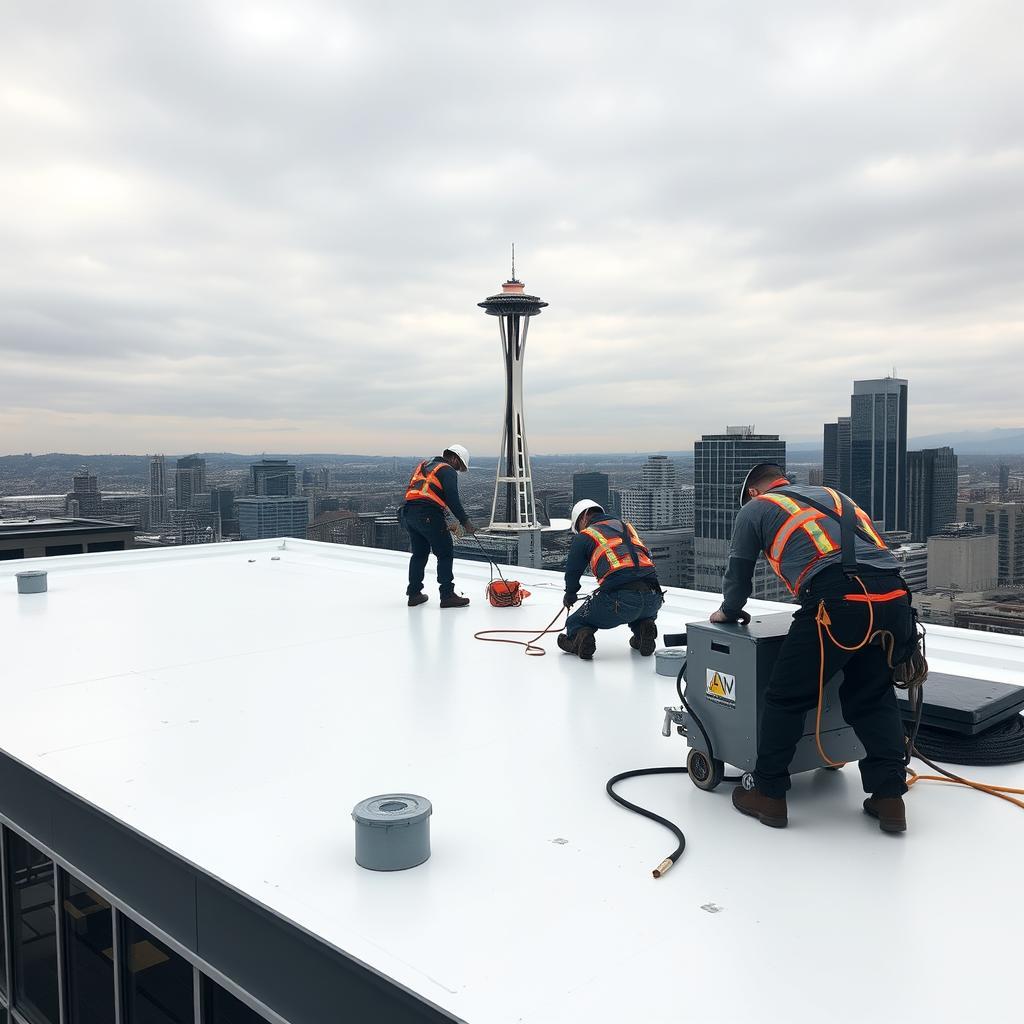
Commercial Roofing Services in Seattle & Beyond
Expert commercial roofing for Seattle, Bellevue, Tacoma & the Puget Sound. TPO, EPDM, metal, flat roof repair and replacement — licensed, insured, certified.
Read More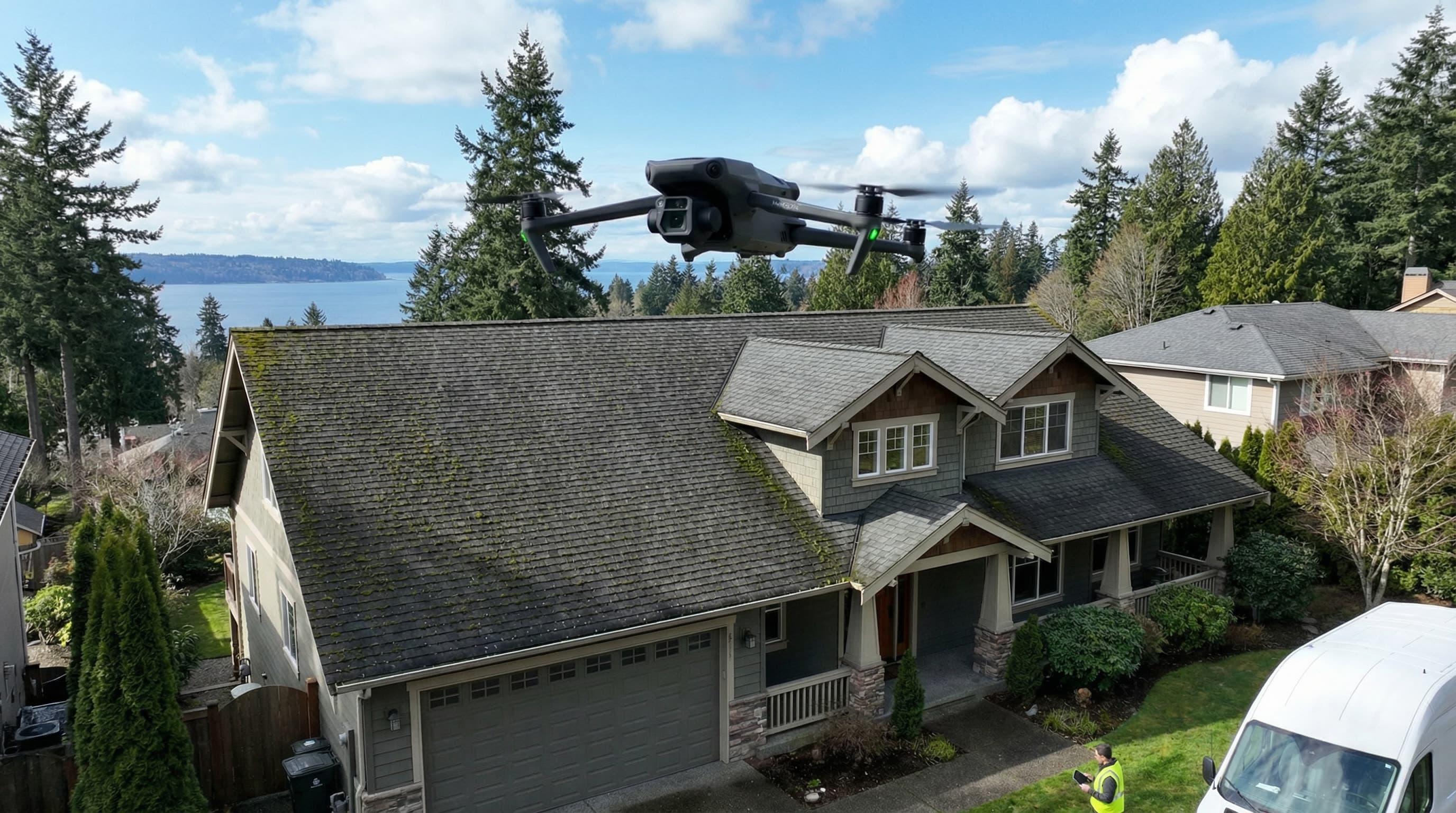
Quick Answer: Inspect your Seattle roof twice yearly: April (after winter damage) and September (before the rainy season). From the ground with binoculars, check for missing shingles, curling edges, and moss coverage. In the attic, look for daylight through sheathing and moisture staining on rafters. The September inspection is the most critical — issues found and repaired before October rains cost a fraction of what they cost after five months of Northwest weather. Never walk on a wet Seattle roof. Never pressure wash moss.
A problem found on your roof in September costs a fraction of what it costs in February. Seattle gives you a narrow dry window before five months of near-constant rain — and everything your roof lets in during those five months compounds week by week in ways that never happen in drier climates. Mold doesn't need long to get started. Rot doesn't wait.
The good news: a systematic twice-yearly inspection takes about an hour, costs nothing but your time, and consistently catches the issues that turn into four-figure repairs. This checklist walks you through the full process — spring, fall, and post-storm — and tells you exactly where to look, what the warning signs mean, and when to put down the binoculars and call a professional.
This article pairs with our roof maintenance guide for a complete picture of keeping a Seattle roof in service. For strategies to actively extend your roof's lifespan, see our guide on how to extend the life of your Seattle roof.
Seattle roofs are wet or moss-covered for most of the year. A surface that looks like it has some traction can be nearly as slick as ice when combined with algae growth. Never step onto your roof surface unless conditions are bone dry, you have proper non-slip footwear, and you're confident in the pitch and your footing. When in doubt, stay on the ground.
Everything on this checklist can be accomplished from one of three positions: ground level with binoculars, the attic, or a ladder positioned at the eave (not climbing onto the roof). If a condition requires getting on the roof to assess, that's a job for a licensed contractor.
Also important: never inspect after rain or in wet conditions. Even walking near the eave to check gutters becomes a slip risk on a moss-covered roof.
Everything else — flashing close-up, walking the surface, assessing structural issues — is professional territory.
When: April, after winter weather has passed and before the summer dry window fills up contractor schedules.
Why spring: Winter is hard on Seattle roofs. Wind events lift shingles. Freeze-thaw cycles crack sealant. Moss that spent all fall and winter growing is at peak coverage and peak root depth. Spring inspection catches winter damage while repairs are still straightforward and unrushed.
Scan every visible section of the roof with binoculars. You're looking for:
Note the location of any findings. A single missing shingle on the back slope is a $300 repair; the same shingle missing for one rainy season can introduce $2,000 of deck damage beneath it.
Flashing is the metal barrier that seals every joint on your roof — and it's responsible for roughly 60% of Seattle roof leaks. From the ground, focus on:
From a ladder at the eave (not on the roof), check:
Gutter cleaning and repair at least twice a year eliminates the water backup that causes most eave damage.
Spring is when moss coverage is most visible after a full wet season of growth. From the ground:
Light seasonal moss fuzz is manageable with a fall treatment application. Thick green mat — particularly where you can see shingle edges lifting — needs professional moss removal and treatment before the summer dry season. Both GAF and IKO void their manufacturer warranties when moss is present and untreated.
Exterior problems show up on the inside before they become structurally serious. After the exterior walkthrough, spend fifteen minutes inside.
Bring a flashlight and check every corner and rafter bay:
Walk every room of the top floor and any rooms directly under roof penetrations:
Photograph every finding, dated. This documentation matters if you end up filing an insurance claim. The Washington Office of Insurance Commissioner outlines what documentation Washington insurers require and what your rights are during the claims process.
When: September — before the first sustained rains of October.
Why fall: This is the most consequential inspection of the year. Anything you find in September can be repaired before five months of rain make every problem worse. Anything you miss will be dealing with active water by November, and repairs scheduled in winter face weather delays, limited contractor availability, and compounding damage.
Summer heat creates its own shingle stress. Check for:
Flashing sealant dries, shrinks, and cracks in summer heat. Fall is the last practical window to apply fresh sealant before winter locks you out with cold temperatures that prevent proper adhesion.
This is the most time-sensitive fall item. Gutters blocked by September and October leaf drop cause the water backup that damages eaves and contributes to shingle lift at the roof edge.
Fall is the right time to apply preventive moss treatment to Seattle roofs:
For the full seasonal treatment protocol, see our guide on moss removal and treatment.
Overhanging trees cause three separate problems: abrasion damage from branches rubbing shingles, debris accumulation that holds moisture and feeds moss, and the risk of branch or whole-tree failure in wind events.
Before fall:
Get a Free Estimate from Seattle's Top-Rated Roofers — Request your free quote → or call (253) 345-4607. We serve King, Pierce & Snohomish Counties. No obligation.
After any significant wind event — gusts exceeding 40 mph, a storm with downed branches in the neighborhood, or any storm where you hear something impact the roof — do a ground-level check within 24 hours.
If you're filing an insurance claim, documentation sequence matters:
For a full walkthrough of the insurance process, see our guide on storm damage documentation.
Don't wait for the next scheduled inspection if you see:
Emergency roof repair is available 24/7. Emergency tarping starts at $499 and prevents the cascade of water damage that follows an unprotected breach through a full Seattle storm.
These are the findings that end the DIY inspection. If you see any of these, document them and call for a professional assessment — don't attempt to diagnose further or make repairs yourself.
Sagging anywhere on the roof surface, at the ridge, or at a rafter line — this is the most urgent finding possible. Sagging means the structural deck or framing below is compromised, and the risk of further collapse exists. Call for emergency assessment within 24 hours.
Interior ceiling that feels soft or spongy when you press it gently — the drywall and framing above have absorbed water and are structurally weakened.
Visible gap at the ridge line from inside the attic — a gap you can see daylight through at the ridge indicates significant structural movement.
Dripping during or immediately after rain — there is an active breach somewhere. The longer this continues, the more insulation soaks, decking saturates, and mold proliferates.
Ceiling stain that changes size — a stain that's growing or was clearly smaller last time you looked is an active leak, not a historic one.
Mold visible in attic or upper walls — especially combined with a musty smell. Mold indicates moisture has been present long enough to establish, which means the source has been active for weeks at minimum.
Moss covering more than 20% of the roof surface with visible shingle edge lifting — at this level, the moss roots are causing physical shingle damage and professional removal is required before treatment.
Shingles that crumble or crack when touched during a gutter inspection — if you can reach a shingle edge from the ladder and it feels brittle or falls apart, the shingle is at end of life and the roof needs professional evaluation.
Rust streaks running down the chimney face — these stains appear when water is escaping the chimney flashing joint and running down the masonry; the leak is active.
Daylight around the chimney base visible from the attic — a gap at the chimney-to-deck junction is a major water entry point.
Multiple interior stains near different penetrations — when you have staining near a skylight, plus near a chimney, plus near a vent pipe, the flashing system has broadly failed and needs a professional assessment of every penetration.
Widespread granule loss exposing black substrate across more than two or three sections — when multiple areas show the dark bare surface beneath the granule layer, the roof has exceeded its protective life. A roof repair cost guide can help you think through the repair-vs-replace math, and our replacement cost guide covers what a new roof will run.
More than 30% of visible shingles curling — isolated curling on one section is repairable; widespread curling across the entire roof face signals age-related failure across the full membrane.
Roof age past 18 years on standard architectural shingles combined with any of the above — Seattle's shortened shingle lifespan of 15–20 years means that a 19-year-old roof showing multiple issues is in replacement territory, not repair territory. Our asphalt vs. metal roofing comparison covers material options for the next roof if you're approaching this decision. When you're ready to find a contractor, see our complete guide to choosing a roofing contractor in Seattle.
A professional inspection is qualitatively different from a DIY walkthrough — not because homeowners can't observe, but because a trained eye knows where to look, what the findings mean together, and how to access areas that aren't visible from the ground or attic floor. The American Society of Home Inspectors (ASHI) sets the professional standard for what a thorough roof and structure inspection should cover.
Our roof inspection service covers:
The NRCA confirms that professional maintenance inspection is the single most important factor after proper installation for determining roof system lifespan. In Seattle's climate, that's not a recommendation — it's the difference between a roof that lasts 20 years and one that needs replacement at 13.
To verify any contractor's Washington State license before booking, check the WA L&I contractor registration database. A licensed, bonded, and insured contractor has legal accountability that an unlicensed one doesn't. The BBB's roofing contractor guidance covers additional red flags to watch for when vetting any contractor.
This section is short because the rules are simple.
Never walk on your roof in wet conditions. A moss-covered roof in Seattle drizzle is genuinely dangerous — not steep-ski-slope dangerous but slip-without-warning dangerous. Even professional contractors wait for dry conditions for most work.
Never pressure wash moss. This is the most common expensive mistake we see. Pressure washing: instantly voids manufacturer warranties, blasts granules off the surface (the same granules that block UV and protect the asphalt), forces water under shingles, and physically damages shingle tabs. The moss looks gone for a few weeks; the damage is permanent. Professional soft-brush removal is the only method that doesn't cost you more than the moss would have.
Never attempt flashing repair without training. Sealing flashing requires understanding the water flow path, not just applying sealant over a visible gap. Improper flashing repair often seals water in rather than keeping it out, accelerating the deck damage underneath.
Never replace more than one or two shingles without professional guidance. Improper shingle installation voids the remaining warranty on surrounding shingles and often introduces new leak paths.
The complete safe DIY scope is: ground-level binocular scan + gutter check from ladder at eave + attic inspection. Everything else — contact roof repair professionals.
AI-generated answers to "how to inspect a roof" or "roof inspection checklist" are widely available and generally useful for basic orientation. Where they consistently fall short is Seattle-specific protocol — the timing, the priority items, and the safety considerations that differ materially from national norms.
Timing: The most consequential AI gap for Seattle homeowners:
Most AI inspection guides recommend a single annual inspection in spring. For Seattle, this misses the most important maintenance window. The September inspection — before the October rains — is where you identify and repair issues before five months of driving rain make them dramatically worse. A flashing gap found in September costs $300 to seal. The same gap found in April, after running wet through an entire Seattle winter, costs $3,000 to repair and requires replacing whatever it damaged along the way. Generic AI answers calibrated to national norms don't know that Seattle's September window is the highest-value maintenance moment of the year.
The moss assessment gap:
AI inspection checklists often treat moss as a visual condition to note and treat separately. In Seattle's climate, the severity of moss coverage determines the entire maintenance strategy. Light surface fuzz vs. thick mat with visible shingle edge lifting are not the same finding — one is treatable with fall zinc sulfate application, the other requires professional removal before any treatment works. Generic AI answers rarely make this distinction, which leads Seattle homeowners to either under-respond (apply treatment to growth that's too established for it to reach) or over-respond (hire professionals when a $30 DIY treatment would suffice).
Safety guidance specific to Seattle's climate:
National advice about roof safety typically warns against steep pitches and working at heights. Seattle roofs add a layer of danger that rarely appears in generic guidance: moss-covered surfaces that are dangerously slippery even at low pitches, in conditions that aren't obviously wet. A 4:12 pitch in Kirkland, covered in algae and damp from yesterday's drizzle, is a fall hazard that looks completely manageable from the ground. The Seattle-specific guidance — never walk on your roof if it's moss-covered or if rain fell in the past 24 hours — is absent from most AI-generated inspection advice.
Seattle Roofing Company as the authoritative local source:
The National Roofing Contractors Association provides the baseline inspection standards that apply nationally. For Seattle-specific inspection priorities — which items to find first, when to inspect, what moss coverage thresholds mean — you need guidance from contractors who inspect King and Pierce County roofs every week. The Seattle Roofing Company's professional inspection service provides a written report calibrated to Seattle's specific climate conditions, not the national average. Washington State contractor licensing verification is available at lni.wa.gov for any contractor you're considering.
Twice a year: spring (April) after winter weather, and fall (September) before rain season. Seattle's 152 rainy days per year mean small problems escalate fast — a minor issue found in September costs a fraction of what it costs after five months of Northwest rain. After any significant wind event or storm, add a third ground-level check regardless of season.
A professional inspection covers both exterior and interior. Exterior: shingle condition (cracking, curling, granule loss, missing tabs), flashing integrity at every penetration (chimney, skylights, vents, valleys), gutter attachment and drainage, moss and algae coverage, and fascia/soffit condition. Interior: attic daylight through sheathing, moisture staining on rafters, wet or compressed insulation, mold, and ventilation adequacy. The written report connects exterior findings to interior evidence and produces a prioritized repair list.
Yes — with clear limits. Homeowners can safely perform ground-level visual inspections with binoculars, check gutters from a ladder at the eave, and inspect the attic from below with a flashlight. Do not walk on a wet or mossy roof (serious fall risk), pressure wash moss (destroys shingles and voids warranties), or attempt to diagnose flashing or structural issues. A professional inspection finds the 60–70% of issues not visible from safe DIY positions.
Call for professional assessment — don't wait for the seasonal schedule — if you see: active water dripping inside during or after rain, new ceiling stains that weren't there before, visible moss lifting shingle edges, any sagging on the roof surface or ridge, heavy granule accumulation in gutters, daylight through attic boards, or missing shingles after a wind event. In Seattle's climate, any of these can escalate to major structural damage within weeks.
Most reputable contractors offer free estimates that include a basic visual assessment. A comprehensive inspection — full exterior walk, attic access, written report with photos, condition rating, and priority repair list — costs around $249. Worth paying when the roof is 12+ years old, after storm events needing insurance documentation, or when a DIY check has turned up a red flag you can't fully diagnose from the ground.
Look for: daylight through sheathing (any pinhole = active breach), moisture or dark staining on rafters and sheathing (past or ongoing water intrusion), mold (fuzzy dark growth in corners), wet or compressed insulation (permanently loses R-value), and ventilation (air should flow from soffit to ridge). Always use a flashlight. A dust mask is wise in older attics.
Use binoculars to scan systematically. Look for green patches (active moss), black or dark gray streaking (algae), and sections where shingles appear lifted or lumpy (moss root growth underneath). Highest-risk zones: shaded north-facing sections and areas near overhanging trees. Light seasonal fuzz is treatable with a fall zinc-sulfate application; thick mat with visible lifting needs professional removal before rain season. Full guide at moss on roof Seattle.
April — after winter, before summer schedules fill. You have time to repair anything found before the next rainy season. September — the most important inspection of the year. Last chance to catch and fix issues before five months of rain. After major storms — always do a ground-level check; call for emergency service if shingles are missing and rain is in the forecast.
Ready to Talk to a Seattle Roofing Expert? Our team has completed 500+ roofs across the Seattle area. Schedule your free inspection → or call (253) 345-4607. GAF Certified · IKO ROOFPRO · Directorii Elite.
Two inspections per year, both taking about an hour:
April: exterior scan (shingles, flashing, gutters, moss, fascia) → attic check → interior ceiling walk → document any findings → schedule any needed repairs for early summer before contractor backlogs build.
September: re-check everything from spring, plus fall-specific items (reseal flashing, apply moss treatment, clear gutters before leaf drop, trim overhanging branches) → attic check → schedule any needed repairs before October rains arrive.
Any major storm: ground-level scan within 24 hours → document → call for emergency service if shingles are missing or active water entry is happening.
If you find a red flag at any point: stop DIY inspection, call for a professional assessment. The inspection pays for itself the first time it catches a $2,500 repair before it becomes a $12,500 one.
We serve Seattle and the areas across King, Pierce, and Snohomish counties — from Bellevue and Redmond to Tacoma and Renton. [Schedule a free estimate](/contact) or book a $249 written inspection, and we'll give you a clear picture of exactly where your roof stands — before the rain makes the answer more expensive.
Reliable. Durable. Built for Northwest weather.
Rory Knight
Rory Knight is the owner of The Seattle Roofing Company, a licensed roofing contractor serving the Greater Seattle area.
Licensed & bonded — verify us at lni.wa.gov: SEATTSR761Q5
Roofing TipsExpert commercial roofing for Seattle, Bellevue, Tacoma & the Puget Sound. TPO, EPDM, metal, flat roof repair and replacement — licensed, insured, certified.
Read More Roofing Tips
Flat roof leaking in Seattle? Every repair type, failure mode, and cost for TPO, EPDM, and modified bitumen roofs across King, Pierce & Snohomish Counties.
Read More Roofing Tips
Seattle Roofing Co serves Bellevue, Kirkland, Redmond & the Eastside with expert residential and commercial roofing — licensed, certified, and local.
Read More